

NAHA –
Typhoon No. 9 (Bavi) battered Okinawa on July 11 with destructive winds, torrential rain, widespread power outages and extensive transport disruptions, while much of the rest of Japan experienced dangerous heat, including the highest temperature recorded nationwide this year.
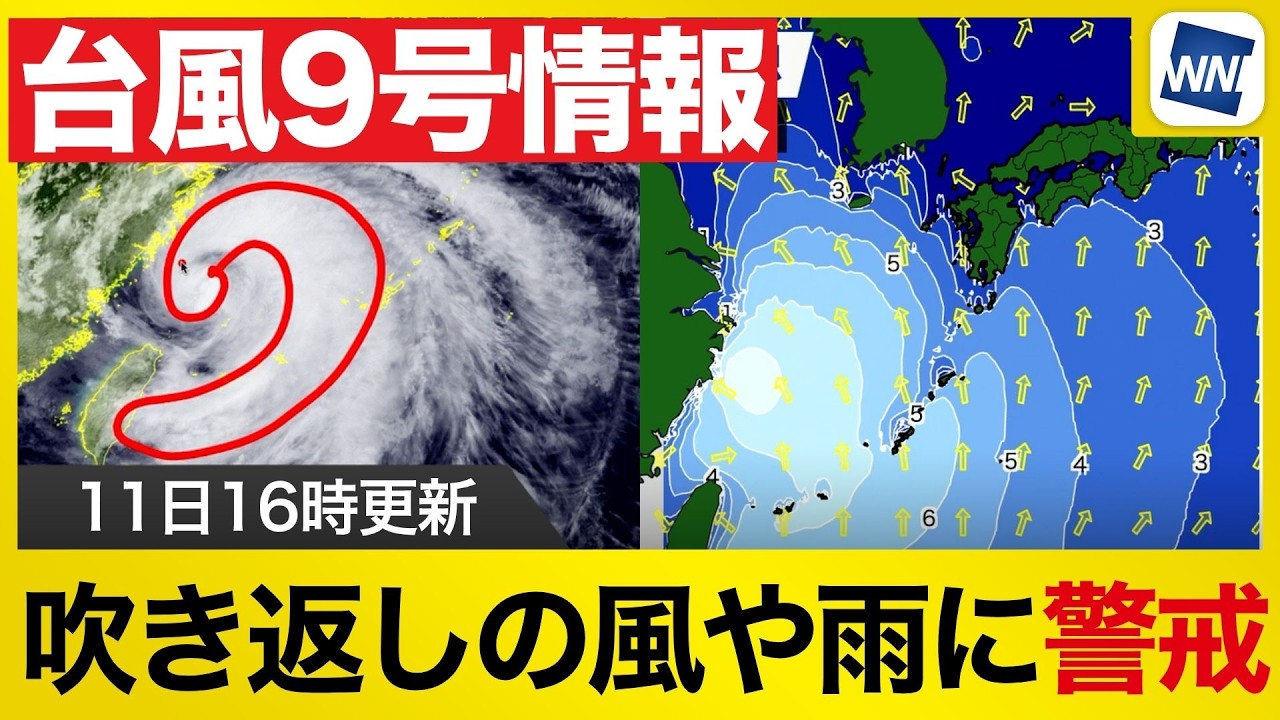
The large, strong typhoon made its closest approach to Okinawa Prefecture’s Sakishima Islands on Saturday morning before moving northward. By 4 p.m., the storm was estimated to be about 270 kilometers north of Yonaguni Island over the East China Sea, moving north at 30 kilometers per hour with a central pressure of 950 hectopascals.
Miyakojima recorded a maximum instantaneous wind speed of 42.7 meters per second shortly before 10:30 a.m., causing extensive damage across the island. Street trees were uprooted, power lines were snapped, traffic mirrors were torn from their bases, and banana trees, one of the island’s well-known agricultural products, were bent and broken by the powerful winds.
Heavy rain also continued. Shimajiri on Miyakojima recorded 194 millimeters of rain over 24 hours, while rainbands extending south and southeast of the typhoon continued to produce intense downpours even after the center moved away.
On Ishigaki Island, fallen trees blocked sections of a prefectural road, while communications problems affected the island’s weather radar, forcing forecasters to rely on radar data from Taiwan to monitor the storm.
Power outages affected about 26,000 households across the Sakishima Islands. On Japan’s westernmost inhabited island of Yonaguni, native Yonaguni horses were seen stranded in exposed areas after losing shelter from the storm.
More than 300 flights to and from Okinawa were canceled by multiple airlines, affecting over 45,000 passengers. Some flight disruptions are expected to continue on July 12.
Although the strongest winds have passed the Sakishima Islands, authorities warned residents not to let their guard down. The islands are expected to leave the typhoon’s storm-force wind zone between about 5 p.m. and 6 p.m., but active rainbands are forecast to continue affecting especially the Miyakojima area until around dawn on July 12. Forecasters warned that localized violent gusts, including possible tornadoes, as well as short periods of very heavy rain, remain possible.
Waves higher than 9 meters are forecast to gradually shift northward with the storm, while seas of more than 6 meters are expected to continue around Okinawa and the southwestern islands through July 12. High waves of around 3 meters are also expected along parts of the Pacific coast of western Japan.
Authorities warned that severe winds and rain could continue to cause major damage to power infrastructure and buildings, urging residents to remain indoors and prioritize their safety until conditions improve.
While Okinawa faced the typhoon, much of Japan endured dangerous heat as the Pacific high-pressure system expanded northward, covering much of the country with warm air.
Dazaifu in Fukuoka Prefecture recorded 39.3 degrees Celsius, the highest temperature observed anywhere in Japan this year and just below the 40-degree threshold regarded as extreme heat.
Other parts of northern Kyushu also experienced intense temperatures, including 38.3 degrees in Hita, Oita Prefecture, 38.1 degrees in Kurume, Fukuoka Prefecture, and 36.9 degrees in Yatsushiro, Kumamoto Prefecture.
In Kumamoto City, temperatures had already exceeded 36 degrees by 10 a.m., while many people sought relief using neck coolers and public cooling stations. A visitor from Singapore remarked that the cooling equipment made the heat bearable.
Even the Kanto region, where the rainy season has not yet ended, experienced oppressive conditions. Kumagaya in Saitama Prefecture, which set Japan’s then-record high of 41.1 degrees in 2018, reached 34.1 degrees on July 11, with misting systems operating near the station and in public parks to help residents cope with the heat.
Source: ウェザーニュース
Disclaimer : This story is auto aggregated by a computer programme and has not been created or edited by DOWNTHENEWS. Publisher: newsonjapan.com







