In a series in which there is still a great deal of secrecy regarding how much the riders earn, what the manufacturers pay or what the championship itself distributes, the arrival of a new American owner, a culture in which talking about money is not taboo, will end up bringing greater transparency about what, how and who pays for various things.
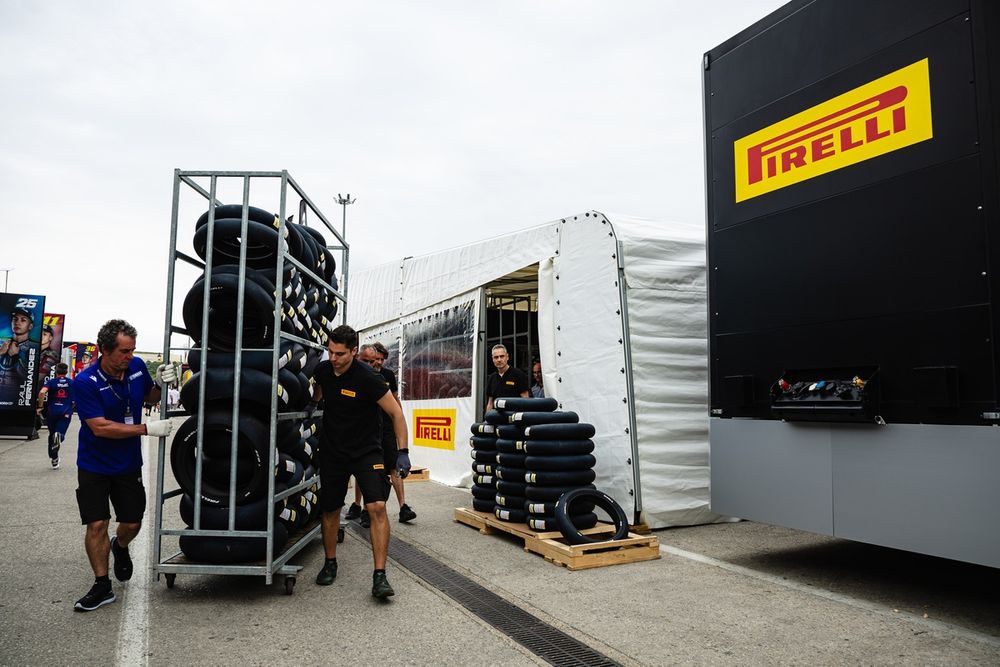
One of the biggest expenses in any motorsport championship is tyres. In the past, there was competition between manufacturers, which drove up investment and spending. But for several years now, there has only been a single supplier in competitions such as Formula 1, NASCAR, IndyCar, World Rally Championship, World Superbike Championship and, since 2009, in MotoGP.
The first manufacturer to become the exclusive supplier to the motorcycle world championship was the Japanese brand Bridgestone, which took on the challenge between 2009 and 2015; it was followed by the French company Michelin, which joined in 2016 and will complete its 11th and final season this year. In 2027, with the arrival of the new technical regulations and the 850cc bikes, Italy’s Pirelli will take over, becoming not only the sole supplier of the premier class, but also of Moto2 and Moto3 – thus covering the entire spectrum of the world championship.
At this point, it is a good time to reveal some questions that fans have always asked: Does Pirelli pay MotoGP to be the supplier, or is it the other way around? Who pays for the tyres? And how much does a premier-class tyre cost?
Do the teams pay for the tyres?
Motorsport.com spoke with Giorgio Barbier, Pirelli’s motorcycle racing director, to try to obtain reliable answers to all these questions.
“In every motorcycle competition or Formula 1, in every one of them, the tyre manufacturer pays the promoter,” the Italian executive explained when asked about the existence of a fee, but with nuances. “I understand the manufacturer saying: I am the sole supplier to MotoGP and I pay a fee. Six million, for example. But then I add: all the tyres cost me 36 million. And you pay those 36 million.”
Pirelli tyres
Photo by: Pirelli
How? That is the question. Barbier warned that there will not be a clear answer.
“They are negotiations,” he said. “That is part of the agreements with the promoter. Because one thing is the cost of the tyres, but there is also the service, the personnel, the whole organisation. They are significant costs. The fee is one thing. Then there are all the ancillary costs, which are also significant. How you have to organise yourself at the factory, the processes, and so on. Then you can say to the promoter: Will you help me cover part of these costs? Or: This is the amount of the costs and this is the fee. They are negotiations.”
And then there are the teams. Do they pay for the tyres?
“In Superbike, they do,” explained the executive, after being asked whether MotoGP teams also pay for the tyres. “In MotoGP, at this moment, it is not envisaged. That happens in Moto3 and Moto2, but in MotoGP, it is not envisaged.”

Giorgio Barbier, Pirelli MotoGP director with Marco Bezzecchi
Photo by: Pirelli
Can you put a price on a MotoGP tyre?
The Italian manufacturer produces and sells racing tyres to its customers, the same ones that are used in SBK. However, MotoGP prevents it, by contract, from marketing its tyres. The reason is simple: the championship requires a specific tyre that cannot be purchased anywhere, because it does not want teams to be able to buy them and carry out testing on their own.
Control, in that sense, is strict, which is why manufacturers are allocated a limited number of units for testing during the year, ranging from 170 to 260, depending on the concessions ranking.
“We cannot sell MotoGP tyres, but we can guarantee our customers that Pirelli’s sport tyres are made by the same engineers and technicians, at the same plant in Breuberg (Germany) where we produce the racing compounds, and with the same sporting spirit that characterises our brand,” Barbier explained, although he cannot give us the price of a single tyre.
“Obviously, I cannot tell you the exact price, but I can give you a clue: How much does the tyre on your bike cost?” the executive asked. A Diablo Superbike rear tyre costs around 300 euros.
“We make the MotoGP prototypes on the same machines and in the same factory where we make that tyre (the 300-euro one). I only change the materials. I may change something in the process. But my cost will never be hugely different,” he said, offering the final clue.
We want your opinion!
What would you like to see on Motorsport.com?
– The Motorsport.com Team
Disclaimer : This story is auto aggregated by a computer programme and has not been created or edited by DOWNTHENEWS. Publisher: motorsport.com