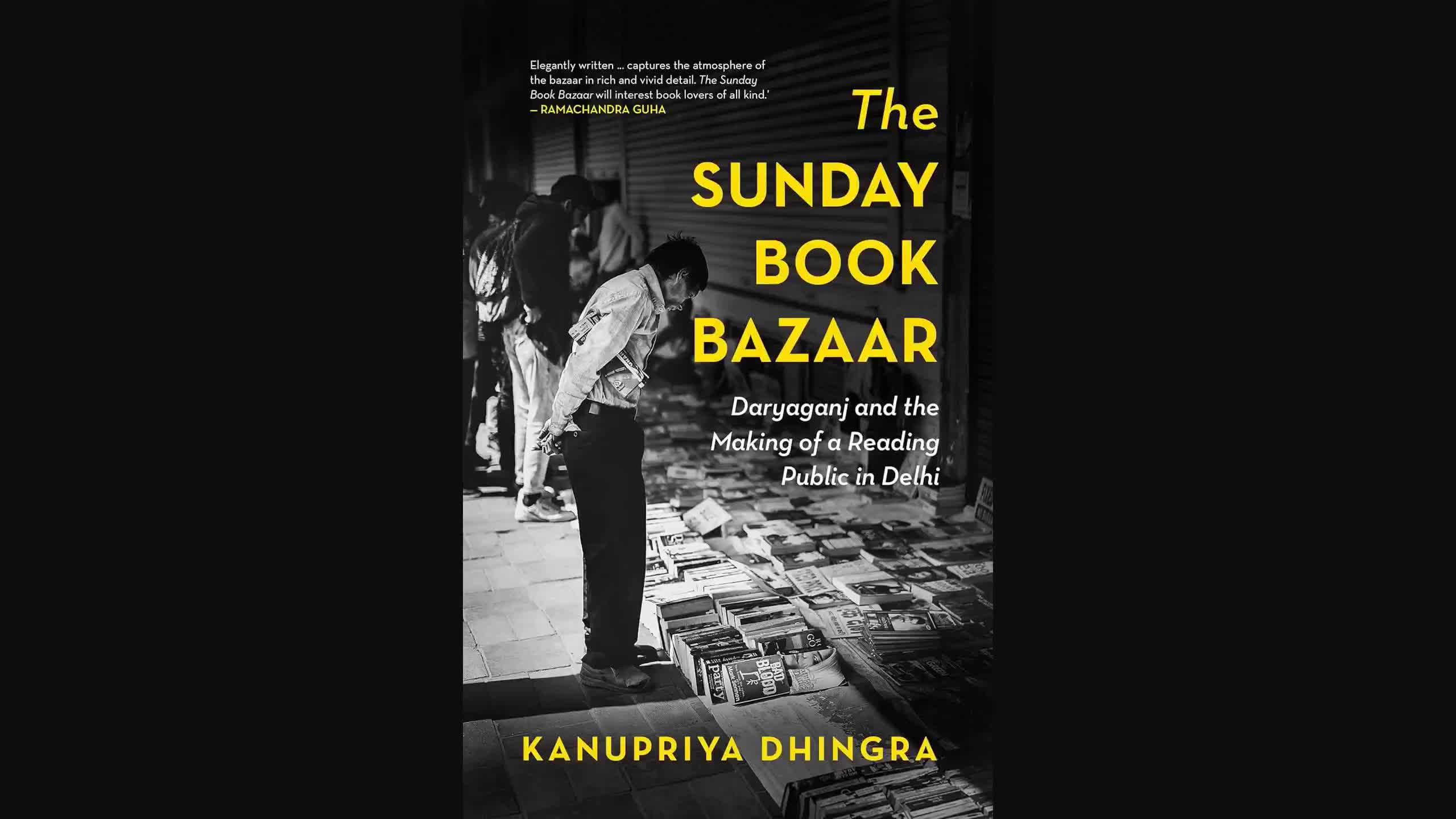
For older readers, this book is pure nostalgia, for it harks back to times when books were rare and precious. Old books spread out on the pavement near Flora Fountain on weekends, old books on staircases off Church Street and on platforms in Chickpet in Bangalore on Sundays… A whole generation of middle-class city-dwellers got their reading at places like these. Every city had a street or neighbourhood where you could spend your Sundays with books without having to empty your wallet for them. There were the weekday shops — Shop Number 42, Shankar Market, for example — or book fairs such as the ones at Delhi’s Pragati Maidan, but the Sunday markets were the ones that mattered. For the middle-aged, born in the 1970s and 1980s, in a country not quite as poor as it was before the economic reforms of the early 1990s, this book triggers memories. Yet to most youngsters who began reading in the digital era, well, it might mean little, if anything at all.
Delhi had the biggest and most varied of these Sunday book markets, and the most notable Sunday book market was in Daryaganj, the ‘Daryaganj Sunday Patri’. Few would be more qualified to write about this than Prof Kanupriya Dhingra, whose PhD thesis was on Daryaganj’s parallel book culture.
Dhingra traces the genesis and growth of this market from the 1950s, not long after Independence, when publishers began to set up shop in Daryaganj market, an old commercial hub in Shahjahanabad, the capital of the Mughals. There were few shops to begin with, but as literacy grew, so did the need for books. But books were expensive, and hence the demand for cheap, used books. The growth in universities in the 1950s and 1960s and even after pushed the growth spiral ever outwards and upwards. Small vendors turned up and set up stalls for second-hand books, growing until they occupied a kilometre of pavement in the Sunday market.
Perhaps the most important thing about this market — more so, perhaps, than similar markets in other cities — is that it shaped Delhi’s reading habits over the decades. In 2019 it shifted from its original venue, Netaji Subhash Road, to Mahila Haat. And the crowds kept coming.
But things are no longer the same. There are digital books, digital libraries, that offer convenience and ease of reading: no missing pages, no words blurred by stains, no dog-ears… Yet there are those who come despite the ebooks, including a student who finds reading on screens a strain. Besides, he finds that using paper books increases his attention span, a crucial ability for a student, or perhaps anyone.
But vendors there, like vendors everywhere, come for profit. Their experience counts. They know publishers, authors, titles. Like cynics, they know the price of every book they carry, but perhaps not its value. That drives the market.
Dhingra’s writing is a bit academic, but clear enough, and competent. Perhaps the progress of the digital age will, over the years, stamp out the very notion of a second-hand book. But even then, this book will carry the memories of many generations of readers who found their lives shaped by cheap, accessible books on crowded Sunday pavements.
The Sunday Book Bazaar: Daryaganj and the Making of a Reading Public in Delhi
By Kanupriya Dhingra
Speaking Tiger
pp. 311; Rs 599/-
Disclaimer : This story is auto aggregated by a computer programme and has not been created or edited by DOWNTHENEWS. Publisher: deccanchronicle.com