
When life in Germany starts to feel a bit too serious, a trip to one of these places can be a good way to remind yourself it doesn’t have to be.
Germany doesn’t have a reputation for being a nation of jokers. But scattered across its maps are place names that will make English speakers do a double-take — and then giggle and maybe stop for a selfie next to a road sign.
Here’s a tour of the country’s most unintentionally hilarious spots, and the history behind each one.
Rimsting
We were itching to start with this one.
An hour outside Munich on the shores of Lake Chiemsee, this small village in the Rosenheim district has a name that is certain to induce a chuckle and perhaps a wince from English speakers.
Its claim to fame, though, is rather more dignified: Pope Benedict XVI’s mother grew up here and once worked as a cook in the local lakeside hotels.
Mount Wank
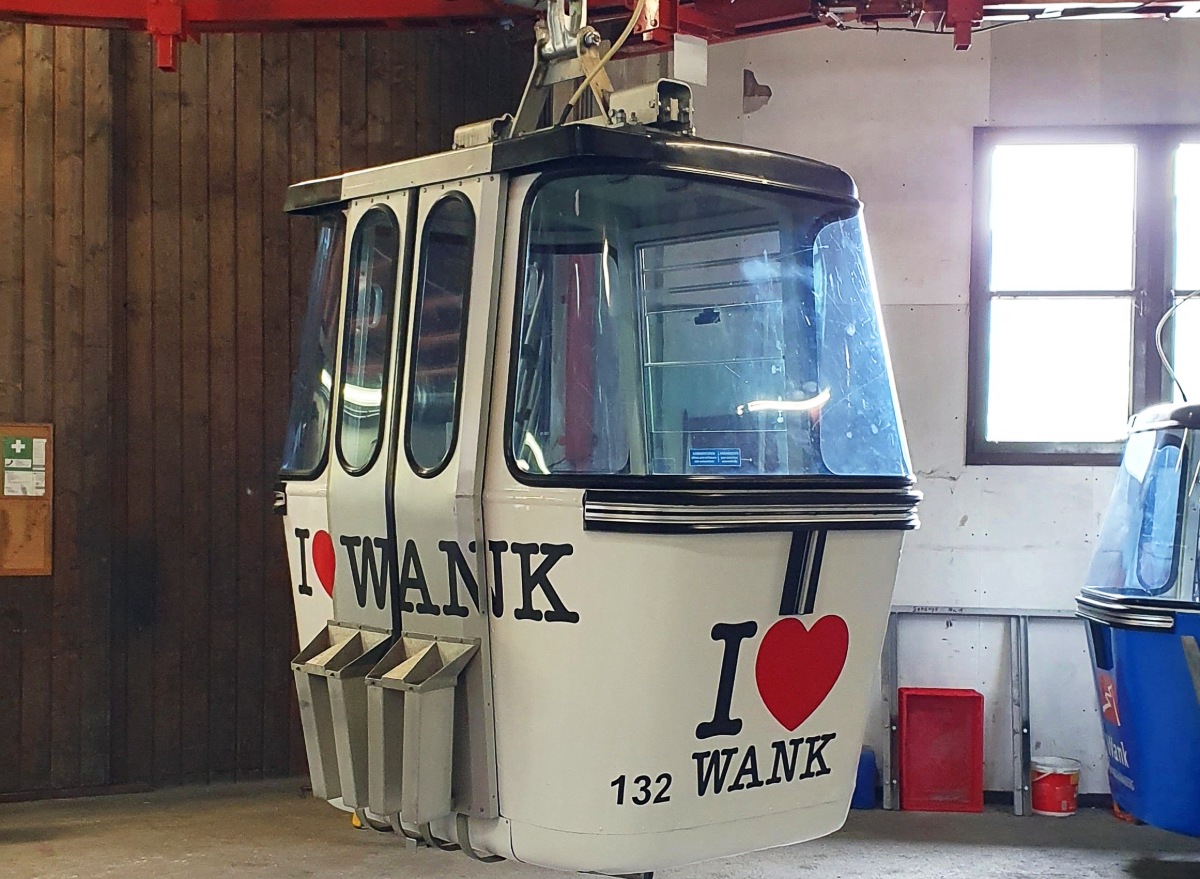
Standing at 1,780 metres in the Bavarian Alps, Wank is easily reached by cable car via the Wankbahn if you’d rather not spend too much energy climbing it.
Unfortunately, the joke is lost in conversation with the locals, who pronounce the name closer to something like “vunk”.
But this hasn’t stopped a steady stream of English-speaking tourists posing for photos beside every “Zum Wank” sign they can find.
READ ALSO: ‘I love W*nk’ – German ski resort’s ad campaign banned at world cup
A gondola of the Wankbahn with the controversial slogan “I love Wank” which was proposed before an Alpine Skiing World Cup event. Photo: picture alliance/dpa/Bayerische Zugspitzbahn
Bad Kissingen
This spa town in Lower Franconia dates all the way back to the year 801 and built its reputation on healing mineral springs.
READ ALSO: Germany’s best ‘Kur’ towns for wellness and why you should visit
More recently, it hosted the Chinese Olympic football team ahead of the 2008 Beijing Games, and the German-Chinese Football Academy set up there is still going strong.
Titz
Tucked into North Rhine-Westphalia near the Dutch border, Titz covers a modest 69 square kilometres.
Someone in the local government may, or may not, have a sense of humour, as one of its districts is officially named “Spiel” — German for “game”.
This means that addresses in the area become, quite literally, Titz Spiel.
Weener
Found in the district of Leer, this small but perfectly formed city sits on the River Ems close to the Dutch border.
Its records stretch back to the year 951.
Wangerland
Not content with an eyebrow-raising name alone, Wangerland’s coat of arms features a topless mermaid.
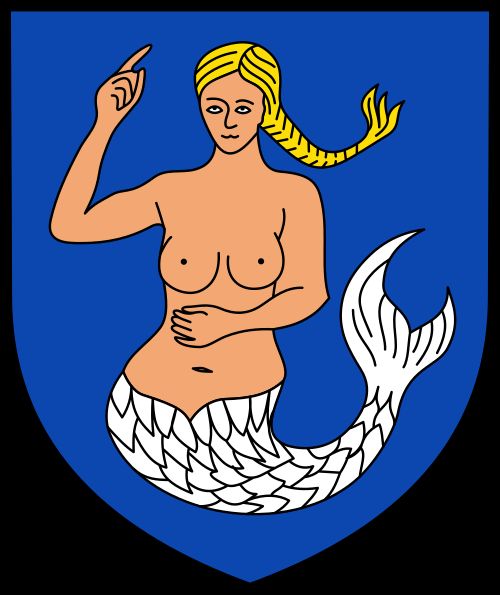
Coat of arms of the city of Wangerland. Image via Wikimedia Commons.
Set in the far north near the North Sea, not far from Bremen and Hamburg, the area’s first settlements go back to the 2nd century BC.
Titisee
This iconic high-altitude lake in the Black Forest spans 1.3 square kilometres and reaches depths of around 20 metres. It’s located between Freiburg and Donaueschlingen and is a popular regional destination both in summer and winter seasons.
Even Germans find the name a bit odd — theories trace it either to a local nobleman named Titini or to the Roman general Titus.
Wankum
A short drive off the A40 autobahn, Wankum draws more than its fair share of English-speaking visitors eager to snap a photo under the “Welcome to Wankum” sign.
Wankum Germany 2013. Hanging. pic.twitter.com/nqTLcHUhif
— Sleaford Mods (@sleafordmods) November 5, 2021
It’s part of the Wachtendonk municipality, not far from Titz. Sounds like a decent day trip to us.
Fahrtgasse
Not every entry on this list is a village; Fahrtgasse is a street — a major one, running through Heidelberg, home to Germany’s oldest university.
It sits near the River Neckar in the city’s shopping district, right by one of Heidelberg’s main public swimming pools.
READ ALSO: Weimar to Heidelberg – The best German university towns for foreign students
Bonus round: Names that are funnier once you translate them
-
Pups (pronounced like the English “poops”): Translating to ‘farts’, Bavarian residents field endless jokes about wind, but the name actually traces back to a Roman settler called Pupis. Going by German naming conventions, a resident here would be a “Pupser“(farter).
-
Drogen: This Thuringian town, whose name quite literally means ‘drugs’, has such a problem with people stealing its yellow road signs that it now installs replacements two metres up, out of easy reach.
-
Linsengericht: More of a wholesome one, this town’s name literally translates to “lentil dish”. Located in Hessen, the area was genuinely famous for its lentil fields.
-
Kotzen: Sadly not the nation’s binge-drinking capital, the name Kotzen actually has nothing to do with the German verb for “to vomit.” It was originally recorded as “Cozym,” from a Slavic root meaning something closer to “wisps of hair.”
READ ALSO: 14 German towns with hilarious literal translations
Etymology aside, if life in Germany can seem serious at times, at least you can always count on its place names to crack a smile.
Disclaimer : This story is auto aggregated by a computer programme and has not been created or edited by DOWNTHENEWS. Publisher: thelocal.de





