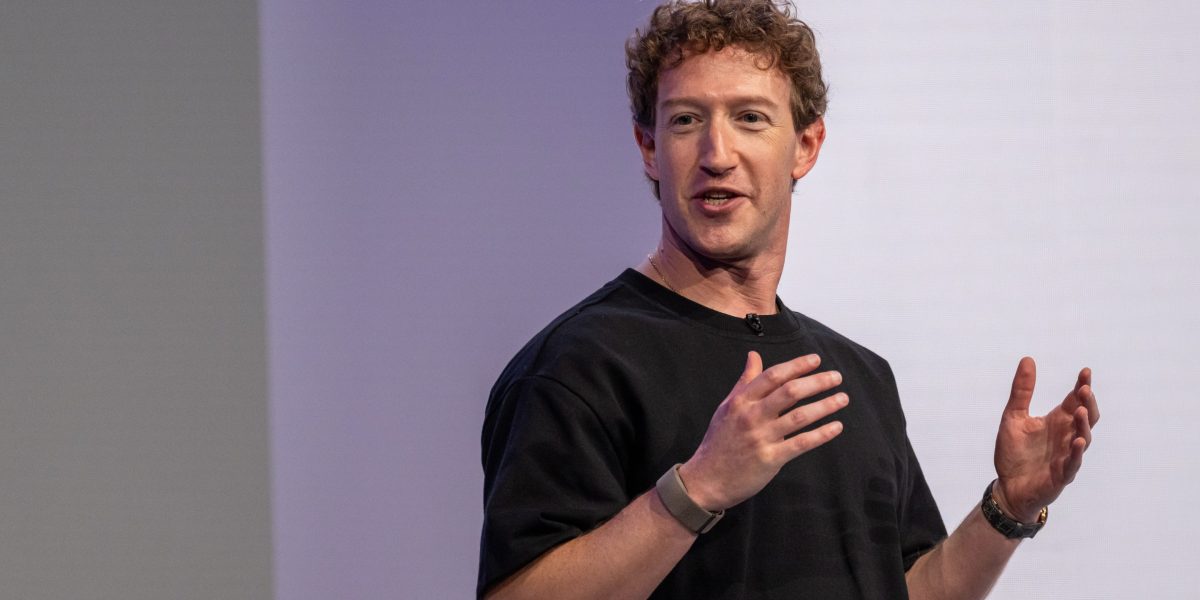
Good morning. Phil Wahba writing this morning from New York. Earlier this week, Meta founder and CEO Mark Zuckerberg published a few of his thoughts. Specifically 6,500 words outlining ways to spread the wealth and opportunity from AI to all people, including skeptics such as residents of communities that host data centers.
That word count made the piece about one-tenth the length of the average novel—and 10x his article on Personal Superintelligence a year ago.
And Zuckerberg is not alone: Anthropic CEO Dario Amodei delivered the longest piece in this genre so far in 2024 with his 13,000-word “Machines of Loving Grace” essay, while Nvidia’s Jensen Huang has also joined in, as have other AI CEOs. The official explanation is high-minded: with Wall Street scrutinizing Meta’s tens of billions in spending and rival labs racing for dominance, these founders want to lay out their vision in exacting detail and bring regulators and the public along. As Columbia Business School professor Dan Wang told me, “They have to draw the boundaries around why AI can be useful even before they begin selling products.”
But there’s a less flattering read, and communications specialist Patrick Riccards put it best. “CEOs, particularly tech CEOs, believe that their words are gospel,” he told me. These essays, he says, are flags planted in the ground: “You essentially have five or six tech CEOs that are trying to demonstrate whose…[shall we say essay] is bigger.” In our era of short attention spans, that raises an obvious problem. Do people other than AI titans even read these? And if not, what’s the point?
For a model of what leadership via long form can actually look like, it’s useful to examine the master of the genre. Warren Buffett went long in his annual letters to Berkshire Hathaway shareholders—often 10,000-plus words, deep on the year’s lessons and the company’s results, sprinkled with folksy wisdom. But the length was never the point. Buffett wrote to be understood by anyone; he famously drafted his letters as if explaining the business to his own sisters, smart people who happened to be outside finance. People didn’t read him because he wrote a lot. They read him because he’d earned the right to be heard, over decades of results, and then chose to be plain about it. (His successor Greg Abel’s first letter as CEO this year followed that tradition.)
And there’s the distinction. Buffett knew exactly who his readers were. Zuckerberg, Amodei and the rest are writing to each other—a closed loop of founders, investors and the reporters who cover them, each essay answering the last. But is that the right audience? Zuckerberg is facing heat from the public who are wary of data centers in their communities and low on trust for Big Tech. A 6,500-word manifesto seems unlikely to change their minds. If there’s one lesson any CEO can take from Buffett, it’s that the writing is easy—earning the right to be read is the hard part.
Contact CEO Daily via Diane Brady at diane.brady@fortune.com
Top leadership news
Traders pay for Trump posts
Trump Media has signed up nearly a dozen customers, including high-frequency trading firms, for a service that provides early access to President Trump’s Truth Social posts for up to $100,000 per month. NYU Stern economist Gian Luca Clementi told Fortune, “This is insider trading by definition.”
Canva cuts growth forecast
Canva lowered its expected revenue growth rate to 20% after unexpectedly high AI-delivery costs forced it to slow its rollout, despite demand for the new tools exceeding expectations. CEO Melanie Perkins told Fortune the company chose to “slow the rollout while we rebuilt the architecture, reduced unit costs and strengthened the business model” rather than release a product before its economics worked.
Economy is a ‘mess’ despite inflation relief
Consumer prices rose 0.1% in July and 3.4% over the past year, matching expectations, as lower energy prices offset other price pressures. KPMG chief economist Diane Swonk wrote that the “economy is a mess,” warning that higher fuel costs could become more apparent in August’s report.
The markets
S&P 500 futures are up 0.097% this morning. The STOXX Europe 600 was up 0.11% in early trading. The U.K.’s FTSE 100 was down 0.41% in early trading. The Nikkei 225 is up 1.16%. South Korea’s KOSPI was up 3.56%. China’s CSI 300 was down 0.57%. Hong Kong’s Hang Seng was down 0.25%. India’s NIFTY 50 was down 0.34%. Bitcoin is slightly up at $63,788.
Around the watercooler
The majority of U.S. employers say they plan to increase hiring this year—these are the top roles they’re looking to fill by Emma Burleigh
Bob Iger and Josh Kushner buy the LA Lakers for a record-breaking $12.5 billion, up 21% in just the 14 months since Mark Walter bought them by Catherina Gioino
Japan and the U.S. just spent billions to try to save the yen. Why is it already losing ground? By Nicholas Gordon
Nvidia found a new way to keep the AI boom funded: your retirement money by Eva Roytburg
CEO Daily is curated and edited by Joseph Abrams, Jason Ma, Claire Zillman, and Lee Clifford.
Disclaimer : This story is auto aggregated by a computer programme and has not been created or edited by DOWNTHENEWS. Publisher: fortune.com