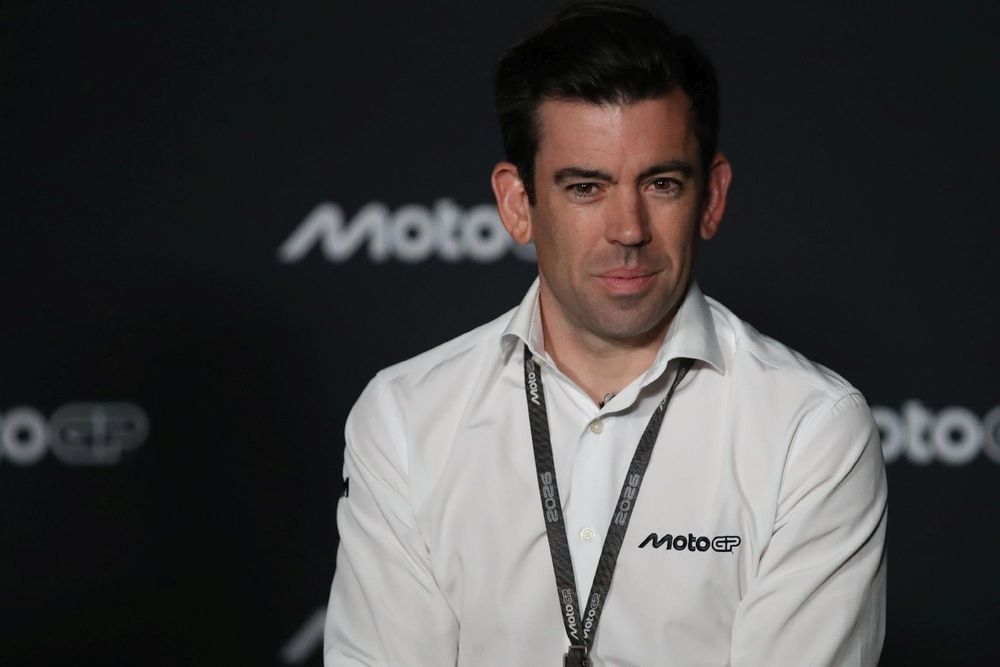
Motorsport.com: Are you satisfied with the expansion process that MotoGP has set out?
Carlos Ezpeleta: People tend to immediately think about the number of races when we talk about the global footprint, but the business is much broader than that. This year, we have 14 events in Europe and eight outside Europe. Next year, it will be nine and 13, and I think that figure will probably balance out at 50-50 fairly soon.
It makes sense to me: from a global perspective, we are overrepresented in southern and central Europe, but the reality is that many of those grands prix are very successful. So, we also want to reassure fans that we will remain faithful to our historic events and to the major races that have attracted so many people for decades and have been part of building MotoGP.
In terms of the numbers, I expect them to reach a 50-50 balance fairly quickly, within two or three years. From there, I would make one point: it is not just about the races, but about how we build a fanbase in different regions of the world. It is not simply ‘Europe and outside Europe’, but the northern and southern hemispheres, the western and eastern hemispheres.
You cannot do everything at once, especially because of the different time zones in which the races take place, which is something we study very carefully. We are focused on expanding our audience in the UK, the US and Southeast Asia. As you build the sport and the brand, doing many things at the same time is quite difficult. We need to make sure we have a presence throughout the year as we develop these markets, because if you go somewhere, hold one race and then disappear from that market, it is very difficult to build a continuous fanbase.
You cannot have a thousand priorities, and these are the ones we have set ourselves. Having said that, we do see it as extremely important to grow outside the markets where we are already established.
MS: If you compare the championship we have today with the one we had five or six years ago, what do you think has been the biggest cultural change?
CE: Within the company, there has been a clear push in the way we look at things and how we set out to do them. I think there has been enormous internal evolution in our organisation from just before the pandemic to now. Starting with the people sitting around the table, of course, where there have been many changes. This year has definitely focused on recruitment and strengthening MotoGP’s management level, making it more international. I think that has been a very clear message, not only within the company but throughout the paddock: we want to bring people from different backgrounds, cultures and countries into MotoGP – as the global property that it is. Also, the mindset, particularly with the new ownership, Liberty Media, is about looking at how we build a premium intellectual property and how we project MotoGP with a three- or five-year vision. That is quite different from the ownership strategy we had before.
We are looking at things from a long-term perspective now. We are in a hurry to lay the foundations for that, but every decision is made with the question: ‘What does this bring to MotoGP in the long term?’
Our focus had been very much on pure competition: how to make the sport safer, more exciting on track, working on TV production, the teams and the technical regulations. That will always remain a priority because we want to continue to be the best motorsport in the world. However, the commercial, marketing and promotional efforts, and how they align with the vision of building MotoGP globally, are becoming increasingly present in our day-to-day work.
Carlos Ezpeleta spoke to Motorsport.com at the British Grand Prix
Photo by: Gold and Goose Photography / LAT Images / via Getty Images
MS: If we take the new 2027 regulations as a reference point, do you see that as the beginning of a new era in MotoGP, both on- and off-track?
CE: Every time I am asked about 2027, I always make a point about the current year, because I think it is important to talk about the present. Can I refer back to the last time you asked me that question in Kuala Lumpur? You said to me: ‘I fear this year is going to be very long for many people and that everything will be decided by September.’ And I told you: ‘Look, I’ll tell you one thing: I have a similar feeling, but there is something that always happens in MotoGP, which is that what you think is going to happen in February never happens. At least you might get one rider right, but you won’t get everything right.’
Here we are, eight months later, and we definitely have a hugely exciting championship. When talking about 2027, I always want to be respectful of the current year, because the riders are out there fighting tooth and nail in an incredible season. Unexpected protagonists have emerged, both in terms of teams and manufacturers and riders, and we are delighted. All of this is the result of the work done by the teams and riders, but also of the overall technical regulations and how everything is designed.
As for 2027, of course everyone is as excited about it as they are about 2026. I would say the technical regulations matter, and the change of tyre supplier is an additional factor that shakes things up in the way manufacturers design their bikes and riders ride them. They will have to wipe the slate clean. I would be surprised if everything were turned upside down compared with now; the riders and teams at the front will probably still be there. But I do think it is a new era on track, one that many people will remember.
Visually, the bikes without the ride-height devices and launch systems, all together, will represent a major change in the way riders have to manage them and in how fans enjoy them. On the commercial side, we are hiring quite a lot of people and restructuring our organisation. All of that together marks a new milestone. That said, from our commercial and promotional side, things take time. You bring in new people and they have to learn the sport. It is essential that anyone who joins MotoGP learns this discipline and what it means to the fans, and remains authentic to that as we move forward. We do not want to change MotoGP or its personality, just enhance its global presence.
MS: The new commercial agreement with the teams and manufacturers will shape the next five years. How difficult was it to reconcile the different realities into a single path?
CE: To be honest, I would not say it was extremely difficult. It was a negotiation that is at the core of our sport, stemming from our agreement with the FIM. I think it is normal that, following Liberty Media’s acquisition, the manufacturers – who are the ones actually investing in the sport – and the teams – which are the fundamental pillars of competition – wanted to understand the vision behind MotoGP: what the strategy is, how Liberty Media sees the evolution together with MotoGP Group, how we are going to invest and, from a technical perspective, how we approach things from a governance standpoint.
We are fortunate to have the five best manufacturers in the world in our paddock, five names that anyone who knows what a motorcycle is will recognise. They are very different from one another, which is great for us and for everyone, but they clearly differ in size, structure, objectives and technology. They also have different budgets, so bringing them together and aligning them around a common vision of how to move forward was important. There is a shared interest, vision and ambition among everyone: this is the potential the sport has.
We do not want to change the sport; the competition is the best in the world thanks to what we have built together over the past decades. The question now is how we can take that to a broader audience together. That has been the main focus of the conversation.
Watch: Full Interview: Carlos Ezpeleta Reveals Key Points on MotoGP Future
MS: You mentioned the acquisition by Liberty Media. Has Liberty changed the way the championship measures success?
CE: Yes, I would say that Liberty Media and the people we now have around the decision-making table have changed the level of ambition we set for success. In terms of how we measure it, there are the usual KPIs – key performance indicators – of any company, but there are more factors at play in how we see ourselves, our brand, our presence and our perception. All those non-financial and less direct indicators are now very important, both to Liberty and to us. So yes, there is definitely an expectation and a level of sophistication that MotoGP did not have before.
MS: Are commercial metrics becoming as important as sporting ones when evaluating new projects?
CE: I would say that only applies to the choice of a new destination – a grand prix venue – because a race or its location are the only agreements or projects that have real sporting implications, unlike a deal with a media partner, for example, which has visibility and commercial implications. When looking at the business as a whole, with every option on the table, you assess several factors before making a decision: either it is obvious, or you measure it. Or the decision represents an investment – which can take many forms, such as accepting a lower rights fee for media or sponsorship in exchange for greater presence and visibility.
I would say that, compared with the past, the purely financial aspect now carries slightly less weight, while greater priority is given to what something brings to MotoGP in the long term, how many fans we believe we can attract and the impact on the brand’s global presence and perception.
On the sporting side, it is quite black and white: does it meet the safety standards and everything we want to achieve? That is not a choice, it is a non-negotiable requirement. From a sporting perspective, we have done an incredible job of ensuring that we maintain an extremely high standard wherever we go in terms of safety, but also when it comes to the racing spectacle and every decision concerning the technical regulations. Every decision we make is always aimed at improving the competition.
MS: Let’s talk a little about Adelaide, which I think is one of the championship’s most ambitious projects of the past decade. How is the project progressing and how are preparations going?
CE: I agree that it is probably the most ambitious project we have undertaken. It will really set the tone for a new era in MotoGP, although we do not see the Adelaide project as something we are going to replicate 10 times a year. I think it will open people’s eyes around the world by showing that this is possible.
We are very optimistic. We have worked very closely with the South Australian Motorsport Board, its government and the city of Adelaide to get to where we are today. A lot of work has gone into the circuit and its layout, with an emphasis on how to design the best possible track within the existing constraints. From a safety perspective, which is non-negotiable, it will be safe. Once that was established, we looked at how to minimise the impact, improve the racing and everything else.
We are very proud of the work we have done with the FIM over the past decade. The tools we have now are very different from those we had 15 or 20 years ago. That is probably why we feel very comfortable having this conversation now, whereas previously everything was much more analogue when it came to safety run-off areas and so on. The race will be on next year’s calendar, the layout will be announced very soon, and the event will take place in the latter part of 2027. Expectations have been huge since we announced the agreement at the beginning of this year. The promoter has received hundreds of thousands of ticket reservations and the government’s popularity has risen since the announcement. We are very, very excited.

Other regions are now clamouring to host MotoGP
Photo by: Gold and Goose Photography / Getty Images
MS: Once the Adelaide project was made official, have any other cities approached you with a view to MotoGP’s future?
CE: We have been approached by cities all over the world. The Adelaide project opens up a major window of possibilities for other cities globally. There is anticipation; they want to see how the event develops in Adelaide, but there are already conversations taking place. Sometimes, when someone does not know the details and complexities of this sport, they read the headline and think you can put a circuit in any city, and that is not the case: you need a huge amount of space. But yes, there is enormous interest.
MS: Australia is very strict when it comes to environmental issues. How are you managing that?
CE: First of all, we have very clear environmental and sustainability targets ourselves. Next year we will compete with 100% sustainable fuel, we have reduced fuel tank capacity and we are doing a lot in terms of our logistics and operations. The environmental impact on the park [in Adelaide] has been a priority for us from the beginning. Everything we changed was offset somewhere else. For example, for every area of permanent asphalt that is installed, other areas will be turned into green spaces. There has been very meticulous work – and I think this is a credit to the FIM and the MotoGP team – to be very precise about where the track goes in order to minimise the impact, particularly on native trees, which is the most important thing.
Then, making sure that for those that need to be relocated, the net balance is positive by offsetting that through planting new trees elsewhere. All of this is part of a broader sustainability approach that we are undertaking together with the South Australian Government. We know there is a legal and legislative process that the South Australian Motorsport Board has to follow to approve all of this, and that is what is happening.
MS: With the calendar approaching its practical limit, how do you decide whether a track deserves a place on the calendar? What are the main criteria?
CE: First of all, it has to have a homologated circuit; that is an absolute requirement. Then, the reality is that we have 22 events and, as new ones come in, others will probably have to leave. I think the immediate objective will be how to balance that: we are overrepresented in Spain and central Europe, so that decision is fairly obvious. New destinations will come in, and some will have to leave simply because we have too much concentration in that area.
As we move forward and have 22 great events – each with its own personality, operating like a kind of mini Super-Bowl and selling out, which is the vision we have – the value they create for us will be fundamental. We do not shy away from the fact that we want to have a greater global presence, be closer to major cities and main airports where we can reach a new audience and have good hotel and hospitality infrastructure. It is about making things easier for the fan: when they are at the track, we need to offer them not only the best racing in the world – which we already have – but also the best possible experience. We will see more events of this kind joining the calendar.
There is also a desire and investment on our part to work with existing promoters and permanent circuits to ensure that they also improve the fan experience. The key is how to improve existing events while bringing in new ones.
MS: When Liberty Media made the acquisition, many people thought: “They want to achieve the same kind of success as Formula 1.” But F1’s growth is a unique case in the history of sport. With the pandemic, Drive to Survive and the end of the 2021 season, the perfect storm came together. Is there any specific commercial plan or major-impact initiative you have in mind that would move in that direction?
CE: I think it is more about a hundred or a thousand small things that, combined, build a brand and a premium intellectual property, which is what we are trying to do. With Formula 1, both Liberty Media and its team did a superb job; it is a growth story that does not happen very often in the history of sport. The Formula 1 team and Liberty certainly deserve a lot of credit. We are now fortunate to have many of those people on our board, because the names on the MotoGP board are impressive. We also maintain very close ties with Formula 1’s management, and having all that experience is extremely helpful to us.
Although there is no ‘playbook’ or guide, it is clear that these are two different properties with different fans looking for different things. However, the way of working and the opportunities in the digital world, merchandising, licensing, commercial and hospitality sectors are all there for MotoGP. We just need to execute them in a way that is authentic to our discipline. There is no desire to emulate Formula 1; this is not Formula 1 on two wheels, and that is not what we are trying to do. But among the things we want to implement, many have already been done by Formula 1; we will simply do them while retaining MotoGP’s own identity. We have a huge opportunity.
MS: MotoGP has opted for Rio de Janeiro for next season’s launch event. Are you happy with how this season-opening event has established itself almost as a tradition?
CE: The goal was to create a recurring event every year that we could continuously invest in. I think the teams and manufacturers are extremely happy with the evolution. We have only had two editions, but the leap from the first year to the second was very significant. The presence and iconic backdrop of the Petronas Towers in Kuala Lumpur, with MotoGP bikes riding through the streets, set a new benchmark. The reality – even beyond the conversation about Adelaide – is that the media loved seeing MotoGP bikes on the streets; it was incredible, and we were lucky with the weather.
It is a very good way of seeing the new bikes, riders and line-ups, and it allows us to expand our footprint beyond the races themselves. We are very happy with the huge impact it is having. We believe next year’s launch will be even bigger, and we hope to keep improving year after year.
MS: North America remains a strategic market, not only for MotoGP but for most sports in general. How would you describe MotoGP’s progress there?
CE: It is a strategic and important market for everyone. MotoGP is not FIFA. We have our size and we are very optimistic and ambitious, but there is a reality to what can be done and what investment can be made. Everyone is fighting for the North American market. The F1 story is something I think is difficult for any sport to replicate; other sports have been trying to do it for decades and decades. That said, we already have an engaged audience that we reach through our VideoPass or through TV broadcasts. When we broadcast the races on good platforms, we see very solid numbers of viewers watching MotoGP, as we have seen this year. We are also broadcasting some grands prix on Fox.
There is a fanbase and I think this sport could not be better suited to a young American audience. From a motorsport perspective it is the best there is, but it is also a young, athletic, dynamic sport that is very easy to understand. We are well positioned from a sporting and product perspective. We are also making significant investments in TV broadcasting to ensure an evolution towards a format that is even easier for new fans to understand. I think there is always the question of the presence of races and the possibility of a second grand prix in the United States, which we are certainly looking into. Again, you are limited by the existing circuits that are suitable for MotoGP, and there are not many of them. I also think there is interest from the market in seeing what Liberty Media is doing with MotoGP and whether this will become the next big phenomenon.
On the other hand, the United States is also complicated for us because we do not have that many races in the western hemisphere in terms of time zones. We are assessing various initiatives to develop that market, both through broadcasting and through sponsors and the whole ecosystem that helps you grow it.
MS: How crucial is that second race in the United States that you just mentioned?
CE: There is a lot to do in the US, with or without a second race. Even in Austin, there are still huge opportunities. A second race helps you go from having an impact one week a year to having it two weeks, so you basically double your presence in the market. But the real goal is to have MotoGP present in the United States 52 weeks a year. A second race is important, but I would say it is not crucial.
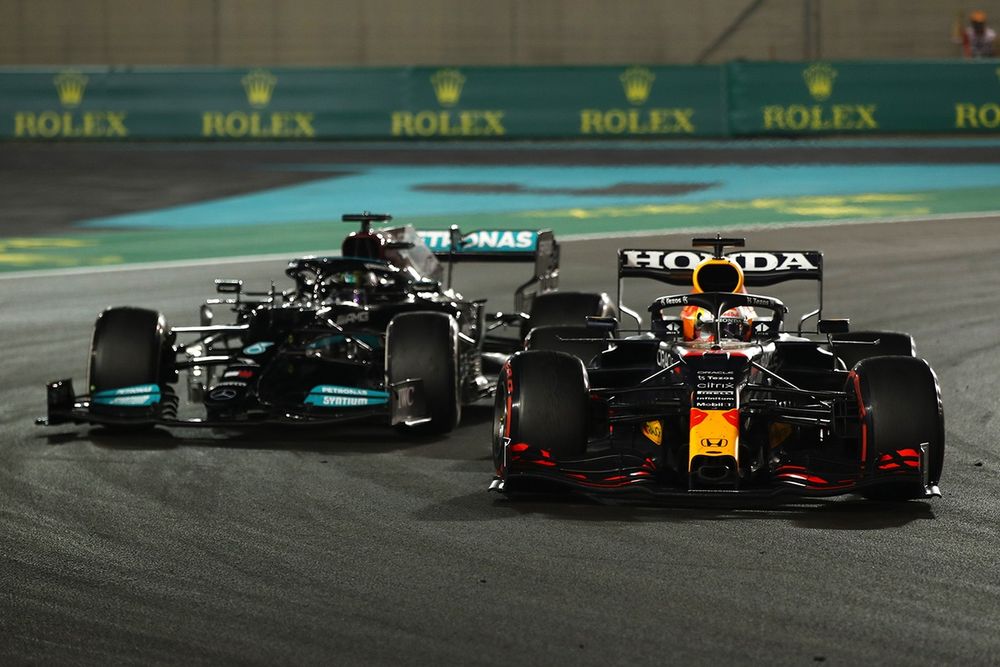
MotoGP is considering a budget cap similar to that imposed by F1 in 2021
Photo by: Joe Portlock / LAT Images via Getty Images
MS: We were talking about the regulation changes coming next year, and I remember we had this conversation a few years ago about the impact the budget cap had on Formula 1. Is it possible that something similar could happen in MotoGP?
CE: From our side, there is undoubtedly a desire to consider introducing a budget cap. However, I would make one qualification: I think Formula 1 needed it for different reasons. We do not have a problem on track, and I think it is very important to emphasise that. MotoGP does not have a problem when it comes to the racing spectacle, so a budget cap would not solve anything from a sporting perspective. In fact, we are now seeing some manufacturers with more modest budgets outperforming others. We have an incredible sport on track, fantastic racing, and I think everyone agrees on that.
What I do think is fundamental is to bring some logic to how we do things and why we do them, particularly on the manufacturers’ side. We want to implement a budget cap, and we have made that very clear to the manufacturers. It will be very difficult to reach an agreement; it is ambitious because manufacturers are extremely closely tied to their parent companies, which are often independent entities based elsewhere. They are deeply intertwined with their corporate structures, and they are all very different from one another. It is something we need to think about, but I believe where there is a will, there is a way, and I am sure we will achieve it together with the manufacturers.
In MotoGP’s history, we have never had a budget cap because I do not think there has been a need for one. What we have done very well is control the technical regulations to make sure that having deeper pockets does not automatically mean you win, because we have limited what can be done and invested. But in motorsport, if you are prepared to invest whatever it takes to win, you enter dangerous territory for everyone else in the competition. Because it does not just affect you; you drag the other teams and manufacturers into an endless escalation.
Putting a ceiling on that investment would allow us to create a level playing field. The reality of any sport is that, at the end of the season, only one wins: one team, one manufacturer and one rider. Full stop. But all 22 riders, 11 teams and five manufacturers have to be able to make a living from this. So far, they all have, directly or indirectly. But ultimately, it does not matter how much you spend; what matters is how much you spend compared with everyone else.
And it does not matter how fast you are; what matters is how much faster you are than the others. That is what we are trying to get everyone to agree on around the negotiating table. If we manage to reach an agreement and implement that budget cap, it will also help all the stakeholders invest in their commercial and marketing departments over the long term, because the technical side will have a defined ceiling.
MS: In any case, we have to assume that such a drastic change would only come once the current agreement expires, which is in 2031, right?
CE: Of course. Everything has already been agreed for the next five years. Any change would require consensus from all parties.
MS: And, as has become clear, that is not exactly easy…
CE: Yes, it is incredibly easy for all of us to agree (laughs). I mentioned earlier that Adelaide was an ambitious project; this is even more ambitious. We see the budget cap as a long-term project. Everyone has to get their heads around it; it has many implications, but it is something we genuinely believe is necessary. And again, we do not see it as a necessity to balance the sport on track, but as an exercise in financial logic.
MS: In Formula 1, it made a huge difference, because the budgets of the biggest teams went from more than $300 million to being capped at $145 million virtually overnight. How much scope is there in MotoGP?
CE: I do not like constantly comparing MotoGP with Formula 1. There are many sports that are doing very well, including MotoGP. But I would make several points. First of all, if we look at Formula 1 – and this is a dynamic I would like to see, and I think we will see it in MotoGP – there is the valuation of the teams. If you analyse the history of F1’s growth, where valuations have really exploded is in the teams themselves. Their value has increased dramatically in recent years, even faster than the championship itself. I think the budget cap deserves a lot of the credit for that.
Speaking from the outside and without being directly involved, I have heard several people who experienced its introduction in Formula 1 say that the biggest teams, which were the most reluctant at first, were ultimately the most grateful that it was introduced. Because, in the end, what makes the difference is not how much you spend, but how much more you spend than everyone else. If you can limit that, it is a logical decision. Previously, everyone complained about how expensive it was to compete; if you simply tell them, ‘Spend less and we will all get the same result,’ that is a huge advantage for everyone in terms of fairness – but also when it comes to attracting investment into the teams and their commercial structures.
Implementing it is not straightforward. It is not simply a case of saying, ‘Come on, let’s agree to spend a maximum of €50 million.’ It has to be drafted with extreme precision to ensure there are no loopholes. I have spoken to many people in the automotive industry, and it is something that has evolved and been refined over time. That experience is extremely useful to us. But we need to make sure we build a very robust legal framework: a genuine budget cap with no loopholes.
It will be a very long conversation with the manufacturers. We also need to listen to them to understand which areas of the bike they want to continue investing in and which have the greatest transfer to road bikes for their businesses. The motorcycle market is huge worldwide: how do they see that evolution? In which areas – whether engine, chassis or aerodynamics – do they want to retain proprietary knowledge that brings real value to their production bikes?
Bringing all of that together is extremely complex. However, I firmly believe there is an opportunity. You mentioned scale, but I think some manufacturers have significant room to reduce their budgets if we all agree to do it in a sensible and fair way for everyone.
Finally, our MotoGP fans are very knowledgeable about the sport and mechanics; a large part of our fanbase is extremely passionate and has a deep understanding of the technical side. The way we would implement the budget cap would not change the essence of the bikes, but it would slow down the pace of excessive development and innovation.
The reality is that, unlike four-wheel racing, we have an insurmountable limit, which is safety. The budget cap helps in that respect: the lap times at Silverstone were crazy. And that is despite people saying that the 2025 and 2026 bikes would be very similar.
Some will argue that advances improve safety – for example, that the ride-height device improves stability – and that is true: the rider comes into the box, highlights a problem and the brightest engineers in the world solve it. They will tell you they have made the bike safer, but the reality is that they have made it faster. And faster means that, because a rider’s natural instinct is to always ride at the limit, crashes happen at ever-higher speeds every year.
That is why all of this makes sense: we need to bring some logic to development because we cannot allow the bikes to reach 400 km/h. We have to be conscious of that, because circuits cannot be made bigger indefinitely.
We want your opinion!
What would you like to see on Motorsport.com?
– The Motorsport.com Team
Disclaimer : This story is auto aggregated by a computer programme and has not been created or edited by DOWNTHENEWS. Publisher: motorsport.com