In 2002, Dan Evans’ first season as the Dodgers’ general manager, the team won 93 games. This sounds preposterous today, but the Dodgers had not won more games since 1988, the Kirk Gibson year.
In 2003, the Dodgers won 85 games, with a minor league system on the rise and a front office Evans had staffed with Logan White, the scouting guru who drafted Clayton Kershaw, and future general managers Kim Ng and A.J. Preller.
For Evans, that was the end in Los Angeles. Frank McCourt bought the team before the 2004 season and brought in his own people, as a new owner often does. The new general manager was Paul DePodesta, immortalized in “Moneyball” and promptly tagged by Times columnist T.J. Simers as “Google Boy.”
Evans figured he would get a second chance as a general manager. After 22 years, he is getting that chance, but with a twist: The team might never exist.
In the same year Evans left the Dodgers, the Expos left Montreal, traveling south to emerge as the Washington Nationals. If the guy trying to revive the Expos as an expansion team succeeds, Evans is his choice for president of baseball operations.
“I love the idea of trying to put together something from the beginning,” said Evans, 66. “I just think it would be a really wonderful place to call my final spot in baseball, to make a difference and bring a team back and set up a franchise for the next 20 years.”
After major league owners and players reach a new collective bargaining agreement, probably sometime next year, baseball is expected to invite bids for two expansion teams.
In Montreal, the civic leaders most likely to lead bid groups distanced themselves from baseball after the 2022 collapse of a shameful effort by the Tampa Bay Rays to secure a new Florida ballpark by pitching a team-share concept between Montreal and St. Petersburg, Fla. When the leverage play failed, major league owners ditched the two-city notion.
Into the breach stepped Ashkan Karbasfrooshan, a Montreal technology entrepreneur and founder of Watch Mojo, a pop culture brand with 26 million subscribers on YouTube. His net worth — he posted it on social media — is $250 million.
That’s nowhere close to what one would need to buy an expansion team, but it’s enough to start a conversation. And the sentiment in Montreal is much the same as it is in Los Angeles: Public funds should not be used to build professional sports venues.
“If we go out there and say we need a billion from taxpayers, it’s not going to go anywhere,” Karbasfrooshan said.
The average value of an MLB team today: $4 billion, according to CNBC. The projected fee for the coming NBA expansion team in Las Vegas: $7 billion to $10 billion. As baseball owners prepare for a lockout, in a push for the salary cap that would drive franchise values higher, insiders anticipate the MLB expansion fee could settle around or even above the $4 billion range.
Then, say, another $2.5 billion for a ballpark with a retractable roof, and billions more for the surrounding development: not just the usual restaurants and shops but also, according to a vision Karbasfooshan posted online, an immersive technology pavilion, an entrepreneurship academy, even a “live beer-making process tied to Montreal’s brewing heritage.”
So Karbasfrooshan has started the conversations, with old money and new money in Montreal, with corporations there and elsewhere, with private equity funds from all over — and with sports industry veterans who can tell him what he doesn’t know. He might end up with a small stake in the team, or none at all.
“I’m not coming at this like some kind of social dilettante billionaire who thinks he’s God’s gift,” he said. “I’m just a guy.
“I’m a nobody in many ways, but I’m a guy who built a world-class company and executes and fundraises and all that.”
Karbasfrooshan is optimistic he has generated enough interest to pull all that capital together, but he spoke this week with a sports investment banker in the hope of “turning that interest into commitments.” He has a former NFL executive interested in becoming president of business operations and has spoken with a former MLB executive about running stadium operations.
He has Evans too, although the person proposed to run baseball operations is pretty low on the list of priorities for MLB.
“They wouldn’t care if the capital wasn’t there,” Karbasfrooshan said. “But, if all factors are equal — if Salt Lake has capital and we have capital; if Raleigh has a stadium and we have a stadium — you can then show you have these people committed. In a way, it’s doing a bit of their due diligence.
“They’re going to maybe take you a little more seriously than if you’re just a guy making noise.”
For now, MLB is keeping an eye on him. Without billions in funding and a stadium site, the rest is flowery prose, but there is no sense in dismissing any potential bidder a year or two before the bidding opens.
Former Dodgers general manager Dan Evans is part of an effort to revive the Montreal Expos as an expansion franchise.
(Courtesy of Dan Evans)
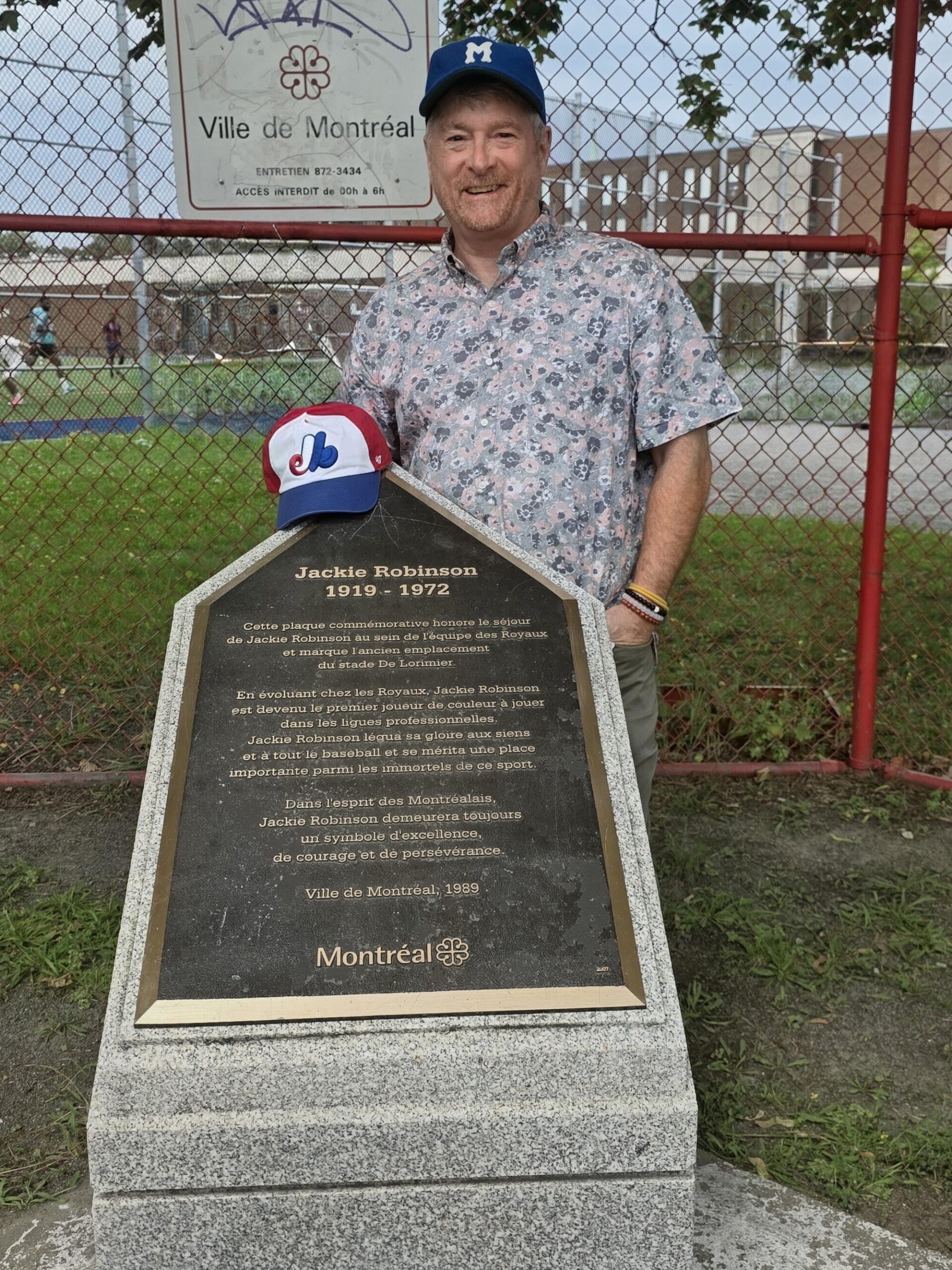
Montreal boasts the largest market of any of the projected expansion contenders, with a rich history of baseball even beyond the Expos. After Branch Rickey signed Jackie Robinson to break the color barrier, he dispatched Robinson to the Dodgers’ triple-A team in Montreal.
The oft-cited lack of fan support for the Expos is largely a myth. It was the same playbook the Athletics ran in Oakland: trade away your best players and tell fans the ballpark is terrible, and then shrug and say the fans aren’t showing up. Montreal is a great sports town, with room to embrace a good ballclub.
Maybe Montreal does not get a team, or maybe Karbasfrooshan lands a billionaire who has someone else in mind to run baseball operations. Even if Evans does not get an opportunity to construct Version 2.0 of the Expos, life has been good since McCourt sent him packing.
For the next five years, Evans scouted for the Seattle Mariners.
“It kind of control-alt-deleted me and put me in a really good place,” he said.
Since then, lots of really good places: player agent; mentor in a sports management training program; Toronto Blue Jays front office; president of the board of directors of the Society for American Baseball Research; chief operating officer of the company that turned the Field of Dreams site from a movie set to a year-round tourist attraction.
“When your day is evaluated by thousands of people coming through on a daily basis, from all over the world, and they just want to enjoy it and play catch, it really improves your quality of life,” he said.
“It’s not winning and losing anymore, which was a bit of a shock to the system. But I actually won every day.”
That’s what the Dodgers do these days, just about every day of every year. They just tied the major league record for consecutive postseason appearances with 14.
In every one of those years, save for the pandemic-shortened 2020 season, they have won at least 90 games. They have come a long way from the days of McCourt, who took the team into bankruptcy.
“It’s remarkable,” Evans said. “For a lot of people, they don’t remember that Dodger franchise, because they see today’s. You and I know what it looked like, and it was embarrassing. What he did was ransack the team.”
Harsh, but the league said the same. In a bankruptcy court filing, MLB accused McCourt of “looting” $189 million in team revenue. (McCourt denied the allegations and said the league had approved the organizational restructuring that facilitated that accounting.)
Evans chuckles at the suggestion that today’s Dodgers are bad for the sport.
“Now, for a lot of people, the franchise is the scourge of baseball,” he said. “And, folks, if you only had a little memory.”
In Montreal, Major League Baseball is only a memory. Nos amours, the good people of Montreal called their team. Our loves.
More to Read
Disclaimer : This story is auto aggregated by a computer programme and has not been created or edited by DOWNTHENEWS. Publisher: latimes.com