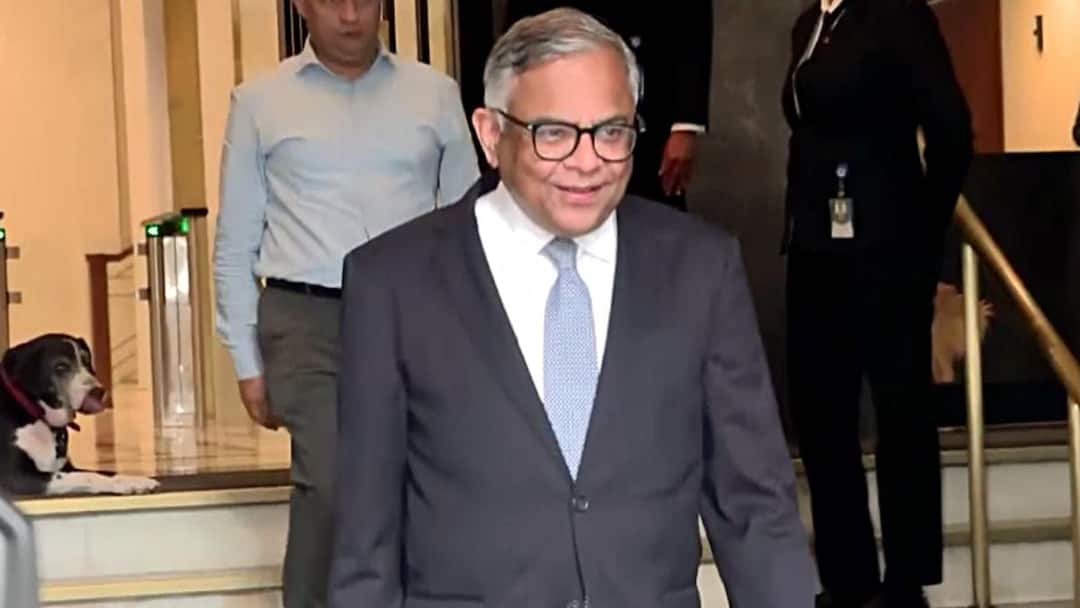
- Tata Trusts rejected chairman’s reappointment, calling it legally invalid.
- One Trust nominee voted against, lacking required affirmative support.
- Trusts rejected casting vote and deadlock arguments as irrelevant.
Tata Trusts has rejected the Tata Sons board’s decision to reappoint N Chandrasekaran as chairman for another five years, calling the September 17 resolution legally invalid and “void ab initio”.
In a statement, Tata Trusts said the Articles of Association (AoA) of Tata Sons do not leave board decisions to a “mere head count of Directors” and require the affirmative support of at least a majority of directors nominated by Tata Trusts, which holds approximately 66% of the company.
“There are two Tata Trusts nominees on the Board of Tata Sons. Majority amongst two is two and not one,” the Trusts said.
According to the statement, one of the two Tata Trusts-nominated directors voted against the resolution on September 17, 2026. The Trusts said the required affirmative support was therefore not given.
“The condition failed, and so did the resolution,” it said.
Tata Trusts Rejects Casting Vote Argument
Tata Trusts also rejected the argument that the chairman could use a casting vote to resolve the issue.
“The Chairman’s casting vote is available only where there is equality of votes at the overall board level. It does not apply amongst Tata Trusts’ Nominee Directors,” the Trusts said.
It added that whether the board vote was 4:1 or any other figure was irrelevant because the separate condition under the AoA had not been met.
The Trusts also rejected the suggestion that its refusal to support the resolution amounted to a deadlock that could paralyse Tata Sons.
“There was no paralysis and there was no deadlock,” it said, arguing that the exercise of a protective right provided under a company’s own constitution cannot be treated as a deadlock.
“The exercise of a protective right conferred by a company’s own constitution is not a deadlock; it is that constitution working as it was written to work,” the statement said.
Tata Trusts Cites Cyrus Mistry Dispute
Tata Trusts also referred to the Cyrus Mistry dispute, arguing that the affirmative voting rights granted to its nominee directors under Tata Sons’ rules are legally valid.
The Trusts said Tata Sons itself had strongly defended these provisions before the Supreme Court during the dispute involving Mistry. The court had accepted Tata Sons’ argument and upheld the validity of the provisions, according to Tata Trusts.
The Trusts argued that Tata Sons cannot now disregard or move away from rules that it had itself defended before the country’s highest court.
Disclaimer : This story is auto aggregated by a computer programme and has not been created or edited by DOWNTHENEWS. Publisher: abplive.com