
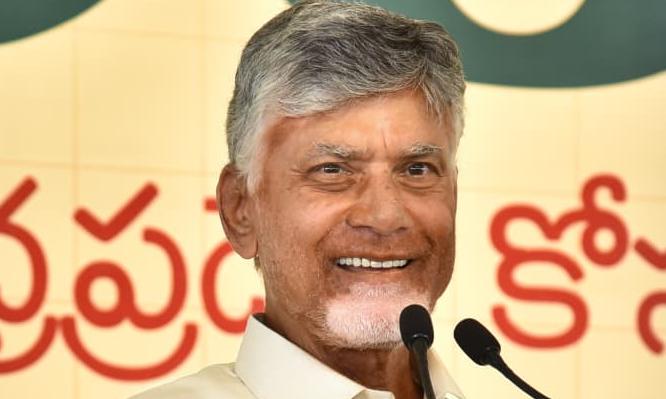
Vijayawada: Chief Minister N. Chandrababu Naidu on Sunday directed officials to implement an action plan to tackle the impact of El Nino with the twin objectives of protecting farmers from the adverse weather conditions and preventing a rise in the prices of essential commodities.
Naidu said water was flowing in the Handri-Neeva canals even during an El Niño-like situation because of advance government measures.
Water, he said, was made to flow through the canals within 100 days by spending `3,500 crore.
Of this, `65,000 crore was spent on irrigation between 2014 and 2019 – as against the `22,000 crore during 2019-24.
Had the projects been completed, there would have been no difficulty even during disasters such as El Nino, he said.
Addressing a teleconference with officials of various departments, as also district collectors, field-level officials, employees and Rythu Seva Kendra (RSK) staff, Naidu said the impact of El Nino would not be confined to farmers but would affect all systems.
He called for temporary and medium-term plans to deal with the situation and stressed on demand-based crop cultivation.
The Chief Minister directed officials to keep prices of rice, onions, palm oil and red gram under control.
Officials must assess rice stocks in godowns and release adequate stocks into the market to prevent price rise.
Onion was currently being procured from different areas to control prices, he said, and called for promoting onion cultivation according to future demand.
Naidu also directed officials to implement decisions that were already taken to control palm oil and red gram prices.
He called for promoting kitchen gardens through self-help groups to increase vegetable production and help keep prices under control.
The CM said the government had already insured crops and directed officials to ensure farmers received insurance amounts in case of crop losses.
He also asked officials to coordinate with the Centre over minimum support prices for crops.
Calling upon the government machinery to treat El Nino as a challenge, Naidu said public representatives, officials, farmers and irrigation associations should work in coordination.
The impact of disasters should not reach people because of official negligence, he said.
He said, “The recent rains should be utilised effectively while rain-fed crops and natural farming should be given priority.
Officials must ensure drinking water for people and water and fodder for livestock.
Measures should include demand-based cultivation, increasing fodder production and sowing seeds for mulching.”
Naidu said `190 crore had been allocated to protect horticulture crops in high-risk RSK areas. He instructed officials to make effective use of the funds.
Green cover should not be allowed to decline.
He also called for intensifying the Jaladhara programme by linking it with VBG Ramji works.
He said the state had recorded a 50.7 per cent rainfall deficit, with Prakasam, Annamayya and Sri Sathya Sai districts facing the highest deficit.
Against the targeted 30.84 lakh hectares of kharif cultivation, sowing had begun on 79 per cent of the area due to the El Nino conditions.
The CM said, “While pulse cultivation was better, oilseed cultivation remained low.
The impact of El Nino was more visible on crops in Kurnool, Nandyal and Anantapur districts.
Officials must effectively implement the contingency plans that were already prepared.”
The government, he noted, had supplied pulses, millets and green manure inputs for 5.21 lakh hectares and distributed 1.31 lakh quintals of seeds at an 80 per cent subsidy. Another `60 crore had been kept ready for the kharif contingency plan.
Naidu asked officials to undertake regular field visits and urged public representatives to tour villages extensively and create awareness among farmers on El Nino despite the local elections.
Farmers should be encouraged to cultivate pulses, millets and crops in high demand, while the benefits of drought-resistant crops should be explained to them.
Onion and chilli cultivation should also be taken up in non-traditional areas.
The advance measures, he claimed, had enabled the government to supply water to drought-hit areas.
Water had been provided to tail-end lands through the Handri-Neeva system, while steps were being taken to prevent drinking water shortages.
Disclaimer : This story is auto aggregated by a computer programme and has not been created or edited by DOWNTHENEWS. Publisher: deccanchronicle.com




