Warfare experts cite a minimum differential in conventional firepower of three times for an attacker to overwhelm a defender. New versions of defensive warfare evolving in Ukraine have increased this differential to 20 times in favour of the defender. Corporate wars are different. Cash is king. But the laws of collegiality, relationships and voting power matter more.
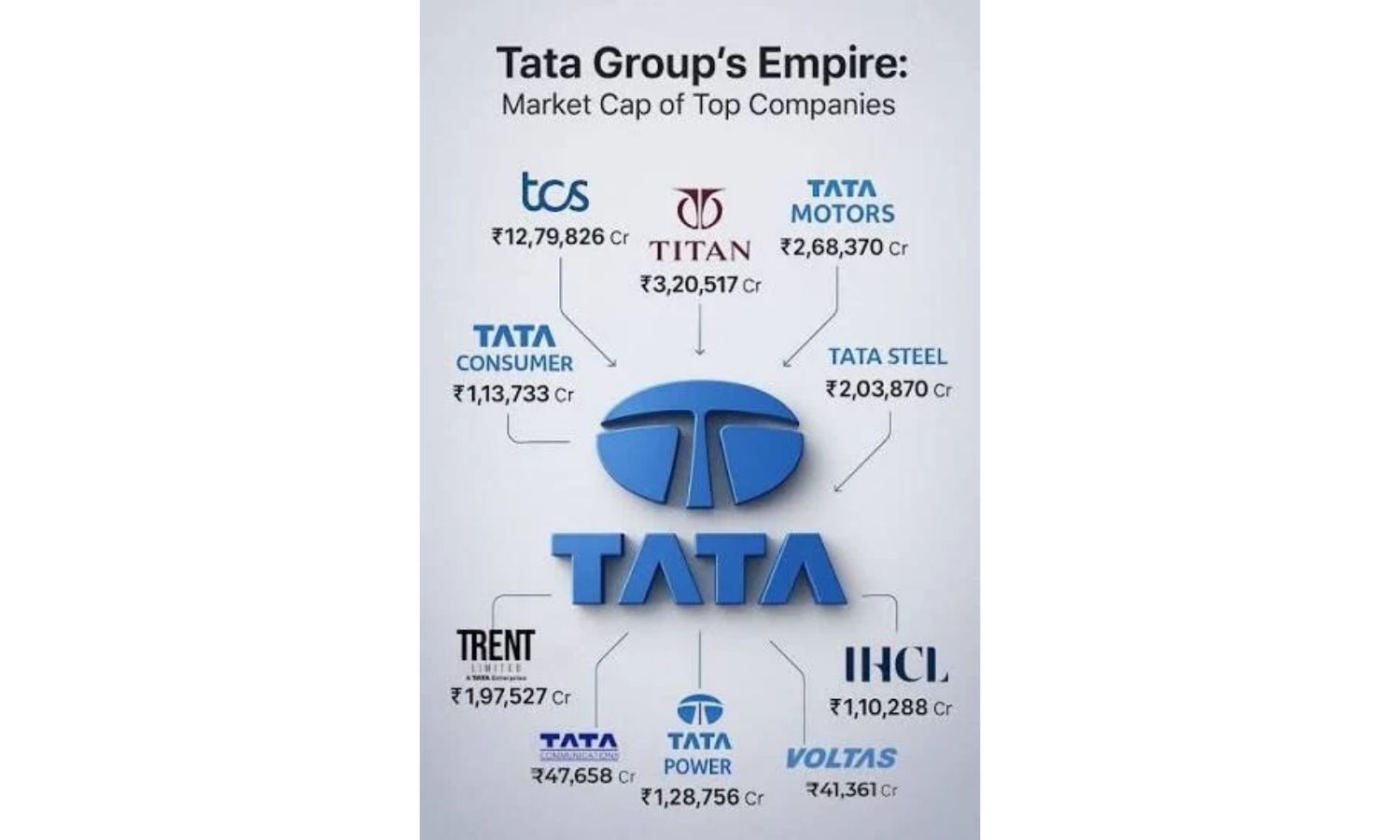
Consider the curious case of the Tatas. Despite holding majority shares in Tata Sons, via two Tata Trusts, board incumbents from the Ratan Tata years have revolted against the only Tata presently on the board of this holding company, which controls publicly listed Tata group companies with a market value of Rs 26 trillion.
Ratan Tata’s anointed heir is Noel Tata, his half-brother — same father but different mothers. Noel, like Ratan, chairs both Tata Trusts. But he is only one of the two Tata Trusts nominees in Tata Sons. The other is Venu Srinivasan. Tata Sons, founded in 1868, when India was still a British colony, became a symbol of national pride, taking Indian capital overseas by acquiring Corus Steel and Jaguar Land Rover in the UK under Ratan Tata — an early case of reverse capital flow. Today, Noel Tata’s eminence in the group aligns with the frequently seen phenomenon of Indian “turtles” returning to a globalised India. Noel is an Irish national whose karmabhoomi is India.
“Revolt of the subalterns.” How does one explain the happenings in the September 17, 2026, board meeting of Tata Sons? Two propositions were put to vote.
First, reappointing chairman N. Chandrasekaran for a further five years after his term ends in February 2027.
Second, listing the company as directed by the Reserve Bank of India way back in 2022 and reiterated on September 11 this year by rejecting the Tata Sons’ three-pronged argument as to why Tata Sons should be exempt from the regulatory requirements for an upper-level NBFC and core investment company.
First, there are no public funds invested in it. Second, it invests only in Tata Group companies. Third, the dividend income earned is used to fund the charitable activities of the Trusts which own Tata Sons. All three distinguish it from a normal investment company.
The “revolt within” might have been precipitated by the RBI’s public rebuff of Tata Sons’ representation against listing. Alternatively, it might have been incited by the undue haste shown by Noel in trying to gain the upper hand within Tata Sons, less than two years after Ratan Tata’s death in October 2024. Noel is at the cusp of his 70s and time is not on his side. The Tata Group companies have a history of powerful “satraps” outside the Tata family managing them. Ratan Tata succeeded JRD Tata in 1991. He spent six years consolidating his control over the Group companies — replacing ageing “satraps” like Rusi Modi, the larger-than-life chairman of Tata Steel, and Darbari Seth, the legendary chairman of Tata Chemicals, and establishing uniform governance systems across Group companies.
Noel is also less institutionally empowered than Ratan Tata was. The latter was chairman of both Tata Trusts and chairman of Tata Sons. When he retired in 2012 from Tata Sons chairmanship, he retained control of both Tata Trusts with a 66 per cent share in Tata Sons, ensuring that the new Tata Sons chair — Cyrus Mistry — would remain sufficiently collaborative. This was not to be and differences arose. In 2022 the articles of association were amended to require compulsory separation between the chairpersons of Tata Sons and the Tata Trusts.
Noel inherited a depleted “empire”. He is chairperson of both Tata Trusts but only jointly represents the Tata Trusts as a nominee director in Tata Sons with Venu Srinivasan. If they vote differently, effectively cancelling each other’s votes, the casting vote rests with the chairperson Tata Sons.
In the September 17, 2026, Board meeting of Tata Sons, Noel Tata was isolated. Chairperson N. Chandrasekaran abstained (aptly) from the proposal for his own re-appointment. Four other directors voted for reappointment. Noel Tata voted against. He reasoned that this matter had already been decided earlier when the chairman said he was not available for reappointment. Second, Noel pointed out that the appointment process required that the board appoints a committee which recommends appointment of a chairperson to the board. This procedure, mandatory even for reappointment, was not followed.
On whether Tata Sons should go public and list — as directed by the RBI — reports differ on whether chairperson N. Chandrasekaran abstained or voted for the proposal. If the chairperson voted for listing, it would automatically overrule the tie between the two nominees of Tata Sons — Venu Srinivasan for and Noel Tata against — in line with the Tata Trusts resolution that Tata Sons must remain private. Noel feels fresh resolutions from Tata Trusts, supporting listing are necessary before the matter is reconsidered. If the chairman abstained, it leaves unresolved the tied vote of the Tata Trusts, tainting the process. Bizarrely, three directors supported listing, demonstrating a board in disarray.
There is a raft of legal issues. Noel Tata could take Tata Sons down the litigation road, as happened earlier in the removal of Cyrus Mistry as chairman of Tata Sons. A precedent from that case, decided by a bench headed by the then Chief Justice of India S.A. Bobde, is that private companies have the privilege to formulate reasonable restrictions on shareholder rights, at variance with norms for public companies. CJI Chandrachud has echoed the same in an opinion which Noel tabled during the board meeting. This is countered by “legal eagle” Harish Salve’s opinion that the Tata Sons board has acted perfectly legally.
Even if chairman N. Chandrasekaran continues at Tata Sons, the next few years might be consumed by litigation. That is expressly what he wished to avoid earlier — a divided board clouding the work sphere.
Listing Tata Sons with a book value of about Rs 2 trillion would be phased over time.
The minimum listing requirements is one per cent of the equity, worth at least Rs 150 billion immediately, leading to an eventual minimal listing of 25 per cent of the equity over 10 years. Either way, don’t hold your breath for the IPO.
For the old-timers of Bombay House, this might be a significant inflection point with the quaint crockery and cutlery service on its last legs. Hopefully, though, the pets left behind by Ratan Tata — the last Tata to rule Bombay House — would be spared the ignominy of transition.
Sanjeev Ahluwalia is distinguished fellow, Chintan Research Foundation, and was previously in the IAS and the World Bank
Disclaimer : This story is auto aggregated by a computer programme and has not been created or edited by DOWNTHENEWS. Publisher: deccanchronicle.com