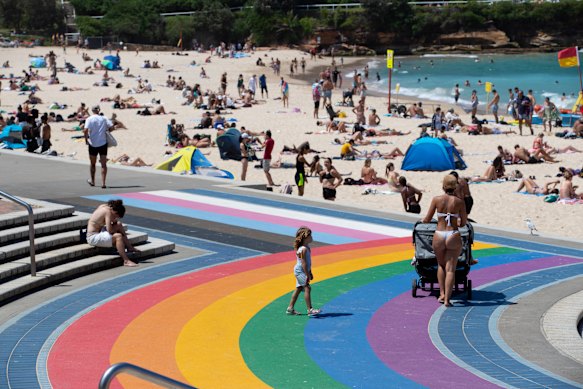

Sydney beaches are the latest battlefront in a crackdown on AI smart glasses as councils move to restrict the discreet recording devices in public spaces because of privacy and security fears.
Rangers patrolling beaches across the Randwick Council area, including Coogee, Clovelly and Maroubra, could soon be empowered to order visitors to remove the eyewear or leave as part of restrictions set to be considered by councillors this week.
The move would make Randwick the first local government area in NSW to prohibit the devices on beaches, and the proposed ban would extend to other council-run facilities including playgrounds, swimming pools, sporting fields, surf clubs and childcare centres.
Councillor Philipa Veitch, who put forward the proposal, said the restrictions responded to increasing community concerns about smart glasses, which can resemble conventional eyewear while incorporating cameras, microphones and AI functions.
“These devices can allow users to film members of the public without their knowledge or consent, which presents serious privacy and safety risks, particularly for children and women who already bear the brunt of so much violence and abuse,” Veitch said.
“Our pools, beaches and playgrounds should be places where the community feels safe and [can] have fun – not risk getting filmed and having their image uploaded to the web.”
The proposed ban includes the development of potential enforcement measures, including patrols, signage and establishing designated areas at beaches where users can leave their smart glasses before stepping on the sand.
The move makes Randwick the latest in a string of councils cracking down on the wearable technology in public facilities, with exemptions for people using smart eyewear for visual assistance or other accessibility needs.
City of Sydney councillors on Monday night unanimously voted to prohibit smart glasses at council-run pools, including Andrew (Boy) Charlton Pool, Ian Thorpe Aquatic Centre and Victoria Park Pool, as well as gyms, libraries and childcare centres.
The decision followed action by Canterbury-Bankstown Council, which last week became the first Sydney council to ban smart glasses from its aquatic facilities. Lane Cove councillors are also due to consider restrictions on the technology in pools and other community facilities this week.
City of Sydney councillor Matthew Thompson, who introduced the council’s ban, said that local governments were being forced to respond as wearable technology developed faster than regulation.
“Overseas, we’re seeing women being targeted, harassed in public and recorded without their consent by influencers, tech bros and other sorts of creeps, and we don’t want that happening here,” he said.
“We want to make it really clear to the community that they’re safe to come to our public places and not have the fear of being filmed.”
The council restrictions have been backed by Digital Rights Watch, amid concerns about the rapid proliferation of the technology, fuelled by cheaper models including Kmart’s $89 offering, which recently sold out following widespread interest.
The bans also add pressure on the federal government to introduce national regulations governing the devices.
Attorney-General Michelle Rowland has resisted calls for an import ban but has encouraged councils to regulate the technology in public spaces while broader privacy reforms are developed.
The eSafety Commissioner has urged manufacturers to make recording indicators more obvious and consider safeguards such as automatically blurring the faces of people captured by the devices.
On Thursday, Public Service Minister Katy Gallagher said she had asked the Australian Public Service Commission for advice on whether smart glasses should be prohibited in Commonwealth workplaces, citing privacy and security concerns.
The Morning Edition newsletter is our guide to the day’s most important and interesting stories, analysis and insights. Sign up here.
 David Barwell is an urban affairs reporter for The Sydney Morning Herald.Connect via email.
From our partners
Disclaimer : This story is auto aggregated by a computer programme and has not been created or edited by DOWNTHENEWS. Publisher: www.smh.com.au