A sloth bear looking for food does not know where a forest ends and a town begins. If food is scarce inside the forest but easy to find near a settlement, it will follow the food.
An open garbage dump filled with food scraps can offer an easy meal. If a bear finds food there repeatedly, it may learn to return. The hunt that begins as a search for food can eventually bring the animal into much closer contact with people.
So, when a sloth bear is spotted on a road or near a settlement, the question is not only why the bear came there. It is also worth asking what changed in the landscape around it.
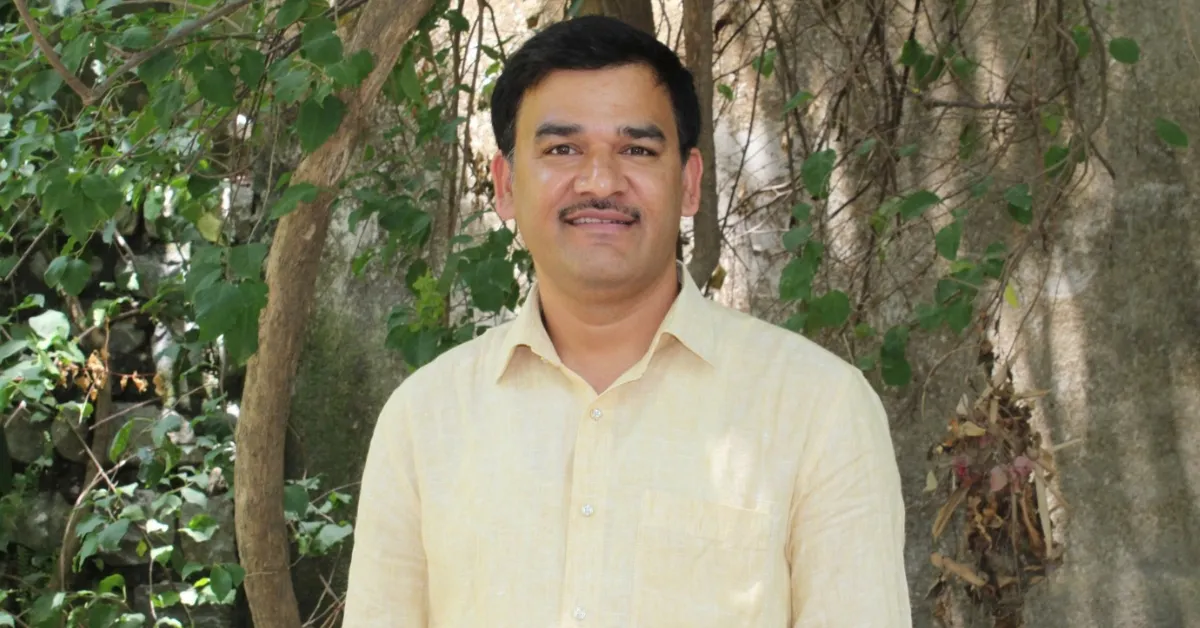
Dr Harendra Singh Bargali, deputy director and head of conservation, policy and advocacy at The Corbett Foundation, has spent more than two decades studying sloth bears and human-wildlife interactions. His work offers some answers.
A scientist who has spent years studying bears
Dr Bargali began working on sloth bears in 1998, when he joined a long-term study funded by the Wildlife Institute of India as a research scholar. The project involved radio-collaring sloth bears to study their movement, activity, and ecology.
In the Nilgiris, he says, the answer begins with what is happening to the bears’ habitat.
When forests get divided, bears have fewer places to go
Sloth bears do not stay inside one small patch of forest.
“Historically, in accordance with its natural behaviour, the species would explore areas surrounding its core habitats,” says Dr Bargali.
If fruiting trees, honey, or crops that they find palatable were available around the edges of forests, bears would move out to feed. That behaviour itself is not new.
What has changed is the landscape around them.
Towns and settlements have expanded. Roads and other infrastructure have come up. Forest areas have been converted for activities including commercial tea plantations. This has left sloth bear habitats more fragmented and has brought bears into greater contact with people.
In the Nilgiris, he says these changes, along with the depletion of natural food resources, have affected sloth bear populations and increased the chances of encounters with communities.
“When natural food resources become scarce, sloth bears are likely to explore all available options to meet their nutritional requirements and guarantee their survival,” he tells The Better India.
Those options can include agricultural fields, plantations, and settlements.
And sometimes, they include a pile of household waste.
A garbage dump can become an easy food source
Food waste can be particularly tempting when natural food is harder to find.
“When bears face a shortage of natural food resources within their habitats, the availability of waste and garbage dumps can attract them to human-dominated areas,” says Dr Bargali.
Once a bear finds food at a particular place, the problem can grow.
He says sub-adult bears and cubs may also start visiting such places after repeated exposure. Social learning can play a role too. “If access to anthropogenic food becomes a regular part of their feeding behaviour, they may increasingly depend on such sources,” he says.
That can mean that when food is no longer available at a garbage dump, a bear may search further, moving towards nearby homes and other places where food might be found. This is why the waste problem cannot be treated as something separate from the bear encounters.
But removing garbage alone will not solve everything either.
Why one clean-up drive will not fix the problem
Better waste management can reduce one reason for bears to enter human spaces.
In areas close to bear habitats, the expert recommends using bear-proof bins, segregating waste properly, and stopping open dumping altogether.
But there is a larger question.
What happens if the bear leaves the garbage dump and still cannot find enough food in the forest?
“It is equally important to understand the habitat requirements of sloth bears and assess the availability and seasonal distribution of natural food resources within their fragmented habitats,” he says.
If those resources remain limited, bears may still move towards kitchen gardens, fields, orchards, and other places where food is available.
This is why the conservation biologist believes the Nilgiris needs both better waste management and a closer study of what is happening inside the remaining sloth bear habitat.
The crowd around a bear can make things worse
A bear entering a town can frighten people. It can also attract a crowd. That is when a situation can become dangerous.
Dr Bargali says bears that are chased, surrounded, or attacked with stones may try to escape in any direction. If people block that escape, someone can end up in the animal’s path.
“Sloth bears generally do not pursue people with the intention of attacking them,” he says. “However, when they are chased, cornered, or otherwise threatened, they can respond defensively.”
This makes the way people respond to a sighting important.
The conservationist studied 138 cases of sloth bear attacks and interviewed the people involved to understand what happened during those encounters.
His advice is easy to follow.
- If the bear is at a safe distance, stay calm and slowly move away.
- Do not shout or make sudden movements.
- Do not chase, surround, or throw stones at the bear.
- Give it a clear path to move away.
- Inform people nearby and contact trained forest personnel.
- Do not try to handle the situation yourself.
Close encounters can be especially risky around bends and blind corners, where a person and bear may suddenly find themselves face to face.
A frightened bear may stand on its hind legs and use its forelimbs to defend itself. Its long, curved claws can cause serious injuries at close range, particularly to the head and face.
At the same time, the bear specialist says his observations did not show bears pursuing people after an encounter to continue attacking them. In the cases he studied, the bear generally struck and moved away.
What needs to change in the Nilgiris?
There is no single group that can fix the problem.
According to The Hindu, an awareness meeting was recently held in the Nilgiris to discuss ways to limit human-sloth bear interactions, underlining the need for communities and authorities to understand how to respond when bears enter human-dominated areas.
Households and communities need information about sloth bear behaviour and what to do during an encounter. Hotels and restaurants, particularly those near bear habitats, need to keep food waste in secure bins and prevent wildlife from accessing it.
/filters:format(webp)/english-betterindia/media/media_files/2026/09/22/sloth-bears-in-nilgiris-2026-09-22-18-52-31.png)
Local authorities need systems for regular collection, segregation, transportation, and safe disposal of waste, along with checks to prevent open dumping. The tourism department and forest department also need to work together, particularly in tourist areas close to sloth bear habitat.
The forest department also needs better information about the bears living in the Nilgiris.
Dr Bargali says research should look at their population, movement, habitat requirements and the seasonal availability of natural food. It should also examine the places where bears come closest to people and why.
That information could help authorities identify areas where encounters are more likely, and plan measures before a problem becomes serious.
Should every bear that enters a settlement be captured?
Not necessarily.
A bear entering a settlement does not automatically mean that something is wrong with the animal.
The conservationist says an occasional visit to a fruit store or a house containing honeycombs can be linked to food-seeking behaviour. But repeated or forceful attempts to enter houses, particularly when a bear appears unable or unwilling to leave, need immediate attention.
In such cases, the forest department should be informed. A trained wildlife veterinarian and experienced forest personnel can assess the animal’s physical condition and behaviour before deciding what needs to be done.
For the longer term, he points to protecting the remaining habitat, keeping wildlife corridors intact, improving degraded areas, and reducing access to human food.
The answer is not just a cleaner garbage dump
For people living in the Nilgiris, avoiding an encounter with a sloth bear may begin with something as ordinary as making sure food waste is not left where wildlife can reach it.
But that is only one part of the work. The bears also need forests where they can find food, move between habitats and live without having to enter human spaces.
“Conservation should focus on maintaining functional and connected ecosystems rather than on protecting individual species in isolation,” he says.
/filters:format(webp)/english-betterindia/media/media_files/2026/09/22/sloth-bears-in-nilgiris-2026-09-22-18-54-39.png)
For the Nilgiris, that means looking beyond the next bear sighting and asking what is happening to the landscape around it. Better waste management can remove one reason for a bear to visit a settlement. Protecting habitat and understanding the food available to bears can address another.
Dr Bargali says coexistence will require communities to understand bear behaviour, local authorities to stop open dumping and the forest department to study the species and its habitat properly.
It will take time.
“There is no shortcut to achieving long-term coexistence,” he says.
The goal is not to make wild animals behave as if they belong in towns. It is to make sure they have fewer reasons to enter them in the first place.
All pictures courtesy Dr Harendra Singh Bargali.
Disclaimer : This story is auto aggregated by a computer programme and has not been created or edited by DOWNTHENEWS. Publisher: thebetterindia.com