
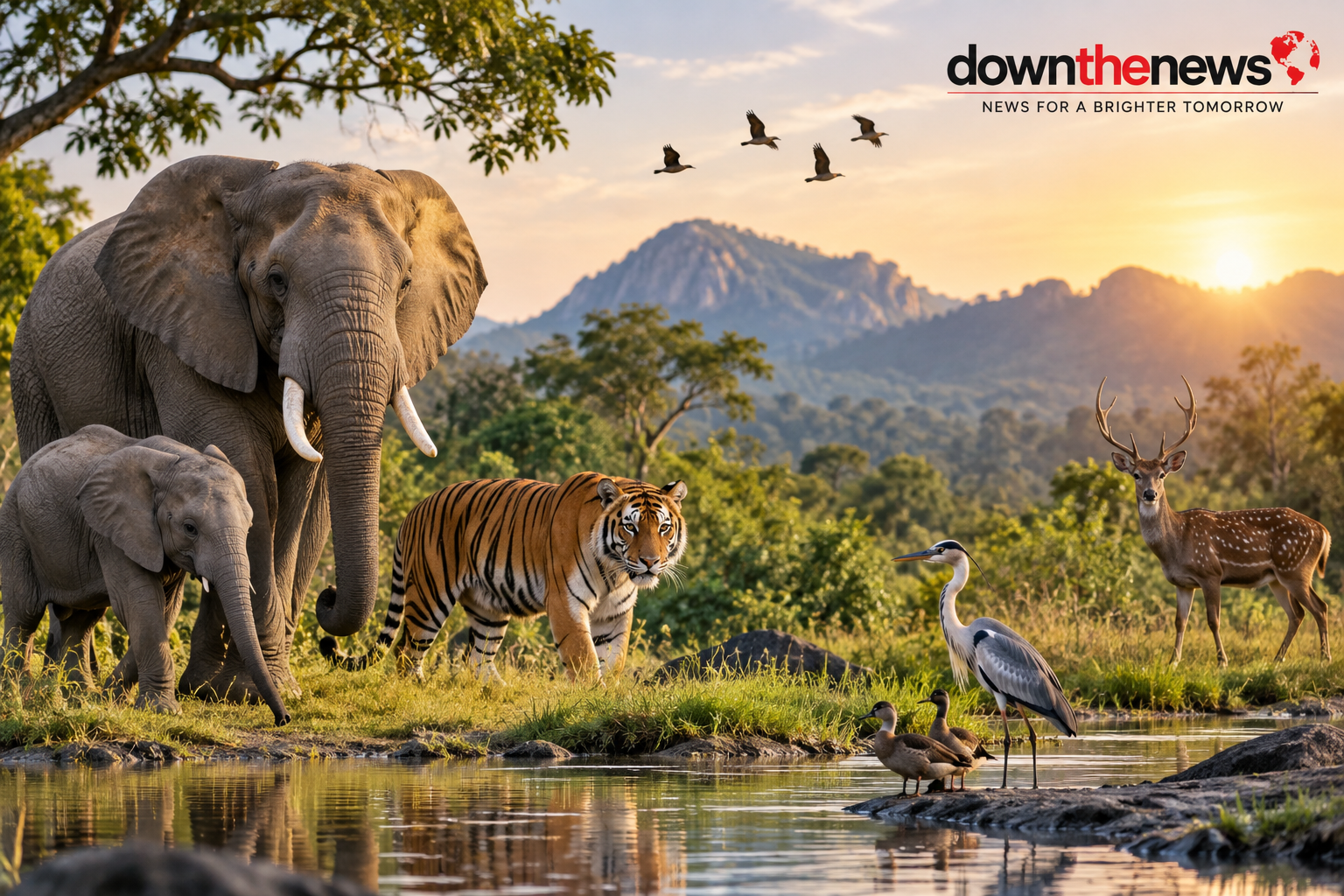
Top 20 Animal & Wildlife News Stories — Wednesday, September 23, 2026
Here are 20 significant animal, wildlife and conservation stories from India and around the world making headlines today. developments reported today and major stories from the past few days that remain relevant.
1. India launches Project Rhino on World Rhino Day
Prime Minister Narendra Modi highlighted India’s role in conserving the greater one-horned rhinoceros and announced Project Rhino, aimed at providing financial and technical support to rhino-range states for protection, habitat management, genetic improvement and population studies. Assam is home to nearly 80% of the world’s rhino population, according to the government.
2. West Bengal destroys 105 seized rhino horns
West Bengal authorities publicly disposed of 105 rhino horns and other wildlife parts seized during anti-smuggling operations. The material was destroyed in Alipurduar as part of World Rhino Day activities, with authorities stressing efforts against illegal wildlife trade.
3. India highlights importance of protecting rhino grasslands
A new conservation focus is emerging around the habitats supporting India’s greater one-horned rhinos. Conservation experts are emphasizing that protecting grasslands and wetlands is essential alongside protecting the animals themselves. Indian rhino numbers have risen substantially over recent decades.
4. Bihar prepares to reintroduce rhinos into Valmiki Tiger Reserve
The Bihar government is developing a programme to bring rhinoceroses into the wild at Valmiki Tiger Reserve. Officials are considering sourcing animals from Assam and West Bengal as part of a broader effort to expand rhino conservation in the state.
5. Rare caracal released into Rajasthan’s wild
A female caracal was released in Jaisalmer after treatment and rehabilitation. The endangered Schedule I wild cat was fitted with a radio collar by the Rajasthan Forest Department and Wildlife Institute of India to track its movements after release.
6. Cheetah Gaurav dies at Kuno National Park
Gaurav, a Namibian cheetah that was among the early animals brought to India under Project Cheetah, died at Kuno National Park after becoming severely weak and dehydrated. Officials said he had been rescued from the wild earlier this month and received treatment before his condition deteriorated.
7. Kuno records unusual coalition between unrelated male cheetahs
Wildlife officials at Kuno are observing an unusual partnership between two male cheetahs that are not brothers. The animals have been seen sharing kills, grooming one another and defending territory together—behaviour notable because male cheetah coalitions are commonly formed by siblings.
8. Assam treats injured wild elephant
Wildlife Trust of India and the Assam Forest Department treated an adult male elephant in Sonitpur after it suffered serious injuries to its foreleg. Officials suspected a sharp-object injury, and the elephant underwent chemical immobilisation and surgical treatment.
9. Bornean orangutans threatened as Indonesian fires spread
Forest fires in Indonesia are putting additional pressure on Bornean orangutans, with their remaining habitat shrinking as fires spread through parts of Kalimantan. Conservationists warn that continued fires could damage connected forest corridors that are important for orangutan movement.
10. At least 18 orangutans rescued from Indonesian fires
Eighteen orangutans have reportedly been rescued in West Kalimantan within a month as fires destroy sections of their forest habitat. Rescue teams are encountering animals displaced from forests and forced toward plantations and human-dominated areas.
11. Australia intensifies crackdown on wildlife trafficking
Australian authorities and conservation investigators are examining the illegal trade in reptiles, with investigations highlighting the connections between wildlife trafficking, organised networks and financial incentives. The country is stepping up efforts to prevent protected reptiles from entering the international pet trade.
12. New pangolin species rediscovered after decades
Scientists have reinstated Manis aurita as a distinct pangolin species following more than five years of research. The finding is particularly significant because pangolins are among the world’s most heavily trafficked mammals, making accurate species identification important for conservation and enforcement.
13. Nepal considers DNA-based rhino census
Nepal is exploring a new approach to counting its rhinoceros population using DNA sampling and camera traps. The proposed methodology would reduce reliance on traditional direct sightings and elephant-based surveys and could provide more detailed information about individual animals.
14. Galápagos biodiversity gets a new scientific atlas
A new Galápagos Atlas is documenting the islands’ biodiversity and highlighting species and ecological questions that remain poorly understood. The work is intended to improve scientific knowledge of one of the world’s most distinctive ecosystems.
15. New flower species in Thailand found to be critically endangered
Scientists have described a previously unknown flower from Thailand that is already considered critically endangered. The discovery highlights how species can be identified scientifically while simultaneously facing severe habitat pressures.
16. New wild cat species officially identified in Bolivia
Scientists have identified Leopardus tilcayo, a previously unrecognized small wild cat from Bolivia’s cloud forests. The discovery is especially notable because it is being described as the first genuinely new living feline species identified in more than a century.
17. Rare slow loris may have a larger population than previously believed
New research suggests the northern pygmy slow loris may have a considerably larger population in China than scientists previously estimated. The finding could affect understanding of the species’ geographic range and conservation needs.
18. New Zealand’s black robin wins Bird of the Year
The Chatham Island black robin, also known as the karure, has been named New Zealand’s Bird of the Year after receiving more than 25,000 votes. The species was once reduced to only five individuals, making its recovery a notable conservation story.
19. African wild dogs make extraordinary 4,000-km journeys
Research has documented young African wild dogs travelling more than 4,000 kilometres while dispersing in search of mates and new territory. Scientists say such long-distance movement demonstrates the importance of connected landscapes for recovering wildlife populations.
20. US endangered-species protections face renewed controversy
Changes to enforcement and interpretation of the US Endangered Species Act are generating significant debate. The Trump administration has pursued regulatory changes affecting how habitat damage and other impacts on protected species are treated, while environmental groups and several states have challenged aspects of the changes.









