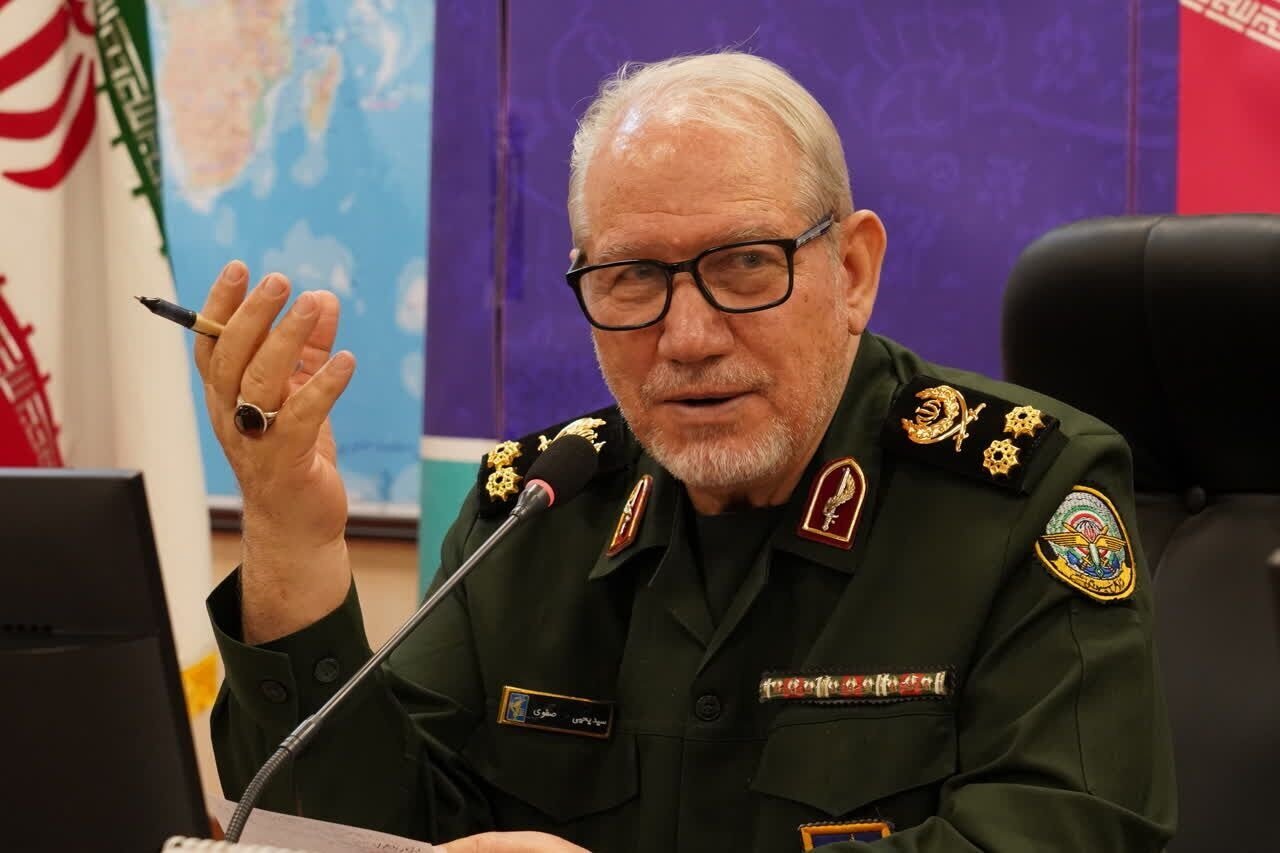
TEHRAN – A senior military advisor to Leader of the Islamic Revolution Ayatollah Seyyed Mojtaba Khamenei, says Iran’s armed forces are fully prepared to defend the country in every field, warning the United States would face heavy casualties in the event of any aggression.
“In the missile, air-defense, and territorial-defense sectors, we have reached a level where, God forbid, if they (American forces) intend to land anywhere in Iran, they will certainly be destroyed,” Major General Yahya Rahim Safavi, said during a televised broadcast on Tuesday.
“We have at least 10 million trained Basij personnel, who can defend all parts of the country through a distributed, mosaic-style approach and asymmetric warfare,” he said.
“People are the main pillar of the Islamic Republic’s power and national security.”
Safavi, a former chief commander of the Islamic Revolution Guards Corps (IRGC), also pointed to Iran’s significant advances in missile, drone and air-defense capabilities, as well as its monitoring of foreign military activity in the region.
“In the maritime domain, whether in the skies over the Persian Gulf or even in the Indian Ocean, we detect with our radar systems the US naval vessels currently in the region…and determine where they are located,” he said.
Safavi said Iran could carry out both defensive and retaliatory operations, adding that the outcome of a conflict would also depend on the resilience and determination of the societies involved.
“What matters is whether their social resilience in the United States is greater than Iran’s. Iran’s is certainly greater. War is a battle of wills,” Safavi said.
“Iran knows its objectives and wants to defend itself, its national interests, and its dignity.”
Safavi’s remarks come amid heightened tensions over US military activity in the region. Iran has repeatedly emphasized deterrence and territorial defense, including the role of missile and drone capabilities and the mobilization of forces across the country.
The advisor also addressed the Strait of Hormuz, saying its reopening would depend, among other things, on the lifting of the United States’ illegal naval blockade.
“The Strait of Hormuz will not be reopened through US military pressure. It is Iran and Oman that can establish the mechanism for this. We are in contact with the Omanis, although public reporting indicates that the United States is preventing this,” he said.
“The reopening of the Strait of Hormuz is conditional on [the US’s] accepting Iran’s terms.”
The strait connects the Persian Gulf to the Gulf of Oman and is a major route for international energy shipments. Its security and freedom of navigation have long been central issues in relations between Iran and the United States.
Safavi said Iran’s broader objective was to establish a Persian Gulf security framework with regional states, without US involvement.
“Our objective is to permanently remove the threat to the Iranian people and, together with the countries of the region, establish lasting security and sustainable development in the Persian Gulf without the presence of the United States,” he said.
Disclaimer : This story is auto aggregated by a computer programme and has not been created or edited by DOWNTHENEWS. Publisher: tehrantimes.com