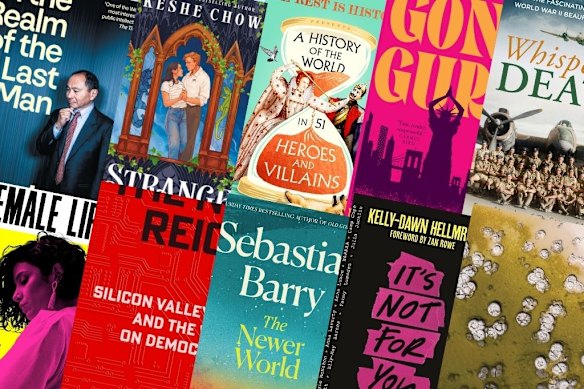
This week’s fiction includes a moving work set in the aftermath of the American Civil War to a world filled with magical animals, while non-fiction ranges across the local rock scene, the heroes and villains of history and WWII fighter pilots.
Fiction
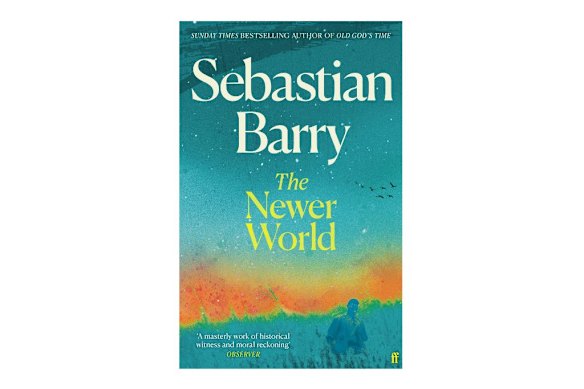
The Newer World by Sebastian Barry (Allen & Unwin $34.99)
Some may quibble that as a white Irishman, Sebastian Barry ought not to have the authorial right to adopt the voice of Tennyson Bouguereau, a black man navigating the messy aftermath of the Civil War. But if anyone can perform this act of cultural ventriloquism well, it’s Barry. The Newer World navigates the world of Tennyson, who, alongside his twin sister, was born into slavery but eventually freed, only to discover that freedom is not necessarily equivalent to acceptance in the deep American South. The newer world is not that much shinier than the old one. From rural Tennessee to Nashville, where Tennyson, with his beautiful voice, is given a chance to join a choir, and then to England when he goes on tour, and then back to America, Barry recreates the 19th-century period with vividness and colour. Written in the first person, this historical fiction is elegantly wrought. Like his poetic namesake, Tennyson’s descriptive mannerisms are filled with rhythmic, lyrical touches that can seem grandiose at times. But the narrative balances racism and trauma with hope and transformation.
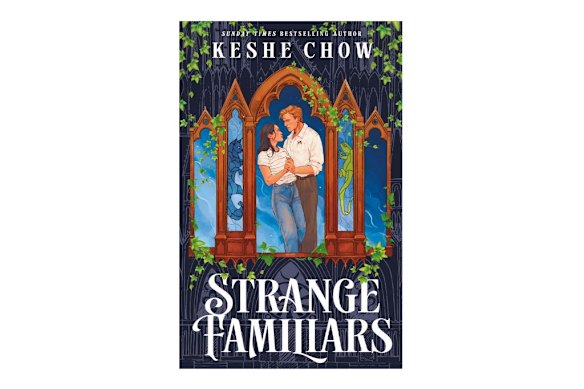
Strange Familiars by Keshe Chow (Hachette, $34.99)
Two academic rivals at a College of Magical Veterinary Sciences battle it out: in the one corner is earnest and hard-working Gwendolynne Chan, and facing her is rich nepo baby Harrisford Briggs. The reader will be forgiving for thinking the novel will focus on cutesy and strange animals doing fantastic tricks before they become injured, but Keshe Chow leads the narrative elsewhere. Set in an alternate London, her world-building involves the pair trying to figure out why there’s excessive magic that turns the animal-familiars feral and also causes explosions in the city. They have to join forces to stop the surges. Strange Familiars is told through alternate viewpoints of the protagonists as they investigate competing organisations that distribute and oppose the global supply of magic. The enemy-to-lovers trope is predictable, with Chow at full rein in exploring the romantasy genre. It’s a fun read – the first instalment of a series of two, and Percy, Gwen’s snarky telepathic cat, is a joyful addition. If only there were more magical animals in the mix.

Female Life on Planet Earth by Laleh Khadivi (Oneworld, $32.99)
Set in Los Angeles, this novel is about secret lives and the relationships between mothers and daughters. It focuses on the year Heti spends after the death of her mother, Anahita. While she plans a large-scale mourning anniversary at the urging of her bossy traditionalist aunt, Heti receives a mysterious package containing photos of a younger Anahita, enveloped in a black veil and carrying a machine gun. The mother Heti knew and loved was sweet and nurturing – who was this fighter in combat mode? What follows is a series of conversational vignettes with strangers about what it means to be a woman. But too much time and energy are spent on such peripheral musings, with comparatively scant details about Anahita’s past only allowed to surface toward the end. Though the book obviously references revolutionary Iran, it’s odd that Laleh Khadivi refrains from mentioning the country. Perhaps she’s aiming for universality of themes about war, religious fanaticism, persecution, womanhood, diaspora, and immigration, but depersonalising the context does a disservice to the narrative.
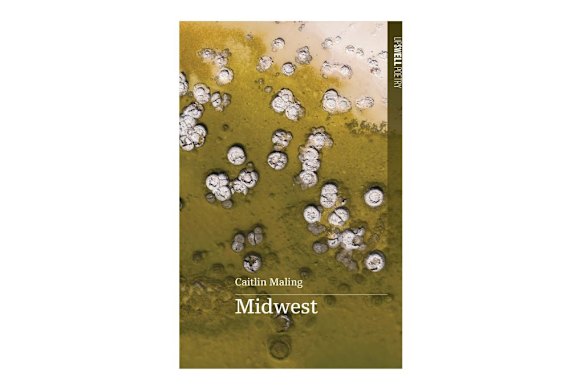
Midwest by Caitlin Maling (Upswell, $27.99)
In this suite of poems, Caitlin Maling roams the coastal waters of Western Australia with a keen eye. Mailing grew up in and around Fremantle, and her love of the vistas around this port city is evident. Midwest, her sixth poetry collection, continues her exploration of the natural world, especially its watery depths and the animals that live or at least struggle to survive within or near the sea. As the Tour Guide at the Ocean Park Marina and Aquarium puts it, “Everything you see is food, sex or death.” Whether it’s sea eagles nesting, parrotfish pecking at coral, sea snakes copulating or crabs being cracked open to eat, Maling’s words are visceral and sometimes startling. There are shipwrecks, salmon farming and single-celled organisms called stromatolites among the mix. Among her descriptions of the birds and beasts, she also writes about motherhood and her young son. Sometimes Maling’s metaphorical reach will make you stop and consider the world anew – she describes rock as “breaking out of the earth like bones” and an octopus’ nodules like “Mardi Gras beads, but finer filigree.”
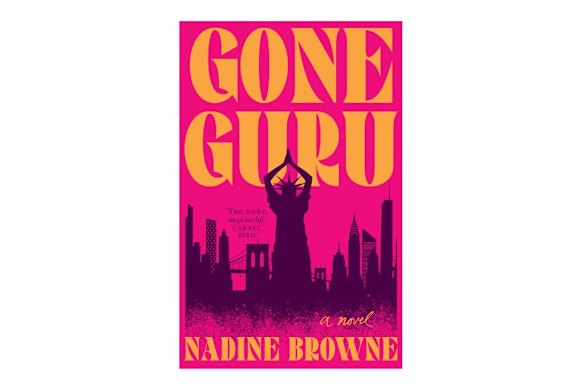
Gone Guru by Nadine Browne (Fremantle Press, $34.99)
Noni has flown into New York from WA and barely settled in her Harlem apartment when she discovers that her new flatmate, Vincent, a self-styled transcendental meditation guru with millions of followers and millions in a trust fund, has disappeared. Maybe he’s too busy trying to find himself? Though Noni has distractions of her own – she’s failing to combat imposter syndrome at a prestigious writing program – she becomes invested in finding him. Noni’s trying to think of a story for her class while navigating the strangeness of a new city; the missing Vincent may just be the catalyst she needs. Gone Guru is an auto-fiction, with Nadine Browne drawing on her own experiences. Partly a sleuthing story, with the clamour, colour, vibrancy, and characters of New York as a background, and partly an exploration into the challenges of being a creative writer (particularly with someone as intimidating as Joyce Carol Oates as a teacher), the book is an enjoyable and funny romp that surveys serious issues (race, class, identity, literature, culture) with a light touch.
Non-fiction
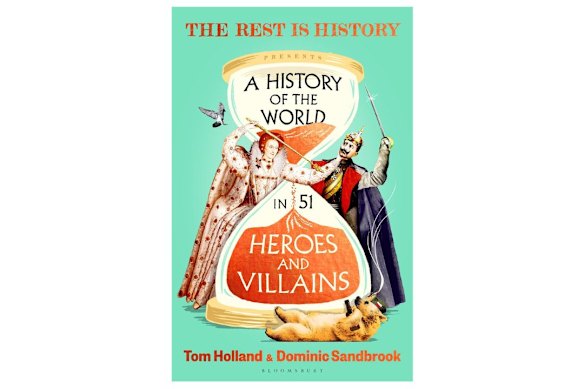
A History of the World in 51 Heroes and Villains by Tom Holland & Dominic Sandbrook (Bloomsbury, $36.99)
History is, of course, about far more than heroes and villains, but they can be a lot of fun, as The Rest is History podcast team demonstrates in this collection of cameos. And they’re not all human, either. Like Wojtek, the Syrian brown bear adopted by the Polish army in exile during WWII, who lugged heavy crates of munitions up the slopes of Monte Cassino, Italy, during the Allied advance and made a highly valued contribution to the war effort. Much loved by the troops, and with a penchant for cigarettes and stealing women’s underwear, Wojtek eventually died in the Edinburgh Zoo, an undisputed hero with his own statue. Some of the other figures, however, aren’t so clear-cut. The mad monk, Savonarola, for example, lauded by some as a Reformationist hero combating excessive wealth and corruption, and reviled by others as a murdering, puritanical fruitcake. Then there are the mysteries, like Elizabeth 1. Was she really a virgin, or just good at “branding”? Incorporated into a tale that stretches from Roman times (Boadicea gets a guernsey) to the 20th century are potted biographies of the likes of US-born photographer, war correspondent and former model Lee Miller, who famously soaked herself in Hitler’s bath. Reading this is a bit like opening a packet of potato chips; once you start it’s really difficult to stop.
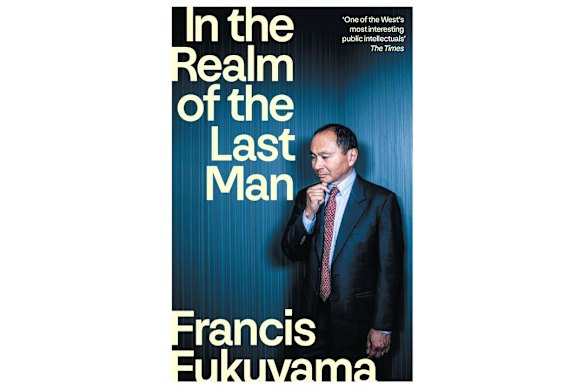
In the Realm of the Last Man by Francis Fukuyama (Profile, $45)
Francis Fukuyama is best known for 1989 essay The End of History, which, he argues in this combination of memoir and dissertation, was wrongly interpreted as a piece of neo-conservative triumphalism – at the same time, stating that he was part of the neo-conservative clique that included the likes of Irving Kristol. Since then, he’s changed his mind, left old alignments behind, and moved closer to the left. What happened? Two things: the Iraq invasion of 2003, which he opposed after concluding that the post-war period of reconstruction would be a disaster, and the GFC that followed not long after, and which led him to question and reject the twin neo-conservative precepts of largely unfettered marketplace capitalism and a strictly limited government role. He might still talk of “history” in quasi metaphysical, qualified Hegelian terms, but his engaging, plain-speaking essays demonstrate that the mind (not just history) is constantly evolving, that someone can break free of outmoded beliefs and world views to see things anew.
The Nerd Reich by Gil Duran (Simon & Schuster, $36.99)
Once upon a time, Silicon Valley was the home of nerdy, vaguely left-leaning liberals. All that has changed. These days it sits at Trump’s table and with sinister intentions. When Elon Musk waved a chainsaw around at a Conservative convention just after Trump’s second coming (the chainsaw symbolising ruthless cuts to government and bureaucracy), the New Yorker announced Techno Fascism comes to America. Journalist and political advisor Duran traces its rise from the late 1990s to the present day. And he paints a truly alarming picture of the world’s most obscenely wealthy men being invited into the Trump administration on a mass scale. These techno-oligarchs, he argues, aren’t content to work within the democratic system – they hate it, want to destroy and replace governments and countries with corporate city states. To counter it, he says, we need to “rethink our relationship with technology, which means rethinking what it means to be human”. Welcome to the new fascism and the “Nerd Reich”, funded by cryptocurrency, enabled by AI and run by oligarchs with deep-seated, anti-democratic, global ambitions.
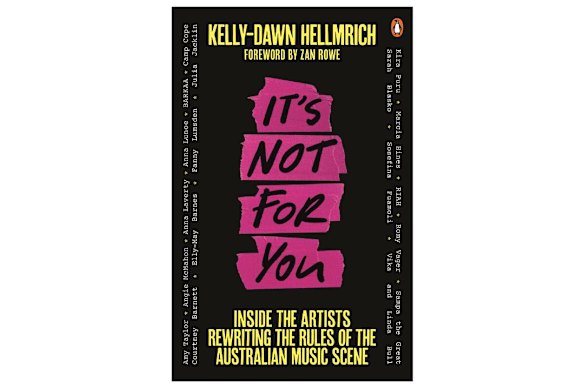
It’s Not for You by Kelly-Dawn Hellmrich (Penguin, $36.99)
I confess I’d never heard of the band Camp Cope before – but I did bow out of the music scene in the late 1970s. All the same, I can recognise, in Kelly-Dawn Hellmrich’s combination of memoir and interviews with fellow women and gender diverse musos, the nitty-gritty of band life. Whether she’s recalling seeing Sarah Blasko in a Sydney café at 18 and interviewing her years later, watching a bouncer in Launceston beat the daylights out of a drunken kid (then make a pass at her), recognising the indigenous blood that flows through her, being told her bass playing wasn’t up to scratch or talking to veteran Marcia Hines about the early days, the key theme of being a woman (or just different) in what has always been a very blokey game, is authentically rendered, often with subtle poignancy that underpins the anger. Among other things, her description of being in a Collingwood share house and being asked to join Camp Cope is understated, immediate, and like the book itself, has the ring of the real thing.
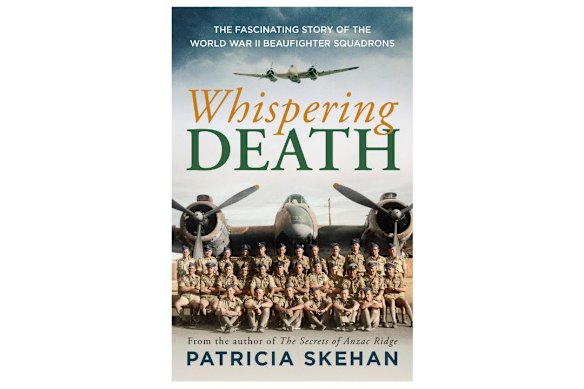
Whispering Death by Patricia Skehan (Hachette, $34.99)
The eponymous death whisperer is the WWII Beaufighter, whose twin engines were so quiet they could sneak up on the enemy and not be heard until they were overhead – too late. In 2012, a former pilot from a Beaufighter squadron called the Green Ghosts (who served in the Pacific) approached Patricia Skehan with boxes of documents and a request that she write their story. Who could refuse? She chronicles the tales of the crews, incorporating their diaries (along with archival material) so that the story is often told in the first person. Mentioned also are the code-breakers (mostly women) who supplied such vital information – especially, using captured files, the de-cyphering of the supposedly unbreakable Japanese code. One for WW2 buffs.
What else is happening in the book world?
Disclaimer : This story is auto aggregated by a computer programme and has not been created or edited by DOWNTHENEWS. Publisher: www.smh.com.au