
Even the dreams of top directors get left on the cutting room floor. In some cases, it’s a blessing.
This year’s much-anticipated touchdown of Denis Villeneuve’s third Dune film coincides with the 50th anniversary of the most valiant yet doomed attempt to bring Frank Herbert’s science-fiction epic to the screen. This earlier quixotic quest eclipsed even the interstellar ambitions of Villeneuve and his team.
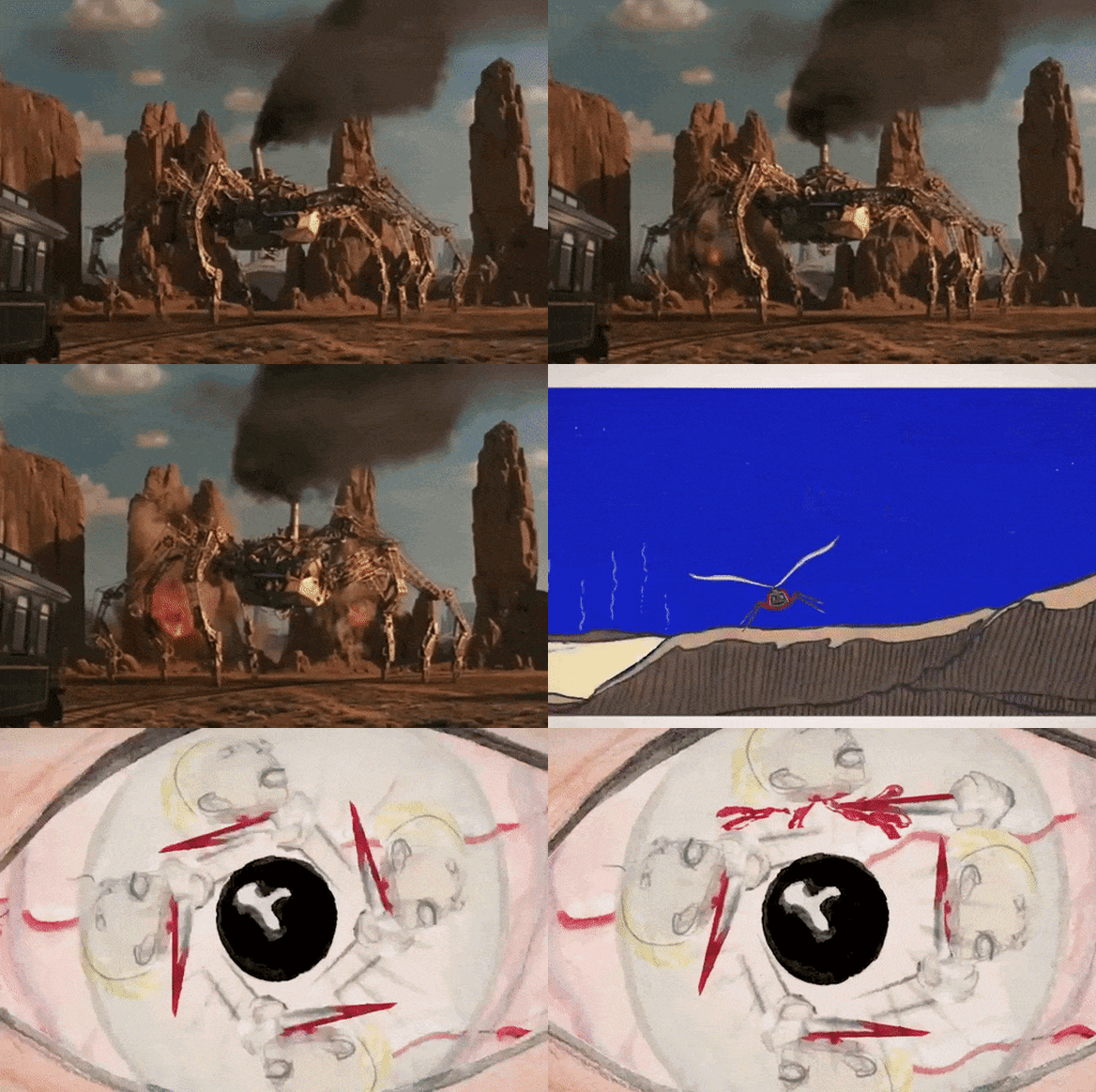
In the 1970s, Chilean-French auteur Alejandro Jodorowsky embarked on an unhinged mission to shoot a Dune film equivalent to an acid trip. His assembled cast included Orson Welles, Gloria Swanson and Mick Jagger; Pink Floyd were on soundtrack duties; French illustrator Moebius and artist H.R. Giger (of Alien fame) designed the psychedelic visuals. Even surrealist grandmaster Salvador Dali signed on, demanding an hourly rate of $100,000. Jodorowsky’s script was 14 hours long, and the production “bible” he created stretched to almost 300 pages (a rare copy sold for $4.3 million – 110 times the expected figure – at Christie’s in 2021).
The film was too ludicrous to manifest in reality but it did spawn Jodorowsky’s Dune (2013), a wildly entertaining documentary tracing the making of a film that wasn’t made. Has there ever been another unrealised pipe dream so tantalising in its promise that other films have been made about it?

As it happens, yes. Jon Schnepp’s The Death of ‘Superman Lives’: What Happened? (2015) offers a glimpse of the monstrosity that might have been had Tim Burton directed his Superman movie with Nicolas Cage as the Man of Steel. Christopher Walken, Courteney Cox and Sandra Bullock were picked for supporting roles, the script was penned by Kevin Smith (Mallrats) and the whole fiasco was produced by Jon Peters, a former hairdresser who insisted that his Man of Steel wasn’t allowed to fly or wear the red-and-blue outfit, and that the film end with Superman fighting a giant spider.
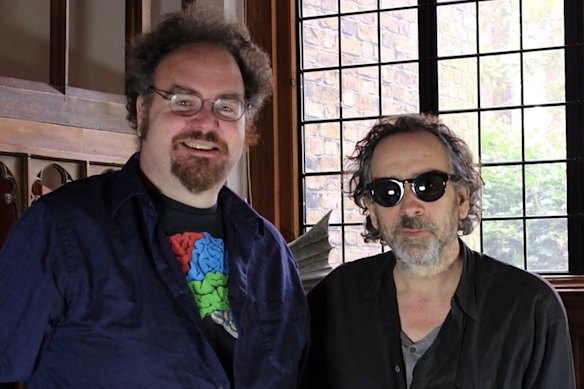
These non-existent movies are just two of the countless unrealised projects that are like cinema’s dark matter: you’ll never see them but their sheer volume holds everything else together. Miles Davis is alleged to have said that great music is about the notes you don’t play; the films a director doesn’t make might be as important as those they do.
For most of his life Stanley Kubrick maintained an obsessive drive to create a film about Napoleon, even enlisting the support of 50,000 members of the Romanian People’s Army to re-enact battles. It wasn’t to be.
For every Basic Instinct or Starship Troopers Paul Verhoeven has directed, there are dozens of films he’s had to abandon: Tom Cruise as Houdini, the early years of Adolf Hitler, a take on the life of Jesus.
And who wouldn’t pay to see Luca Guadagnino’s American Psycho? Darren Aronofsky’s RoboCop? John Carpenter’s Top Gun, Fatal Attraction or Santa Claus: the Movie?
In an alternate timeline all of these exist. But history is haunted by the spectres of films that don’t. Some are the victims of overreaching ambition, while others are vanity projects best left unrealised. A depressing number find themselves wallowing in “development hell”, the industry term for productions that sink into an eternal cycle of script rewrites, studio changes and funding sinkholes.
Jon Peters – the aforementioned hairdresser-turned-producer (and one-time Barbra Streisand squeeze) – is the kind of colourful Hollywood character who can pave the way to development hell. After he attained the rights to Neil Gaiman’s classic Sandman series, he offered up what the author described as “quite easily the worst script I’ve ever read”. Again, there was the inexplicable inclusion of a giant spider (a dream Peters finally realised on 1999’s Wild Wild West, a film critics lambasted).
Some of the greatest hits (or likely misses) we can only imagine: Stanley Kubrick’s Lord of the Rings with Paul McCartney as Frodo and John Lennon as Gollum; Sofia Coppola’s The Little Mermaid, reportedly too dark and risky to finance; indie darling Lynne Ramsay’s unlikely foray into western territory on Jane Got a Gun, which was completed to lukewarm reviews by Gavin O’Connor; Spike Lee’s remake of Bruce Lee’s Enter the Dragon with comedian Ken Jeong in the kung fu king’s role; disaster master Roland Emmerich’s entry in the James Bond franchise.
The list of off-kilter choices to direct Return of the Jedi is enough to induce whiplash. Terry Gilliam would likely have spun off the series in an odd direction but just imagine what Davids Lynch or Cronenberg would have done had they said yes to the job.
And picture the iconic Wolverine played not by Hugh Jackman but by the notably less ripped Bob Hoskins, who was originally slated for the role in the first X-Men adaptation, then to be directed by Kathryn Bigelow.
Bigelow’s own filmography illustrates how the films that don’t get made are as illustrative as those that do. In the 1990s she headed up a string of genre classics, from erotic thriller Blue Steel to surfer heist caper Point Break. Post-9/11, though, she took a hard shift towards serious, politically provocative films such as The Hurt Locker and Zero Dark Thirty. Her catalogue of unrealised projects since that point drives home this career turn, full of titles such as Held by the Taliban, Mogadishu Minnesota and The True American.
Australian directors might struggle to get projects up here but the difficulty can scale up exponentially when they arrive in Tinseltown. Jocelyn Moorhouse’s adaptation of Murray Bail’s Eucalyptus was production-ready in 2005, featuring a dream team of Nicole Kidman and Russell Crowe, before Fox Searchlight canned the project.
Fellow Australian Peter Weir’s filmography may include Picnic at Hanging Rock, Dead Poets Society, The Truman Show, Witness and Green Card but many subsequent projects failed to gain traction and he eventually announced he was quitting the game.
Development hell is a place particular to big-name filmmakers, simply by virtue of their clout. Studios won’t pander to an up-and-comer whose ideas don’t wash but when a Kubrick or a Spielberg has a passion project, they’re not so easily dismissed. Ordering endless rounds of casting changes and screenplay revisions is a way to keep the big earners appeased without actually committing to their financially dubious hobby horses.
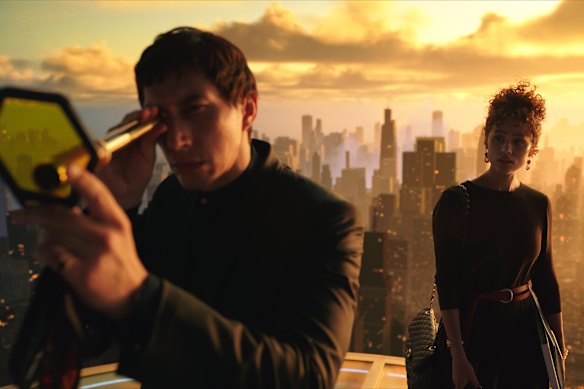
And sometimes the bean counters aren’t the villains of the story. Quentin Tarantino’s Star Trek, set in 1930s Chicago? Hard pass. Sylvester Stallone’s film about Edgar Allan Poe with himself in the lead? Nevermore! Francis Ford Coppola’s Megalopolis spent almost half a century in development hell; he ultimately financed the production himself, the result a sprawling mess that earned less than 10 per cent of its $120 million production budget.
Sometimes a dream is better left that way. Zack Snyder’s bombastic Hollywood fare – 300, Man of Steel, Justice League – has been box-office dynamite but after decades in development hell he finally self-produced his dream project, The Last Photograph. It debuted at the recent Toronto International Film Festival, with critics dubbing it “supremely indulgent auteur gunk”, “boring, bloated, brutally violent” and “an utter disgrace from start to finish … Snyder at his most unfiltered, with no studio intervention”. It’s about the notes you don’t play, Mr Snyder, and the giant spiders you keep to yourself.
The cruellest cut
It’s one thing for a passion project to go unrealised but another level of heartbreak awaits filmmakers who complete a work only for it never to see the light of day.
Coyote vs. Acme, completed in 2023, rated well with test audiences before Warner Bros Discovery decided to shelve it as a $30 million tax write-off. It took a concerted campaign by indie distributor Ketchup Entertainment (and a $50 million price tag) for the film to finally make it to screens. As of writing, it holds a 96 per cent score on review aggregator Rotten Tomatoes.
Few similar tales achieve such a happy ending. The DC superhero flick Batgirl featured a stacked cast including Leslie Grace (In the Heights), J.K. Simmons, Brendan Fraser and Michael Keaton returning to the suit he first squeezed into for Tim Burton’s 1989 Batman. The film was close to completion when Warner Bros Discovery cancelled its release and wrote off another $90 million tax-wise.
Other films have been consigned to the vaults for less financial reasons. The most famous is probably Jerry Lewis’ The Day the Clown Cried, in which a clown sent to a Nazi concentration camp attempts to offer hope to the children imprisoned there. After viewing a rough cut the co-writer declared it was unfit for public viewing and denied all rights for release.
James Franco’s The Long Home was completed in 2016, with a cast including Josh Hutcherson, Courtney Love, Ashton Kutcher and Josh Hartnett. Allegations of inappropriate sexual behaviour by Franco during the shoot, however, ensured that the finished film has never been publicly screened.
In 2009 Tony Kaye (American History X) completed a rough cut of post-Hurricane Katrina crime drama Black Water Transit but the work became a hot potato in a series of legal disputes that culminated in one of the film’s producers being sentenced to eight years in prison for fraud.
Some nearly finished films have been denied the fairytale rescue Coyote vs. Acme has enjoyed. The 2025 musical comedy-drama Golden had some serious talent flex: Michel Gondry directing, Pharrell Williams as co-producer and composer, and an all-star line-up including Janelle Monae, Missy Elliott and Andre 3000, but Universal Studios cancelled the film before it was released.
Coyote vs. Acme is in cinemas now.
Want more movies?
Disclaimer : This story is auto aggregated by a computer programme and has not been created or edited by DOWNTHENEWS. Publisher: www.smh.com.au



