TEHRAN – No previous U.S. president has served Israel in a way that Donald Trump has done for Netanyahu’s terror regime.
He unilaterally withdrew from the Iran nuclear deal. He recognized occupied al-Quds (Jerusalem) as Israel’s eternal capital and moved the U.S. embassy there. He recognized the Zionist sovereignty over the occupied Golan Heights. He also pressured the Arab states aligned with Washington to join the so-called “deal of the century.”
When signs began to indicate that he was close to losing the election after his first term, Trump activated the “Abraham Accords.” He hoped to secure consensus, approval, and support from the Zionist lobby AIPAC. At the time, AIPAC was divided between Republicans and Democrats.
Perhaps history is repeating itself in a different form. Trump’s popularity has declined as a result of his illegal war with Iran at Netanyahu’s request. None of the stated objectives were achieved. At the same time, the Zionist regime is facing unprecedented isolation because of its ongoing war crimes in Palestine and Lebanon.
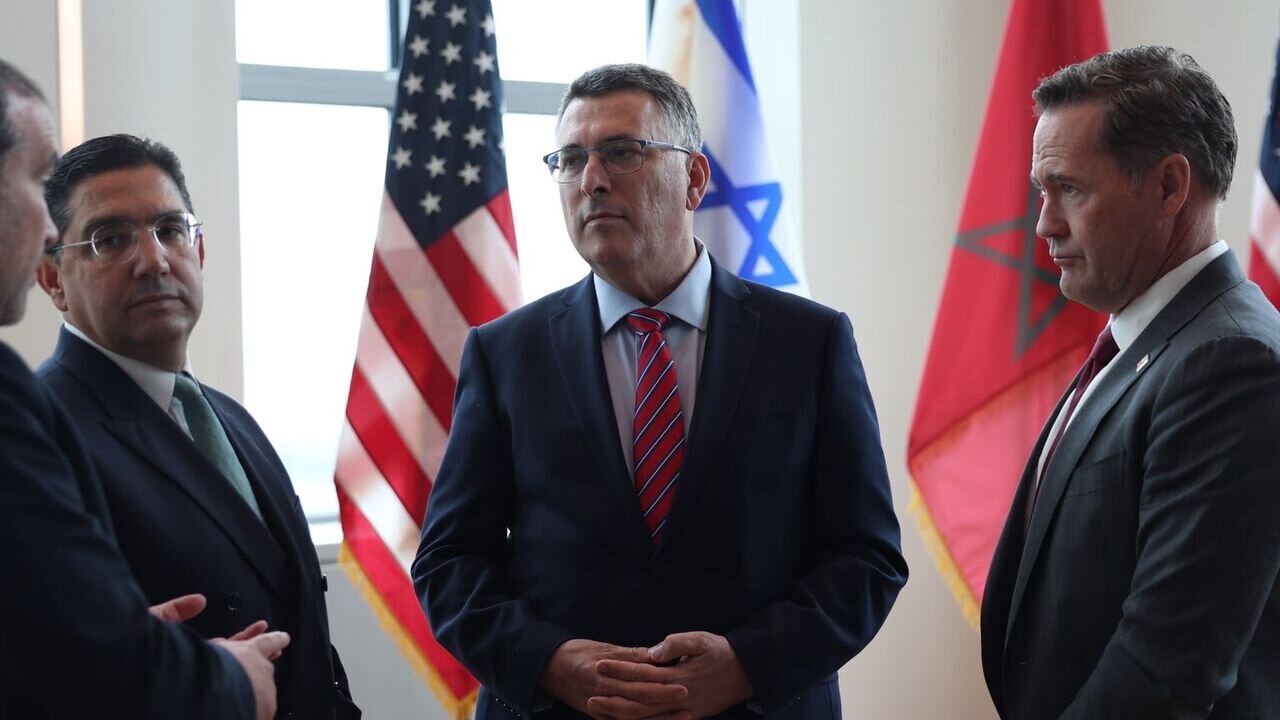
Hebrew media reported that a meeting was held on September 16, 2026. The meeting brought together Moroccan Foreign Minister Nasser Bourita and Israeli Foreign Minister Gideon Sa’ar in the presence of the U.S. ambassador to the United Nations.
It resulted in an agreement to raise diplomatic representation between Morocco and the Zionist regime to the level of opening embassies and exchanging ambassadors.
This step surprised the Moroccan public because of its timing. It came while the nation was preoccupied with a parliamentary election campaign. It has triggered a major wave of public discontent among Moroccans. They are known for their support for the Palestinian people and their rejection of all forms of normalization.
Moroccan–Israeli relations
Numerous informed sources indicate that Moroccan–Israeli relations date back to the 1960s, despite the absence of formal diplomatic relations. There were secret and unofficial contacts between the two sides.
In the 1990s, Morocco formally normalized relations with the regime and established diplomatic ties with it. However, these relations were suspended following the outbreak of the Second Palestinian Intifada on September 28, 2000. In December 2020, Morocco and Israel announced the resumption of diplomatic relations under the “Abraham Accords.” Liaison offices were reopened, including the Israeli liaison office in Rabat in 2021. Official contacts between the two sides also expanded.
Normalization was also elevated to unprecedented levels in several areas. These included economics and investment, security and military cooperation, technology, water management, and agriculture. Cooperation also expanded in tourism and aviation, with an increase in direct flights and tourism.
Trump’s formal recognition, on December 10, 2020, of Morocco’s sovereignty over Western Sahara helped pave the way.
These normalization advocates also claim that the restoration of relations would benefit Morocco on the Western Sahara issue. They argue that the regime’s announcement in July 2023, recognizing Moroccan sovereignty over Western Sahara, would help Morocco make use of the powerful Zionist lobby in the U.S. to advance the recognition.
In the absence of a separate detailed statement from Morocco’s Foreign Ministry on the agreement reached in New York, a joint statement issued by the U.S., Morocco, and Israel confirmed that the two sides had agreed to elevate their diplomatic missions to full embassies and exchange ambassadors. The statement also outlined plans to finalize agreements on investment protection and the avoidance of double taxation, while expanding cooperation in trade, finance, technology, tourism, water, agriculture, energy, and other fields.
Morocco seeks to strengthen and modernize its weapons arsenal. It also seeks to enhance its capabilities in military manufacturing and cybersecurity. Other areas of cooperation include the exchange of security expertise and technology with the regime.
Opponents of normalization argue that this cooperation concerns one of Morocco’s most sensitive areas. They say it raises questions about the use of surveillance and security technologies. They also argue that it opens the door to greater security penetration.
African dimensions
The African dimension is becoming increasingly important in Moroccan–Israeli relations, reflecting Morocco’s growing continental presence and expanding Israeli–African ties.
Since rejoining the African Union (AU) in 2017, Morocco has strengthened its economic and diplomatic relations across Africa, viewing the continent as a key arena for investment, trade, and cooperation. Morocco withdrew from the Organization of African Unity in 1984 over the participation of a Polisario Front delegation, which Morocco considers a separatist party.
Israel nearly secured AU observer status in 2021, but the decision was postponed to avoid divisions within the organization. Its bid was suspended again in 2023. The Gaza genocide and ongoing Israeli war crimes in Gaza, the West Bank, Lebanon, and the illegal war on Iran have further strained its relations with several African states.
The regime hopes to leverage Morocco’s African networks to access markets and develop trilateral Moroccan–Israeli–African cooperation in areas such as agriculture, water, healthcare, security, investment, and technology transfer.
However, political differences, particularly over Palestine and Western Sahara, may limit such cooperation. Its scope is therefore likely to vary across African countries according to their political, economic, and security interests.
Security aspects
Morocco wants to strengthen its presence and partnerships south of the Sahara. The Israeli regime also seeks to expand its relations across the continent, particularly in the Sahel and West Africa.
This cooperation also raises concerns among other African countries, such as Algeria, Egypt, and South Africa. They may view it as a threat to their security, stability, interests, and spheres of influence. They may also see it as a disruption of existing geopolitical balances.
Full normalization and Moroccan–Israeli military cooperation have angered Algeria and increased tensions between Morocco and Algeria. They have also contributed to an unprecedented arms race between the two countries.
This raises concerns about the possibility of a conflict between the two countries, which could cause widespread devastation. Such a scenario, even if limited to a major diplomatic fallout, would serve the Zionist regime’s broader objective of weakening Arab and Muslim states. In such a scenario, both Morocco and Algeria would ultimately bear high costs.
This cooperation also raises political debates related to the Palestinian cause. The issue represents one of the most prominent political challenges surrounding Moroccan–Israeli relations. Morocco officially continues to affirm its support for the Palestinian cause while developing its relations with the occupying regime.
Can Morocco balance the development of its economic and strategic relations with Israel while maintaining its declared positions on the Palestinian cause? The experiences of Egypt and Jordan may offer some insight.
Critics of normalization argue that all the arguments put forward to justify it and the elevation of diplomatic representation are baseless. They consider the acceleration of normalization with the Zionist regime, particularly in sensitive areas, a threat to Morocco’s security and stability.
They have presented extensive evidence of the dangers of normalization and the regime’s evil intentions, as well as its attempts to drag Morocco into conflicts that harm its interests.
The latest example was its attempt to involve Morocco in the storming of the border crossing in the city of Ceuta on July 20, 2026, to embarrass the Spanish prime minister, known for his positions supportive of Palestine.
This led to tensions in relations between Morocco and its second-largest economic partner, Spain, and also affected the positions of other European countries.
An agreement to open embassies does not mean that the exchange of ambassadors has actually been completed unless an official announcement confirms it. Nor does it mean that the embassy cannot subsequently be closed; the step will remain tied to Morocco’s domestic political context.
Many Moroccans consider the Palestinian cause to be a national cause. Public reactions could therefore create pressure on Moroccan decision-makers to reconsider their positions. Some Moroccan officials have also expressed concern about the pace of normalization and the growing presence of Israeli actors.
The step will also remain tied to the regional and international landscape, particularly developments in the U.S., which is heading toward midterm elections. These could change the House of Representatives and the Senate. The elections are taking place amid declining support for Trump, which could affect his ability to complete his term while continuing to bypass Congress.
The completion of the embassy exchange may likewise depend on developments in the Arab–Israeli and wider Islamic–Israeli conflicts.
Disclaimer : This story is auto aggregated by a computer programme and has not been created or edited by DOWNTHENEWS. Publisher: tehrantimes.com