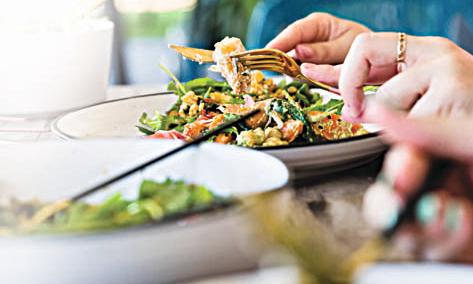
Indian tastes have come a long way, from explaining what matcha is to constantly experimenting with it and making it one of ours. Once unfamiliar, international cuisine is now finding space in smaller towns and local cafes. Alongside this adaptation, international cuisine is being given an Indian twist, with global flavours being reworked through the Indian palate.
Sahil Makhija, a food critic says, “On seeing a certain food trend, there are people who want to make it accessible at a lower cost. That is where the game changes.” As the trends become widespread, he continues, “It’s more the younger generation that is actively seeking out these trends”. This began with Gen-Z’s growing interest in K-pop, Japanese food and experiencing different cultures, a shift that marked the move from niche to mainstream.
The ‘Acquired’ Taste
Of late, ‘acquired taste’ has become a buzzword among Gen-Z to describe food that takes time to appreciate. But acquiring a taste is not just about liking something but also about familiarity. Thomas Zacharias, Chef & Founder of The Locavore, describes ‘acquired taste’ as personal. He says, “India contains an extraordinary range of food cultures. Fermented batters, pickles, dried and fermented fish, bitter greens, pungent ingredients and intense souring agents are already part of everyday food in many regions”.
He further adds, “The bitterness of matcha or the fermented complexity of kimchi and miso may not be conceptually alien to many Indian diners. They come from their own histories and food cultures”. Traditional Indian thalis, for decades, embraced sourness, all in one plate. But the context is different from the way they are encountered in newer global foods.
Selling the Unfamiliar
The introduction of something new does not always translate into immediate acceptance. Brands build familiarity with unfamiliar foods through textures, formats and flavours. Rahul Vohra, co-founder of the Croffle Guys says, “When we started, we had no sales in the start because people were hesitant to try something new. But once they tried their minds were blown away.” He continues, “In essence, croffle is a new food combination. Though it’s international, it’s just a flaky bread, a paratha or a buttered bread that Indians are so familiar with at the end of the day.”
Making It Ours
Indians rarely stop at simply experiencing new food. Instead, they take different cuisines and experiment with them. Thomas says, “We want the food to feel less alien and more enjoyable to the people we are cooking for. We may adjust the heat, acidity, sweetness, seasoning or texture.”
Dishes from different parts of the world are being reworked through an Indian lens to suit the Indian palate.
Indian Remix
Reinterpreting global dishes for Indian tastes doesn’t change their origins, but it shapes how Indians consume and perceive them.
Indianisation in its process, is also, in some ways, changing a dish by adding Indian spin as a new point of recognition. “A shawarma has been desi-fied, masala-fied. If you give an average Indian an actual shawarma which is not so spiced up, they will probably not like it,” continues Makhija.
Curiosity & Craze
A dish no longer needs to be encountered at its place of origin. Social media exposure has drastically changed how people approach unfamiliar dishes. Consumers are more willing to try what they see in online reviews.
Global To Local
“Travel is a privilege and not everyone can go to Italy and eat authentic Italian food, this is the only way people will eat Korean, Japanese, Italian cuisines and more”, said Sahil. Indians have nuanced ways of accepting different cuisines. Indian spin, in many ways, became a bridge from foreign to familiar, allowing new flavours to enter the Indian market. While it may not replicate the experience of eating these cuisines in their original form, it creates a unique entry point.
If you give an average Indian an actual shawarma which is not so spiced up, they will probably
not like it.”
Sahil Makhija, Food Critic
Fermented batters, pickles, dried and fermented fish, bitter greens, pungent ingredients and intense souring agents are already part of everyday food in many regions.”
Thomas Zacharias, Chef & Founder of The Locavore
Disclaimer : This story is auto aggregated by a computer programme and has not been created or edited by DOWNTHENEWS. Publisher: deccanchronicle.com