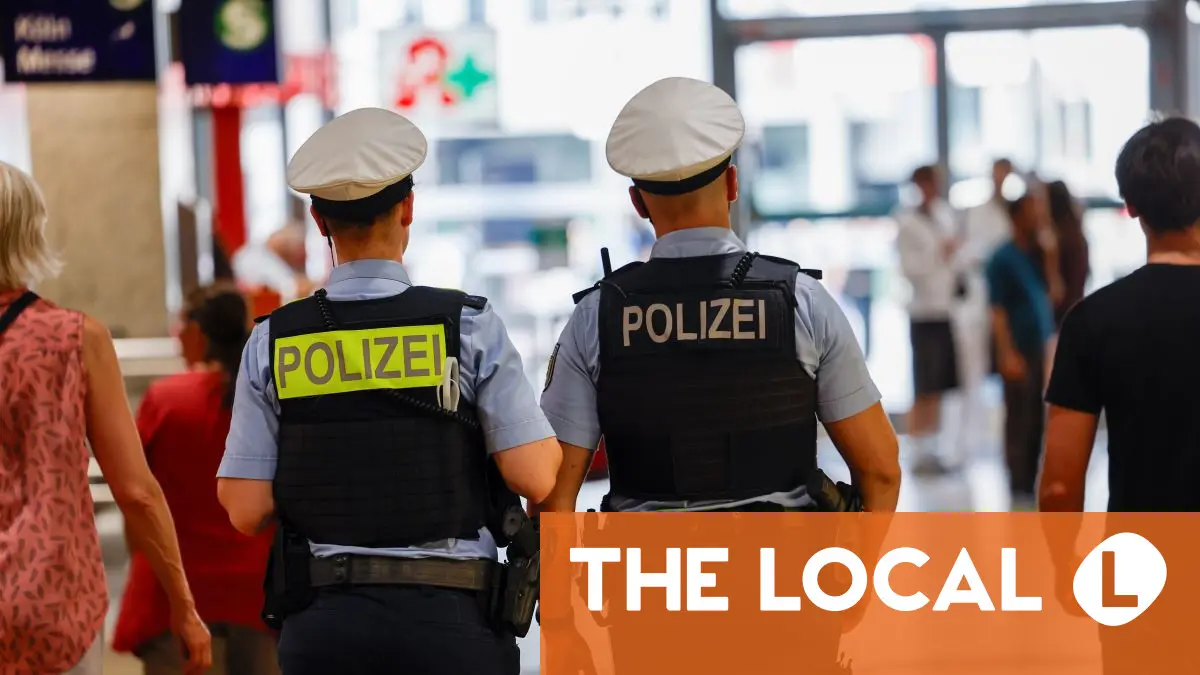
Germany has passed a law expanding the Federal Police’s authority, with potential impacts on residents moving through train stations and airports.
Germany is expanding the powers of its Federal Police (Bundespolizei), giving officers new surveillance tools, broader investigative powers and a greater role in immigration enforcement.
The reform was approved by both the Bundestag and Bundesrat on September 25th, bringing to an end a legislative process that stretched across three federal governments for more than five years.
Several of the new powers apply to places such as train stations, airports and border areas.
What foreign residents are most likely to notice
Many of the law’s new powers relate to transport hubs and other locations that fall under Federal Police jurisdiction.
Under the new rules, the Federal Police may use automatic real-time facial recognition. During the parliamentary debate, supporters pointed to cases such as the search for a kidnapped child as an example of how the technology could be used.
The Federal Police can also use video systems supported by artificial intelligence to identify movement patterns that may indicate a crime is taking place, such as someone drawing a knife, throwing a punch or a person collapsing onto railway tracks.
READ ALSO: German police to get power to shoot down drones
Officers also gain broader powers to monitor communications as part of investigations into extremism and human trafficking.
According to the government, this includes measures such as mobile phone tracking and monitoring communications through messaging apps.
The law also allows for so-called random checks in weapon-free zones at train stations and on trains.
Why are some people concerned?
The strongest parliamentary opposition came from the Greens and the Left Party.
Irene Mihalic of the Greens argued that the use of live biometric surveillance raised legal concerns. Clara Bünger of the Left Party warned that the reforms risked making widespread surveillance a normal part of everyday policing.
Beyond parliament, the reforms have attracted attention from anti-discrimination and civil liberties groups because some of the new powers will be exercised in locations where allegations of racial profiling have already been raised.
READ ALSO: What to know about talking to the police in Germany
Research cited by Mediendienst Integration suggests that people perceived as foreign are stopped by police more often than people not perceived as foreign. Complaints received by the Federal Police Commissioner concerning alleged racial profiling have frequently related to checks at borders, airports and train stations.
Racial profiling remains illegal under German law. German courts have ruled that police stops based on ethnic appearance or similar characteristics violate constitutional protections against discrimination.
What does the law mean for immigrants facing deportation?
One of the most significant changes affecting a small number of non-German nationals concerns deportation procedures.
Under the new rules, the Federal Police can apply directly to detain someone who is pending deportation or pre-departure custody.
In practice, this will mainly affect encounters at places such as airports and railway stations. The government’s stated goal is to prevent people from disappearing before their deportation can be carried out.
Why did the government introduce the law?
Large parts of the current Federal Police Act date back to 1994, long before modern digital communications, AI-powered surveillance technologies and more recent security challenges emerged.
Germany’s governing CDU/CSU-SPD coalition said the reforms would give officers more effective tools to combat extremism, human trafficking and serious security threats.
Supporters of the reform, including Interior Minister Alexander Dobrindt (CSU), also emphasised strengthening the Federal Police’s operational capabilities, including surveillance technology and drone-related powers.
Why did the law take so long to pass?
The road to approval was unusually long. An earlier attempt under Angela Merkel’s government failed in the Bundesrat in 2021. A similar reform proposed during the “traffic light” coalition years also never reached the finish line.
The latest version first passed the Bundestag in July 2026 – but parliamentary officials later determined that it required a special constitutional majority known as a “chancellor’s majority”, meaning support from a majority of all MPs rather than only those present for the vote.
READ ALSO: Are German police racially profiling people at the border?
Disclaimer : This story is auto aggregated by a computer programme and has not been created or edited by DOWNTHENEWS. Publisher: thelocal.de