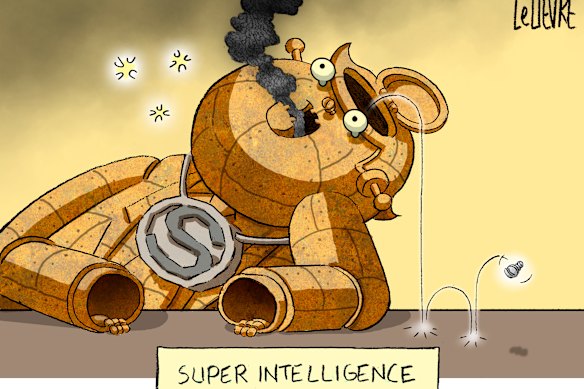
I would never vote for a politician who used AI to write their speeches (“Australian politicians top AI usage list”, October 1). Legitimate research I understand, but when a political representative’s whole raison d’etre is the ability to communicate the needs of constituents and the wider nation to our parliament, they should have enough intelligence of their own to persuade and inspire others. Artificial is indeed the best description of the banal, formulaic, meaningless scrapings that pass as some form of communication from AI and will certainly never progress us as a nation. Elisabeth Goodsall, Wahroonga
As a nonagenarian who is surrounded by people of a similar advanced age, I often mingle with those who once held positions of great influence. We are all soon forgotten. But what is not so easily forgotten are our words, especially those spoken from the heart at times of great joy and great sadness. Words of forgiveness are particularly poignant. Because words can both heal and hurt they often linger well after the speaker has gone and we barely remember the face. Words spoken by politicians such as Winston Churchill, Franklin D Roosevelt and John F Kennedy, notably at moments of historical significance, will certainly perdure, while the non-stop waffle emanating from a Donald Trump will be lost in the dustbin of history. Bernard Moylan, Bronte
Politicians resorting to AI brings to mind Albert Einstein’s valid observation that if you can’t explain it simply, you don’t understand it well enough. Steve Ngeow, Chatswood
It comes as no surprise that some Australian politicians are using AI to write their speeches (“Our politicians’ speeches are literally robotic”, October 1). Too many seem to want to take the easy way out generally – stringing a few words together is apparently harder than it once was. Rather than the hard slog of writing a speech from scratch, it’s easier to cheat than make it up yourself. Unfortunately, this seems to be the approach of sections of our community. Communication should be a politician’s most important task, both in spoken and written form. A politician’s words should match their actions, or they become empty platitudes provided by hollow people. We deserve better. Geoff Nilon, Mascot
Let’s not mince words, some politicians need all the help they can get. Indeed, how apt this quote from Gore Vidal, “Today’s public figures can no longer write their own speeches or books, and there is some evidence that they can’t read them either.” Edward Loong, Milsons Point
Don’t fall for AI gravy train
How refreshing to see someone cut through the ridiculous hype about AI going rogue (“AI can’t ‘go rogue’. Don’t be conned”, October 1). When will our government representatives stop being totally bewitched by a small group of men who have shown themselves to be morally and ethically compromised? The circularity of the argument, that we need them to protect ourselves from the very systems they create is frankly ridiculous. It reeks of desperation to stay relevant. However, trusting my information with a government that courts rather than prosecutes them is a real concern. We are enabling others to hold our country to ransom by the very access we give. Somehow, our leadership has lost its way, tugging their forelocks and trying to jump on a fairly fugacious gravy train. As for the impending IPO, buyer beware. Elizabeth Darton, Lane Cove West
Thank you, Professor Fernandes, for your comforting article about AI, particularly that the “I” part has nothing to do with intelligence, as we humans understand the concept. Worthy of pride of place on my fridge. Pen Layton-Caisley, Marrickville
I was drawn to read Professor Fernandes because of my concerns about my lack of knowledge about AI, and the alarming press reports available about its future. I do have concerns that AI companies are not being open and honest with us, and I hope everyone has drawn the same conclusion. What do people think should be done to investigate these claims of potential corporate malpractice? Ian Shepherd, Elizabeth Bay
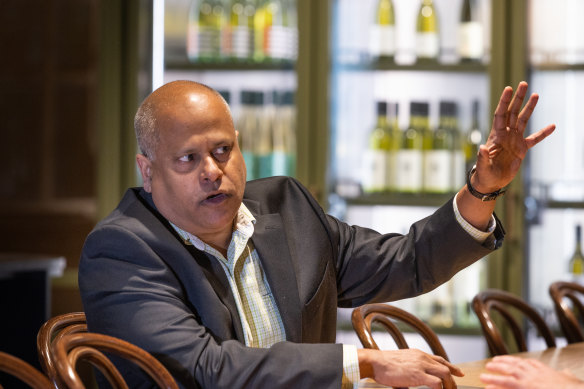
Clinton Fernandes seems right that humans, not software programs, are responsible for AI going rogue. After all, AI is a program, though a very clever one that can do very complex things, but it learns from what’s available and what it has been told to do. There is evidence that human-in-the-loop (HITL, abbreviated already) improves AI through such human supervision.
The opposite is also true as seen in the decision by OpenAI to push the envelope and allow the bots to cross safety limits in the Hugging Face episode. Unfortunately, the guardrails to keep AI ethical will need to be supplied by the companies that design AI systems, as governments are not big buyers of AI and may not have the wherewithal to effectively police it. There are complex international laws compounded by resistance from world leaders who don’t want their country to “lose the race”. I will believe AI agents go rogue when they turn on their creator’s own sensitive information and release it. That would usher out the guardrails quicker than anything. Manbir Singh Kohli, Pemulwuy
Artificial Intelligence or Super Intelligence? Stick a suave name on it and you have sold what is actually a mere statistical processor or an Accounting Interface. So at the moment I am still more fearful of the unstoppable humans behind this new outlet for greed and power, and also those who want in. I, for one, never imagined that human flourishing was their raison d’etre. Helen Lewin, Tumbi Umbi
” loading=”eager” src=”https://static.ffx.io/images/$zoom_0.21%2C$multiply_0.7725%2C$ratio_1.5%2C$width_756%2C$x_0%2C$y_0/t_crop_custom/q_86%2Cf_auto/dc15954d593793603afcd1e4b7cd9984da839faf” srcset=”https://static.ffx.io/images/$zoom_0.21%2C$multiply_0.7725%2C$ratio_1.5%2C$width_756%2C$x_0%2C$y_0/t_crop_custom/q_86%2Cf_auto/dc15954d593793603afcd1e4b7cd9984da839faf, https://static.ffx.io/images/$zoom_0.21%2C$multiply_1.545%2C$ratio_1.5%2C$width_756%2C$x_0%2C$y_0/t_crop_custom/q_62%2Cf_auto/dc15954d593793603afcd1e4b7cd9984da839faf 2x” class=”sc-d34e428-1 ldCIuB”>
Shoebridge too far
David Shoebridge might be an effective politician, but his vision of the Greens supplanting Labor is, I suggest, merely a very hopeful exaggeration (“As head of Greens, Shoebridge’s task is broader”, October 1). Some of the Greens’ ideas may be admirable, but waving the big stick before a government with a sizeable majority, from a stance of limited influence, may curb progress of the party. His first task will be to unite his party, members of which seem to have as many different opinions as they have seats.
This division was recently indicated when three members crossed the floor to vote against the party’s majority position. The Greens are unlikely to check One Nation’s advance when the cost of living is hitting the headlines far more than environmental concerns. Shoebridge could find that his adversarial attitude might be a disadvantage. Pragmatism might be the key. Sensible negotiation and a degree of compromise might work much better, as past history has proven. But at least he is likely to make enough noise to be noticed. Derrick Mason, Boorowa
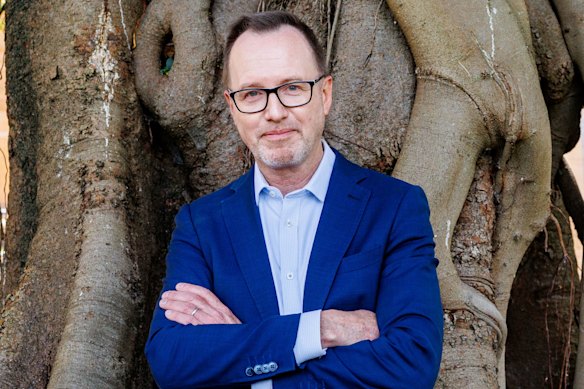
I wish “Shoey” (David Shoebridge) well. However, his bold plan to “Replace Labor” is naive. He would be better adopting Penny Wong’s long used statement of “agree where we can, disagree where we must”. Tim Schroder, Gordon
Coal expansion is lamentable
The only restriction in the Independent Planning Commission (IPC) decision to allow the largest coalmining proposal in the state’s history to go ahead (“Backlash for Labor over coal approval”, October 1) is that the two foreign-owned companies, Yancoal and Glencore, are permitted to only export coal to countries that have strategies to limit emissions in line with the goals of the Paris Agreement. There appear to be no requirements whether these companies meet such goals. None of the larger industrialised countries are on track to meet the Paris Agreement, and, according to Carbon Tracker (a non-profit independent financial think tank), the progress of these companies’ customers such as Japan and South Korea is rated as “insufficient” while that of other customers, namely India and China, is rated as “highly insufficient”. It would seem that the members of the IPC have failed in their duty to the people of NSW and Premier Minns’ description of the decision as “common sense prevailing” is nonsense. Peter Nash, Fairlight
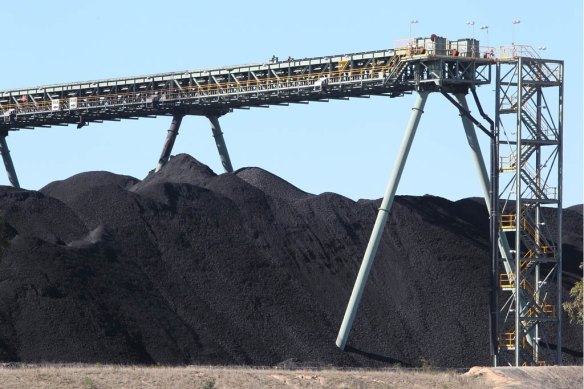
I gasped when I read that the Independent Planning Commission had approved the Hunter Valley Operations Continuation Project. The rationale for this is the project’s contribution to employment and economic activity in the Hunter region. However, continued production of greenhouse gases through coalmining on this scale will come back to bite us with more severe droughts and floods, food insecurity and astronomical insurance premiums. And, of course, the good people of the Hunter who supported this project will probably be baying for hand-outs when this happens to them. The other breathtaking aspect of this decision is its small-minded focus on one region of one country. Pity the Pacific nations who will experience this decision as a threat to their very existence. Ellen McEwen, Croydon
The irony is exquisite. In the same issue that former defence leaders and security practitioners felt compelled to pay for a full-page advertisement about the lack of an Australian climate security plan, the NSW government celebrates the approval given to two multinational coal companies, Yancoal and Glencore, to expand and extend their Hunter Valley coal operations. So much for the plea of the ad’s 18 signatories for the Australian government to end new coal and gas licenses and accelerate decarbonisation. Climate Council chief executive Amanda McKenzie called the coal mine approval the “biggest polluting coal expansion in NSW history”. Can governments be awarded a Nobel prize for cognitive dissonance for claiming environmental credentials while approving 38 polluting coal, oil or gas projects? For spruiking the economic benefits while ignoring the immense long-term financial, social and environmental cost of fires, droughts, storms and rising sea levels? Prime Minister Anthony Albanese would do well to demonstrate cognitive consonance by overturning this lamentable approval. Tom Knowles, Parkville (Vic)
The NSW Independent Planning Commission claims that the economic benefits of the HVO coal mine expansion outweigh the climate change impacts of the project. What a perfect example of short-sighted thinking. Any short-term economic benefits of the project will pale into insignificance compared to the long-term economic damage caused by a rapidly warming planet which the project will exacerbate, not to mention the harm to people and nature. The Insurance Council has calculated that over a five-year period to 2025, there were insured losses of $22.5 billion resulting from extreme weather events, most of which were caused or worsened by climate change. These impacts will get worse unless we stop approving coal and gas projects. It is becoming increasingly difficult to avoid the conclusion that the human race is the only species too stupid to try to save itself. Martin Mansfield, Baulkham Hills
The Independent Planning Commission says the new proposed coal mine’s pollution “can be managed”, which to my mind are just weasel words saying nothing. Future generations will look to the impacts with disgust. Vicki Zvargulis, Corrimal
Bus has racks, woohoo!
I was amused to see the Western Sydney Airport chief executive say a bus service from the airport to Central would provide “a great onboard experience including luggage rack, dedicated space for prams and wheelchairs and exclusive bus bays for boarding and disembarking” (“Direct link from west’s airport to cost $55 per adult on shuttle”, October 1). Surely that is the bare minimum for passengers to expect at $55 a trip on a bus? Greg Phillipson, Aranda (ACT)
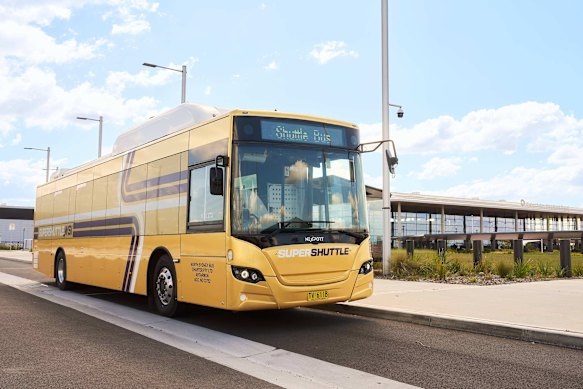
Wow! The Western Sydney Airport shuttle bus at the bargain fare of $55 will allow me to enjoy the onboard experience of a seat, a luggage rack, disabled and child-friendly access and a dedicated place to get on and off the bus. This private operator is going all out. I cannot wait. Scott Warnes, Suffolk Park
In all my travel experiences, I don’t think I have ever paid anything like $55 for a bus from an airport into the city. This may turn some people from using the new airport or increase what will be already heavy traffic in the area. I would hope that for people arriving from overseas that the $55 included a pie and a beer as a welcome to our country. Peter Miniutti, Ashbury
A relatively small fee for a distant airport transfer to the greater city is commonplace around the world. The offset is that the original air ticket price is far cheaper than a direct flight to the city. Girona is one cheaper airport fly-in with a regular shuttle to Barcelona, and Skavsta Airport to Stockholm is another example. For the frugal traveller, it is all part of the journey. I always look at it as a cheap alternative to a half-day tour of a “new country experience”. Janice Creenaune, Austinmer
Maccas trackers
It’s true that McDonalds is “unemotionally … finding the right location to make some money” not far from the end of my street (“Maccas to open Newtown store”, October 1). It might also be said that emotional locals may well be handy with poster designs, spray cans or street-level campaigns. Not that I support that sort of thing, of course. Colin Stokes, Camperdown
- To submit a letter to the Sydney Morning Herald, email letters@smh.com.au. Click here for tips on how to submit letters.
- The Opinion newsletter is a weekly wrap of views that will challenge, champion and inform. Sign up here.
Disclaimer : This story is auto aggregated by a computer programme and has not been created or edited by DOWNTHENEWS. Publisher: www.smh.com.au