TOKYO –
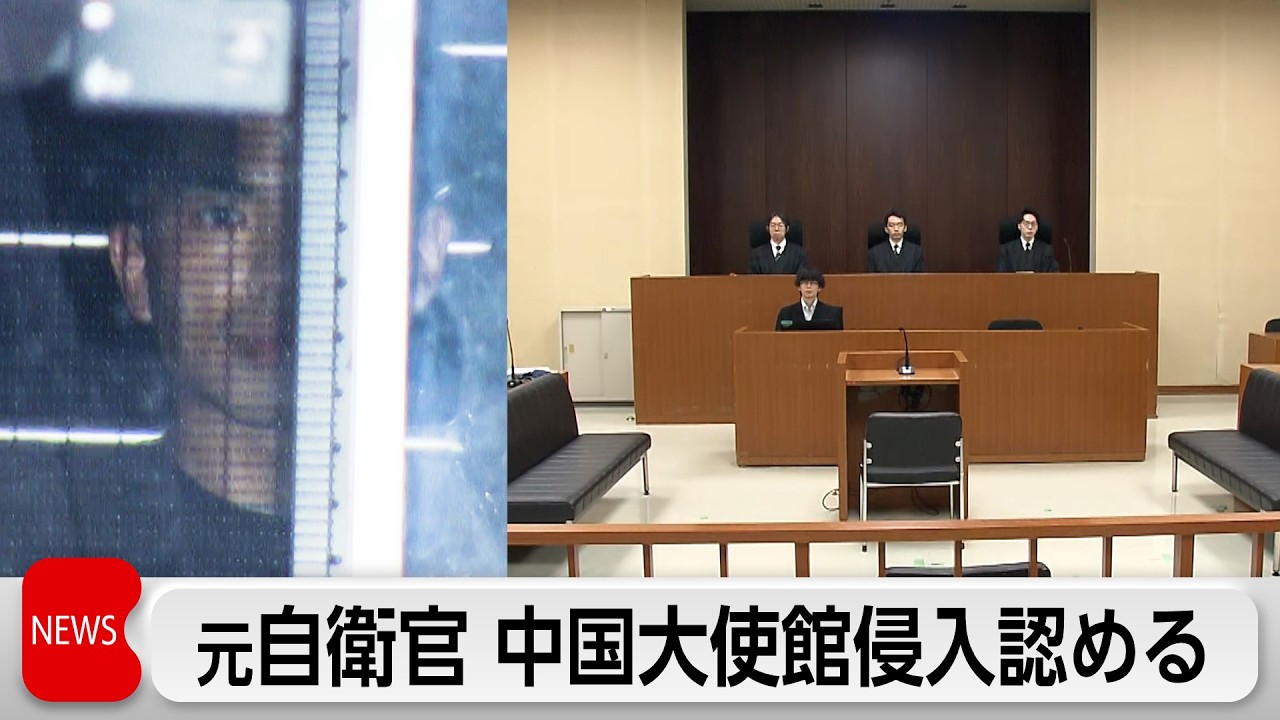
A former Ground Self-Defense Force officer accused of entering the Chinese Embassy in Tokyo with a kitchen knife and threatening diplomatic staff admitted to trespassing and violating Japan’s weapons laws at his first court hearing on October 1, but disputed whether his statements constituted criminal threats.
Kodai Murata, 24, a former second lieutenant stationed at the Ground Self-Defense Force’s Camp Ebino in Miyazaki Prefecture, appeared before the Tokyo District Court over an incident on March 24, 2026, that triggered a diplomatic protest from Beijing and raised questions about security at foreign diplomatic missions in Japan.
Murata acknowledged entering the embassy compound without permission and carrying a knife in violation of the Firearms and Swords Control Law. However, he told the court that he would leave the legal judgment concerning the threatening statements to his lawyers.
His defense team argued that the charge of intimidation should not be upheld, maintaining that Murata had not intended to personally harm embassy staff.
According to the indictment, Murata entered the Chinese Embassy in Tokyo’s Minato Ward on March 24 while carrying a kitchen knife with a blade approximately 18 centimeters long. He subsequently approached embassy employees and presented a written statement containing language that prosecutors allege amounted to a threat.
The statement included the words, “Japanese patriots will execute you on behalf of the Japanese gods.”
Prosecutors allege that Murata handed the document to embassy personnel and read its contents aloud, constituting criminal intimidation under Japanese law.
At the October 1 hearing, Murata did not dispute the wording of the statement but maintained that determining whether it legally constituted a threat was a matter for his defense lawyers.
The case centers on an unusual security breach in which a serving Japanese military officer traveled hundreds of kilometers from his assigned base to Tokyo, purchased a knife and entered one of the country’s most politically sensitive diplomatic facilities.
Investigators established that Murata had been assigned to Camp Ebino in Ebino City, Miyazaki Prefecture, shortly before the incident.
On March 23, the day before the intrusion, he left Miyazaki and traveled by express bus to the Hakata area of Fukuoka, where he transferred to a Shinkansen bound for Tokyo.
He arrived in the capital late that night and visited a retail store in the Ginza district, where he purchased a kitchen knife.
Murata subsequently spent the night at an internet cafe before heading to the Chinese Embassy the following morning.
Investigators said he had taken leave on March 23 but failed to report for duty as required on March 24.
At approximately 8:55 a.m. on March 24, Murata approached the embassy compound and entered its grounds by climbing over a security barrier from an adjacent building.
Police investigations found that he had crossed a fence designed to prevent unauthorized entry before making his way into the embassy’s landscaped grounds.
After entering the compound, Murata reportedly concealed himself among bushes for approximately 15 minutes.
He then left the knife in the vegetation and approached an embassy employee, requesting a meeting with the Chinese ambassador.
Investigators said Murata had deliberately put the knife aside because he believed carrying it openly would make embassy staff suspicious and prevent him from meeting the ambassador.
Embassy personnel detained him at the scene, and police subsequently recovered the knife from the bushes based on information he provided.
No embassy employees were injured during the incident.
Following his arrest, Murata reportedly told investigators that he had wanted to speak directly to the Chinese ambassador about what he regarded as China’s increasingly confrontational diplomatic position toward Japan.
He said he intended to demand that the ambassador refrain from making strong statements against Japan.
According to investigative accounts released after his arrest, Murata initially explained that he had brought the knife because he intended to kill himself in front of the ambassador if his demands were rejected.
He maintained that he had not intended to injure embassy personnel.
Those explanations became a central issue in the subsequent investigation, particularly after authorities examined the written statement he had delivered and the language directed toward Chinese diplomatic staff.
During questioning at the October 1 hearing, Murata gave a further account of what had motivated his actions.
He told the court that before the incident, he had experienced a dream in which a figure resembling a Japanese deity instructed him to confront China.
According to his testimony, the figure told him that China was looking down on Japan and urged him to go and negotiate directly with Chinese officials.
Murata said he had decided to act on the message from the dream.
Prosecutors told the court that Murata had formed a determination to meet the ambassador and express his objections to China’s diplomatic policies.
The explanation followed earlier statements in which Murata had expressed dissatisfaction with what he considered China’s hard-line approach toward Japan.
During an August court proceeding concerning the grounds for his continued detention, Murata said he believed China’s forceful diplomatic stance was unjustified and needed to change.
He also expressed regret over the consequences of his actions, saying he had caused considerable trouble for his family and colleagues.
The March intrusion prompted an immediate police investigation and considerable concern within Japan’s Defense Ministry.
On March 29, investigators from the Tokyo Metropolitan Police Department searched Camp Ebino and other locations associated with Murata.
Police vehicles entered the military installation in Miyazaki Prefecture as investigators sought information about his background, activities and preparations for the embassy intrusion.
The investigation focused on how a serving officer had traveled to Tokyo, obtained a knife and gained access to a protected diplomatic facility.
Murata was initially arrested on suspicion of unlawful entry into the embassy compound.
On April 14, police served a further arrest warrant alleging a violation of the Firearms and Swords Control Law in connection with his possession of the kitchen knife.
Investigators established that the knife had been carried onto the embassy premises before being concealed in the bushes.
The case subsequently underwent further examination, including a psychiatric assessment conducted during a period of detention to determine Murata’s criminal responsibility.
Following that assessment, prosecutors concluded that he could be held criminally responsible for his actions.
Murata was formally indicted in July on charges of unlawful entry, violating weapons regulations and threatening embassy personnel.
The incident also resulted in disciplinary proceedings within the Ground Self-Defense Force.
On August 28, the GSDF announced that Murata had been dismissed from service as a disciplinary measure.
The military described his actions as extremely serious because they had targeted a diplomatically important facility and significantly undermined public confidence in the Defense Ministry and Self-Defense Forces.
It said the incident had caused substantial social repercussions and pledged to strengthen personnel guidance and ensure stricter compliance with laws and service regulations.
Murata responded to the disciplinary action by apologizing for the difficulties he had caused his colleagues.
The Defense Ministry had previously stated that it had received no reports indicating significant problems with Murata’s conduct or attitude toward his duties before the incident.
He had passed the general officer candidate selection process in fiscal 2024 and subsequently undergone officer training.
Defense officials characterized the embassy intrusion as an individual act rather than an operation connected to his military duties.
The diplomatic consequences began almost immediately after the breach.
China’s Foreign Ministry publicly condemned the intrusion on March 24, saying a serving member of Japan’s Self-Defense Forces had illegally entered its embassy and threatened Chinese diplomatic personnel.
Foreign Ministry spokesman Lin Jian described the incident as a serious violation of diplomatic security and demanded that Japan investigate the circumstances, hold those responsible accountable and prevent similar incidents.
Beijing lodged formal protests with Japanese authorities through diplomatic channels in both capitals.
China argued that the intrusion raised concerns about Japan’s obligations under the Vienna Convention on Diplomatic Relations, which requires host countries to protect diplomatic missions against intrusion, damage and disturbances to their security and dignity.
Chinese officials also called for stronger protection of diplomatic and consular personnel and facilities throughout Japan.
The Japanese government acknowledged the seriousness of the incident.
Chief Cabinet Secretary Minoru Kihara described the intrusion as deeply regrettable on March 25 and said the government would take appropriate measures based on the findings of the police investigation.
Japanese authorities increased the police presence around the Chinese Embassy following the security breach.
The National Police Agency also convened an emergency meeting of security officials on March 30 as the incident drew attention to protective arrangements at foreign diplomatic facilities.
The intrusion occurred during a period of particularly strained relations between Tokyo and Beijing.
The two governments had been engaged in disagreements over security in East Asia, Japan’s policy toward Taiwan and the broader direction of bilateral diplomatic relations.
Tensions had intensified after Prime Minister Sanae Takaichi made comments in 2025 concerning the circumstances under which a Chinese military operation against Taiwan could constitute a security crisis for Japan.
Beijing strongly opposed those comments and demanded their withdrawal, while Tokyo maintained its position on Japan’s security responsibilities.
The dispute contributed to wider friction involving economic relations, trade restrictions and exchanges between the two countries.
Chinese authorities connected the embassy intrusion to what they described as growing nationalist and militaristic tendencies in Japan, although those characterizations represented Beijing’s interpretation of the incident rather than findings established by Japanese investigators.
In April, the Chinese Embassy further questioned whether failures in personnel supervision within the Self-Defense Forces had contributed to the case.
Embassy officials called on Japanese authorities to investigate the circumstances surrounding Murata’s absence from his military base and determine whether any other individuals or organizations had been involved.
The publicly reported criminal case, however, centered on Murata’s individual actions.
Following his indictment in July, the Chinese Embassy issued another statement condemning the intrusion, describing it as a serious violation of China’s sovereignty and dignity and a major threat to the safety of diplomatic personnel and facilities.
The embassy reiterated its demand that Japan ensure the security of Chinese diplomatic missions.
The October 1 proceedings marked the beginning of the judicial examination of the three criminal charges arising from the incident.
With Murata admitting the unlawful entry and weapons violation, the principal dispute concerns the legal significance of the words he directed toward embassy personnel.
Prosecutors argue that the written statement and its delivery amounted to a criminal threat, while the defense maintains that the offense of intimidation was not established.
The court will consider the circumstances in which the document was prepared and presented, Murata’s stated intentions and the meaning of his words in determining whether the elements of the intimidation charge have been proven.
The trial is continuing, with no verdict announced at the opening hearing.
Source: テレ東BIZ
Disclaimer : This story is auto aggregated by a computer programme and has not been created or edited by DOWNTHENEWS. Publisher: newsonjapan.com