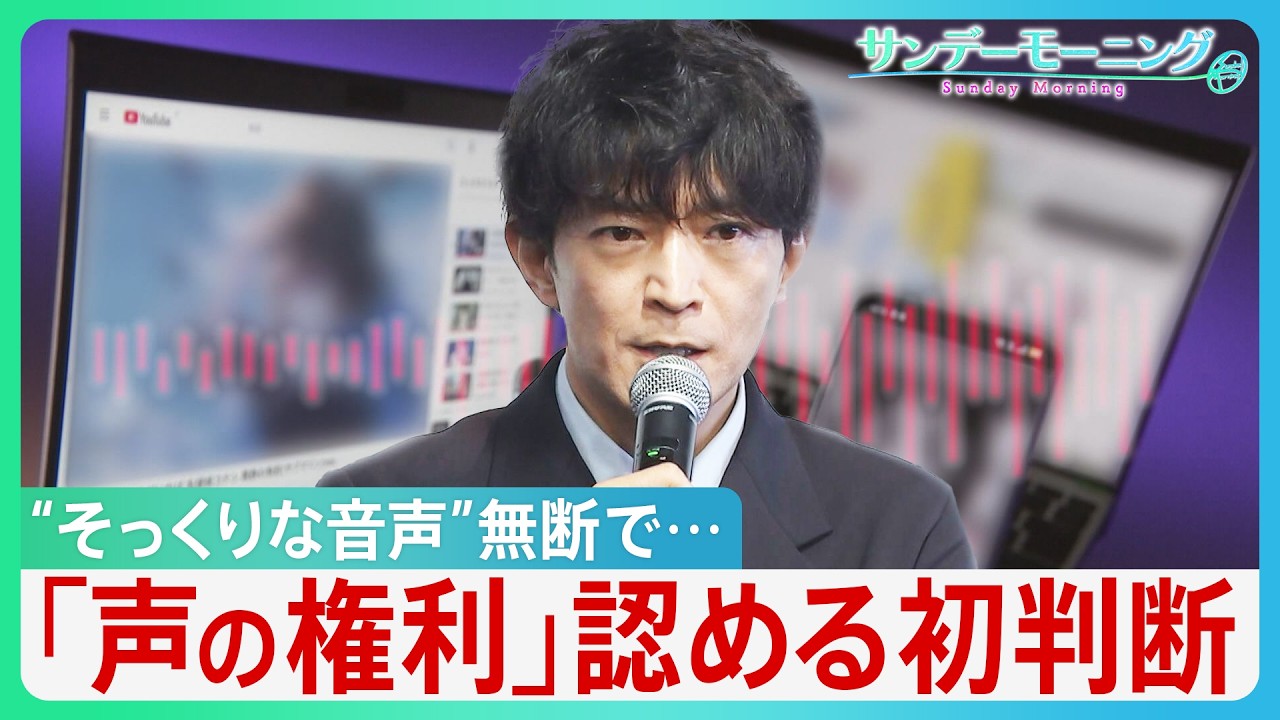
A Tokyo court has recognized the commercial rights of performers over their voices for the first time, ruling that unauthorized use of AI-generated voices resembling those of celebrities can constitute an infringement of publicity rights in a landmark lawsuit brought by popular voice actor Kenjiro Tsuda against the operator of TikTok.
Tsuda, known for his roles in popular anime series including Jujutsu Kaisen, filed the lawsuit after more than 180 videos featuring AI-generated voices closely resembling his own were posted on the video-sharing platform without his permission.
In its ruling on Wednesday, the Tokyo District Court determined that the unauthorized use of a performer’s voice for the purpose of attracting customers or audiences could violate the individual’s right of publicity.
Publicity rights protect the commercial value associated with celebrities and other well-known individuals, allowing them to control the commercial exploitation of their identities. While such rights have traditionally covered names and facial appearances, the ruling marked the first time a Japanese court explicitly recognized that a person’s voice could also fall within this protection.
The decision comes as rapid advances in generative artificial intelligence make it increasingly easy to reproduce recognizable voices with remarkable accuracy, raising concerns among professional voice actors and other performers about the unauthorized use of their identities.
Modern AI voice-cloning applications can recreate a person’s voice after analyzing a relatively small number of recorded sentences. In one demonstration, an application required a user to read 50 predetermined passages before generating an artificial voice closely resembling the original speaker.
The technology can reproduce not only the sound and distinctive characteristics of an individual’s voice but also convert recorded speech into other languages while retaining the speaker’s vocal identity.
Developers say the technology offers significant opportunities for professional voice actors, particularly those who work primarily in Japanese. By recording their voices in Japanese, performers could potentially produce dialogue in English, Chinese and other languages without having to speak those languages themselves, expanding their opportunities in international markets.
AI-generated voices may also provide important benefits for people who have lost their ability to speak because of illness or accidents. Some developers are offering voice-recreation services free of charge to such individuals, allowing them to communicate using artificial versions of their original voices.
The ability to preserve a person’s recognizable voice can provide a sense of hope to those who have lost their speech, demonstrating the potential for AI technology to improve quality of life.
However, the same technology has created growing problems involving consent and unauthorized reproduction.
Some voice-cloning applications have introduced safeguards requiring users to record specifically designated sentences before an artificial voice can be generated, making it more difficult to reproduce someone else’s voice without their participation.
Despite such measures, online platforms have become increasingly populated with videos featuring AI-generated imitations of recognizable actors, voice performers and other public figures.
Japanese voice actors have publicly called for an end to unauthorized AI reproductions of their voices, arguing that the technology threatens their ability to control how their performances and identities are used.
Tsuda’s lawsuit brought the issue before the courts after numerous videos featuring a voice resembling his own appeared on TikTok.
The case raised questions about whether the economic value of a performer’s voice deserves the same legal protection traditionally afforded to a celebrity’s face or name.
By recognizing voices as potentially protected under publicity rights, the Tokyo District Court established an important legal precedent for disputes involving AI-generated imitations.
The ruling also highlights the distinction between legitimate applications of voice-recreation technology, such as authorized multilingual performances and assistance for people who have lost their speech, and the unauthorized commercial exploitation of recognizable voices.
As AI voice-generation technology becomes more widely available, the judgment could influence how online platforms, technology developers and content creators handle recordings that imitate real individuals, particularly when those voices are used to attract viewers or generate commercial value.
Source: TBS
Disclaimer : This story is auto aggregated by a computer programme and has not been created or edited by DOWNTHENEWS. Publisher: newsonjapan.com