
It astonishes me that the abolition of card payment fees seems such a surprise to some organisations (“New payment rules could force renters into arrears”, October 5). The fee changes were announced six months ago but it’s only now that Macquarie Bank and the ATO have told anyone that they’ll no longer accept credit cards, forcing renters, strata levy payers and all those with shortly upcoming tax bills to find alternatives. No doubt other big players will soon do likewise. Even small businesses should have known about the changes ages ago, informed (one would have thought) by the very banks and card companies that turned fee gouging into such an annoying art form. Meanwhile, those providers will all deflect criticism while adjusting prices and cardholders’ ancillary goodies to maintain their bottom lines, and customers who relied on credit cards will have to find different ways to pay their bills. Adrian Connelly, Springwood
How are tenants expected to pay their rent without using a credit card? Yes, they can do a direct debit through their bank, but often these are not reliable regarding funds in the account. Paying with a wodge of cash these days is frowned upon, both for payees’ safety and bank tellers’ safety. So frustration and despair are again heaped on people trying to pay bills.
Can you win? Not likely. Marjie Williamson, Blaxland
My first experience of changes to the credit card surcharge came about when I bought a coffee from a local cafe. Until last week, the coffee cost $6.50 plus an 8¢ surcharge, hence $6.58, which equates to a 1.23 per cent credit card surcharge. The coffee I bought on Saturday cost $6.60, up 2¢. If the cafe was being charged a 1.23 per cent surcharge by the bank until September 30, the maximum surcharge allowable under the new regulations is now 0.3 per cent and the coffee should have decreased to $6.52. It would appear the cafe has taken the opportunity to implement a small increase in the price under the guise of complying with the no-surcharge law. I guess this will occur across the range of businesses that previously applied the credit card surcharge.
I don’t know what large companies that haven’t previously added a surcharge will do if their credit card surcharge does drop to 0.3 per cent. Geoff Lindsay, Thurgoona
The usual suspects say ending credit card surcharges will bring businesses to their knees – apparently the end of the world is nigh. Nobody has challenged the fact that customers should never have been charged the full bank rate in the first place. Because the bank charge is an impost on business, this can be legitimately claimed as a deduction when a proprietor’s tax return is submitted. Customers should only have ever had to pay the bank charge less what the government reimburses the business as a tax write-off. With the cost of living so high, the changes are welcome. Somehow I think businesses will survive. Life goes on. Ray Armstrong, Tweed Heads South
No surcharge, but the cost of our weekly coffee shop treat rose on Saturday. Allan Gibson, Cherrybrook

Excite the electorate
The Angus Taylor-led Liberals are on a path to extinction. Polls for quite some time have shown they languish on less than 20 per cent of the vote. Last week, the best they had was to criticise the removal of the credit card surcharge, a universal irritant to voters. Where are the big ticket reforms that Australia so needs to overcome our cost of living crisis, ballooning debt, rising interest rates, red tape and low productivity? Labor is a sitting duck on all of these, having failed on all fronts. Perhaps the Liberals could start by adopting the 2010 Henry Tax Review recommendations to drop about 100 small taxes and concentrate on the handful of taxes that raise nearly all the revenue. Removing a multitude of smaller taxes would cut compliance costs and supercharge productivity. That would excite the electorate – finally, a party prepared to introduce real reform. Ian Morison, Forrest (ACT)
” loading=”eager” src=”https://static.ffx.io/images/$zoom_0.284%2C$multiply_0.7725%2C$ratio_1.5%2C$width_756%2C$x_92%2C$y_0/t_crop_custom/q_86%2Cf_auto/6bbdb9f5c34a3aa9cdc371534bb2397ea1f74894″ srcset=”https://static.ffx.io/images/$zoom_0.284%2C$multiply_0.7725%2C$ratio_1.5%2C$width_756%2C$x_92%2C$y_0/t_crop_custom/q_86%2Cf_auto/6bbdb9f5c34a3aa9cdc371534bb2397ea1f74894, https://static.ffx.io/images/$zoom_0.284%2C$multiply_1.545%2C$ratio_1.5%2C$width_756%2C$x_92%2C$y_0/t_crop_custom/q_62%2Cf_auto/6bbdb9f5c34a3aa9cdc371534bb2397ea1f74894 2x” class=”sc-d34e428-1 ldCIuB”>
Enough ‘vibrancy’, please
There’s that word again – “vibrant” (“Vibrant vision for Olympic Park precinct”, October 5). Our government urban designers must have a very limited vocabulary, as they constantly revert to building “vibrancy”, this time at Sydney Olympic Park, where the population will be upped from the current 5000 residents to an estimated 20,000 – at least until the next planning thought-bubble. I don’t see a lot of vibrancy looking into a deep wet hole in the ground, aka the Brick Pit, but I’m sure it’s a haven for wildlife such as mozzies. Despite this, the “vibrant” makeover includes a proposed “nighttime vibe” and even a “daytime vibe” (honestly, you can make this stuff up). Patrick McGrath, Potts Point
Precious paper pages
What a delight for this long-time author to read about all those passionate book lovers (“‘They’re my babies’: The surprising reasons we still love physical books”, October 4). I still have my Grade 4 book prize, my Arthur Mee children’s encyclopedia and, as I travelled the world, I always inscribed the date and the city where I bought books. My prize is a signed copy of Perestroika from when I met Mikhail Gorbachev. Jennifer Bacia, Newstead (Qld)
The Shakeshaft way
This week there was a wonderful documentary on NITV, Backtrack Boys, which addresses the problem of youth crime (Letters, October 5). We should all be supporting Bernie Shakeshaft’s idea of giving our youth a feeling of worth. Paree Hartley, North Sydney
Excluded by an oath
Your correspondent (Letters, October 4) suggests that American states should call upon ″competent practitioners to kill their convicted criminals″. However, he will have to exclude those practitioners who have taken the Hippocratic oath. Bernie Bourke, Ourimbah
We may need tech titans
Cory Alpert (“Musk back in the White House as privatisation spreads to warfare”, October 5) grabs the wrong end of the stick with his focus on figures of hate – Elon Musk (SpaceX, Tesla) and Palmer Luckey (Anduril) – who lead technology development. In World War II, our parliament effectively drafted everybody for the defence of Australia, which included the PNG campaign.
Wars are fought by nations, and armed forces are just the tip of the spear. Ukraine’s defence against Russia has relied heavily on innovation cycles from a few weeks to months. It now fights with land, sea and air drones that did not exist in 2022. SpaceX (satellite communications) and Anduril (sea and air drones) have developed technology the US and Australian militaries did not ask for, but now demand. Legacy defence contractors, such as Boeing and Lockheed Martin, are slow and expensive as they develop weapons to order. In a few years, US and Australian ground forces may rely on vehicles driven by Tesla full self-driving hardware and software. Peter Egan, Adelaide (SA)
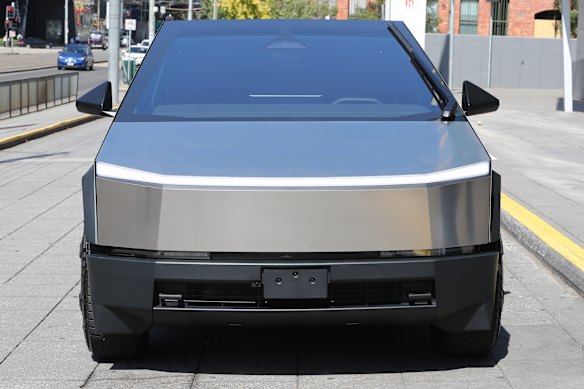
Project Meridian has very little to do with the future of warfare. What it will do, is probably designed to do, is extract more money from taxpayers and pass it to the already wealthy. The future of warfare is really being decided on the battlefields and in the small factories of Ukraine. Greg Baker, Fitzroy Falls
Musk surely is the man who knows how to build weapons. Take his Cybertruck, for example. What a bomb. Keith Russell, Mayfield West
Parents have role over e-bike use
Recent e-bike accidents rightly raise questions about safety and regulation, but responsibility must be shared between governments and parents (Letters, October 5). E-bikes can be practical and enjoyable, but children may not have the experience or maturity to anticipate hazards or manage speed safely. Parents therefore have an important role to play. Before providing a child with a powerful e-bike, the question should be not just can they ride it, but are they mature enough to ride it safely? Governments, parents, riders and retailers all have a part to play. Clear rules, better education and sensible parental judgement are a good place to start. Stephen Wilson, Kangaroo Valley
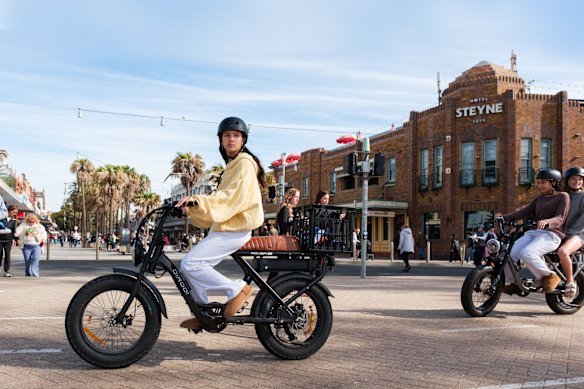
There will be no multi-million dollar lawsuits until it is compulsory for e-bikes (and fat bikes in particular) to be registered with compulsory third-party insurance and it be mandated that all riders must wear a helmet and the bike be fitted with a license plate so that the owner/rider can be traced and held accountable. And in the case of riders being under the age of 17, at least one parent/guardian should have to be listed as the adult responsible for any injuries caused by these bikes, as this will go some way to compensating people like Margaret Throsby who are injured by these bikes. Sue Armstrong, Newcastle
The shocking injuries suffered by Margaret Throsby last week highlight the urgent need to make our footpaths safe. Footpaths were originally developed as a way to protect pedestrians and children from the dangers of speeding cars. Somehow they’ve now become freeways for e-bikes. E-bike impacts can be deadly. The momentum forces the pedestrian to pivot around their ankles and smash face-first into the ground. Severe injuries to the face, wrists and upper body are common. In older people it can break bones. Every e-bike rider should be forced to acknowledge, via website training, that they must slow down or stop near pedestrians, and pass at a safe distance. That is particularly important for international visitors who hire e-bikes. Anthony Healy, Centennial Park
May I suggest a simple solution to the preponderance of illegal fat bikes on our roads and footpaths would be to fine the people who buy them – the riders’ parents. Helen Robinson, Killcare
Mining and whining
Is there glaring sexism evident in the whingeing about the potential loss of jobs if our old world, polluting coal mines are phased out (Letters, October 5)? When Paul Keating deregulated the clothing industry, allowing for cheaper, sweat shop garments to flood the Australian market, he virtually wiped out the Australian rag trade. Nobody gave a rat’s because the vast majority of the thousands of workers who became suddenly unemployed were women. They might be forgiven for telling the miners of the Hunter to ″suck it, boys″. John Campbell, South Golden Beach
Maths is a way forward
As a retired maths teacher, it was encouraging for me to read that more boys were attempting the more advanced maths subjects in senior high school (“Boys rush in record numbers to try advanced maths”, October 5). Perhaps these boys have realised not only that advanced maths is the key to technology and thus the future, has always been formulaic, or algorithmic as we now prefer to say, but is also rewarding when taught well. By that, I mean explicitly, where explanation and example precedes practice. The added attraction for boys is the fact that maths has a definite conclusion which doesn’t involve the opinion of the instructor, unlike some subjects where work evaluation can be subjective. Boys in particular like the certainty of a mathematical solution rather than the uncertainty of an essay evaluation. Max Redmayne, Drummoyne
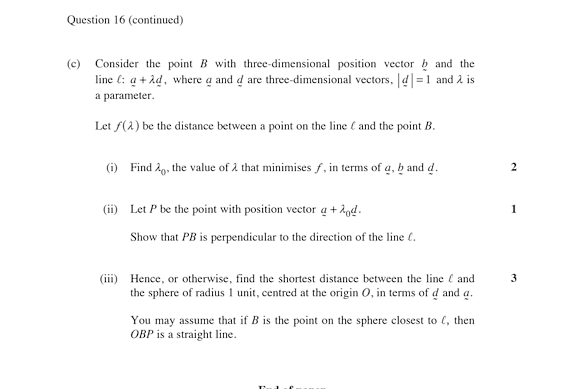
After years of reports about declining performance in NAPLAN, it is encouraging to see more students choosing difficult mathematics, although figures showing near-record enrolments in Mathematics Extension 2 should not be mistaken for evidence that Australia’s broader educational problems have been solved. But, despite the heavy skew towards boys, they suggest that at least some students are willing to tackle subjects that demand persistence and intellectual effort. That matters beyond mathematics. A country hoping to remain competitive in science, technology and innovation needs young people willing to tackle difficult problems and develop the confidence to persevere when there is no obvious answer. The example of Quakers Hill High School, a non-selective school, is worth noting. Its teachers have deliberately built mathematical concepts and confidence from the early years of high school, and the school has also seen more students choosing advanced mathematics and succeeding in it. John Kempler, Rose Bay
Cerebral palsy in focus
The 15th World Cerebral Palsy Day is today (October 6). What began in Sydney in 2012 with a simple goal of giving people with cerebral palsy a stronger voice has grown into an international movement. It now brings together more than 187 partner organisations and last year reached more than 20 million people. Australia has done more than help to start it. Research here has helped to drive a 40 per cent drop in the rate and severity of cerebral palsy, while world-first early diagnosis guidelines are now used in more than 36 countries. For the 50 million people with cerebral palsy worldwide, recognition would create a global focal point each year and could help build support for better services, research, inclusion and opportunity. This year World Cerebral Palsy Day asks people to name the change they want to see. Ours is simple: United Nations recognition. Hannah Diviney, Rob White, Allambie Heights
Migrants are essential
I suggest that Eryk Bagshaw’s argument in favour of maintaining our immigration numbers is incontrovertible (Letters, October 4). If the anti-immigrationists had their way, Australia would come to a virtual standstill. First and second generation Australians provide up to half of our workforce, from unskilled labour up to and including the professions. Graham Lum, North Rocks
- To submit a letter to the Sydney Morning Herald, email letters@smh.com.au. Click here for tips on how to submit letters.
- The Opinion newsletter is a weekly wrap of views that will challenge, champion and inform. Sign up here.
Disclaimer : This story is auto aggregated by a computer programme and has not been created or edited by DOWNTHENEWS. Publisher: www.smh.com.au