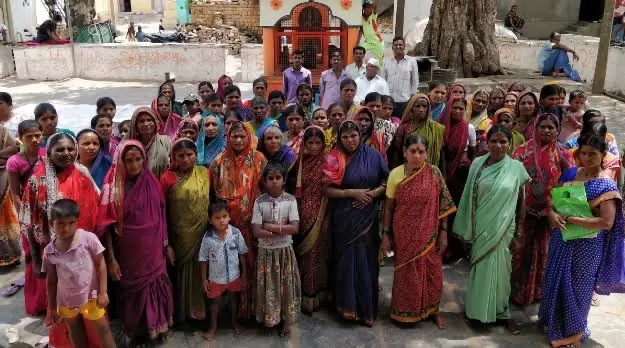
In 1991, a group of women in Dubagunta, a village in Andhra Pradesh’s Nellore district, walked to the local arrack shop with broomsticks, sticks and chilli powder, and forced it to shut.
Many had only recently learnt to read at an adult literacy night school. Two years later, what became known as the anti-arrack movement had travelled across the state and pushed the government to ban arrack, the cheap country liquor that was draining their homes of money and peace, from 1 October, 1993.
A night school that changed the conversation
The anti-arrack movement began with a school, not a protest. In January 1990, the National Literacy Mission launched its campaign in Nellore, and as women learnt to read in adult literacy classes, they began to speak openly about what troubled their households, and many named arrack.
According to researcher Rekha Pande, the spark came when drunk men abused literacy workers, and the women present drove them away. Deccan Chronicle adds that a night school story about a woman called Sitamma inspired them further.
Their anger had numbers behind it. Nellore alone had 864 arrack shops, Pande writes, and Feminism in India reports that state excise revenue rose from Rs 39 crore in 1970-71 to Rs 812 crore in 1991-92. In the same year, the average family in Andhra Pradesh earned Rs 1,840 and spent Rs 830 of it on liquor.
Brooms, chilli powder and a godown
Vardhineni Rosamma, an unlettered agricultural labourer then in her late 60s, led the Dubagunta women and, the New Indian Express notes, joined the movement in 1991 inspired by the book ‘Mahila Meluko’.
Deccan Chronicle reports that they first destroyed pots of toddy after assuring the families who depended on that trade, and then ransacked the arrack shop despite police action. Historian Jeedigunta Chalapathi Rao adds that they attacked the local godown and drove out the liquor contractors, and that most early protesters were poor Scheduled Caste and Backward Class women.
Women in neighbouring villages followed, with the Nellore NGO Jagruti filing a public interest litigation against the auctions, and the campaign grew into a contest with contractors, local officials, the police and eventually the Chief Minister, Feminism in India records.
Contractors funded gangs to guard their monopoly, while the government argued that it could not close the shops because liquor money paid for welfare.
/filters:format(webp)/english-betterindia/media/media_files/2026/10/08/5-2026-10-08-19-41-08.jpg)
Pande records the arithmetic of that argument: the state spent Rs 1.50 on every kilo of subsidised rice but earned Rs 3.50 from liquor. The women answered by offering a day’s wages instead, which showed they were offering a substitute and not only objecting. They also asked why water and schools were scarce while arrack was always available, Feminism in India notes.
When about 50,000 people, 80% of them women, marched against arrack auctions in 1992, the police attacked the protesters.
In 1992, women in Goa also fought against a bar licence in Tivrem village and got the licence revoked after a long battle that included demonstrations and trips to government offices.
From an arrack ban to total prohibition
The pressure told. Then Chief Minister banned arrack from 1 October 1993, The News Minute reports. Because sales of Indian-made foreign liquor continued, women’s groups pressed for total prohibition, and N T Rama Rao of the Telugu Desam Party promised it in the 1994 election campaign. He imposed it on 16 January 1995, soon after taking oath as Chief Minister.
What the ban left behind
The ban did not outlast the government that imposed it. On 1 April, 1997, about 28 months after prohibition began, the next chief minister lifted it.
Whether bans on alcohol work is still debated, but the idea that women can decide what is sold in their own neighbourhoods has found echoes since. In 2016, women in Rajasthan’s Kachabali village campaigned until 94% of voters backed closing the village’s only liquor shop.
Rosamma died on 7 August, 2016, aged 93. She had spent her final years in hardship and on dialysis, after the government land allotted to her was taken over.
Yet the woman who could not read when she picked up her broomstick had, by then, given her village’s name to her own, and every report of her death called her Dubagunta Rosamma.
Sources:
‘Anti-liquor activist Dubagunta Rosamma no more‘: by Express News Service for The New Indian Express, Published on 8 August, 2016,
‘Anti-arrack fighter Dubagunta Rosamma dies of organ failure‘: by DC Correspondent for Deccan Chronicle, Published on 8 August, 2016
‘Andhra anti-liquor movement crusader Rosamma dies‘: by TNM for The News Minute, Published on 7 August, 2016
‘The Anti-Arrack Movement: The Historical Women’s Protest For Total Alcohol Prohibition‘: by Dhwani S for Feminism in India, Published on 14 June, 2019
‘Politics of liquor policy in Andhra Pradesh: Between the bottle and the ballot‘: by Bhaskar Basava for South First, Published on 22 February, 2024
Disclaimer : This story is auto aggregated by a computer programme and has not been created or edited by DOWNTHENEWS. Publisher: thebetterindia.com