Swinney backs Flynn in ferry gas leak row and says ‘nobody’s perfect’
-
Published
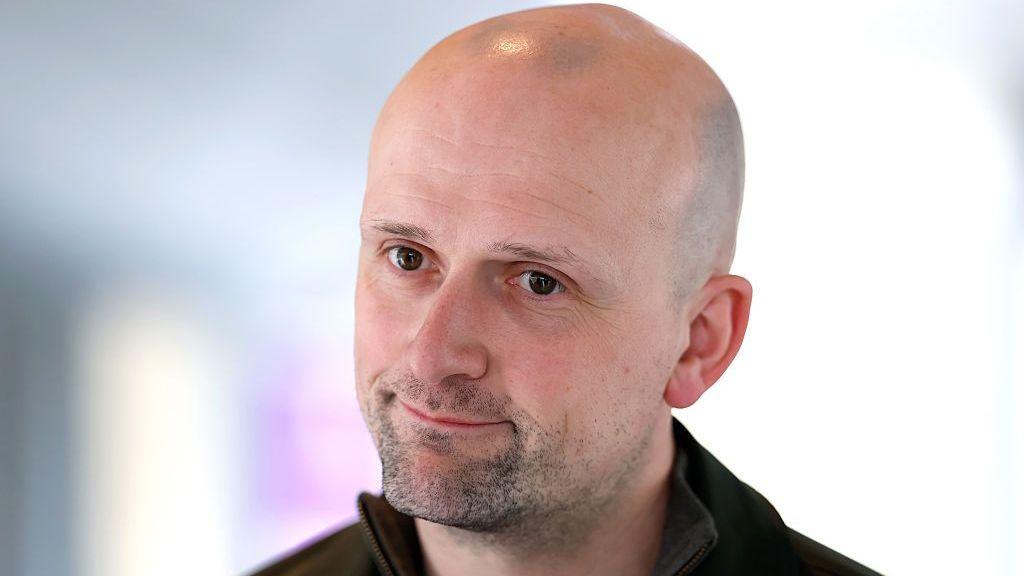
First Minister John Swinney has backed Stephen Flynn in the row over whether the transport secretary had been briefed about a gas leak on a CalMac ferry.
Speaking to the BBC’s Laura Kuenssberg programme in an interview to be broadcast on Sunday, Swinney said emails showed Flynn had not been briefed ahead of a Holyrood committee meeting last month.
The first minister said he had confidence in his transport secretary, who “recognised that he should have been across an issue to be in front of the transport committee and he remedied that right away”.
Swinney added: “Nobody’s perfect, nobody’s infallible”.
Flynn was appearing before the transport committee on 9 September when he said he was not aware of a BBC Scotland News story published online more than nine hours earlier.
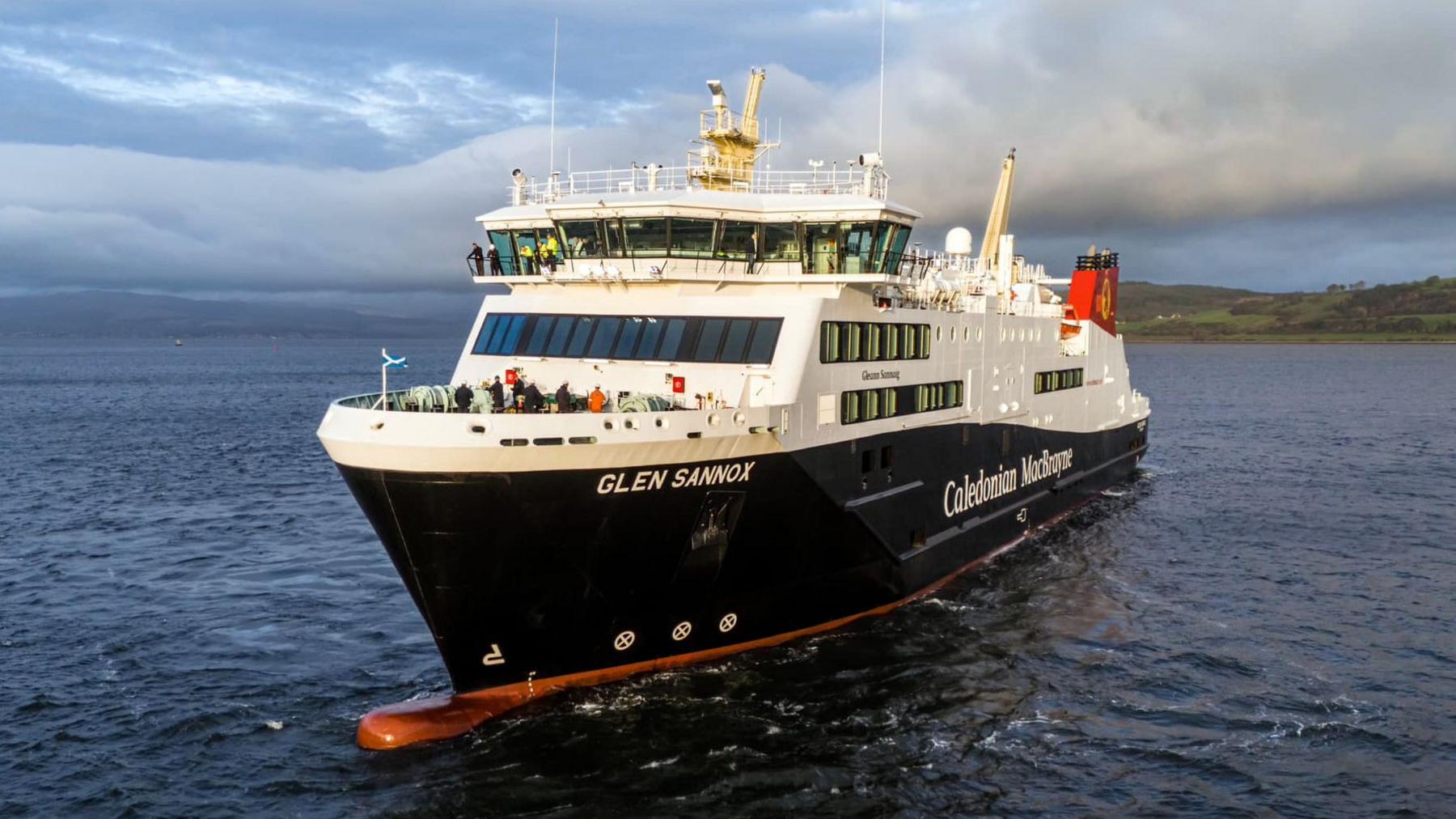
It revealed how a faulty valve led to 700kg of flammable methane gas being vented from the side of the ferry MV Glen Sannox while it was carrying passengers from Arran to Troon in June 2025.
-
Valve failure on CalMac ferry saw uncontrolled escape of flammable gas
-
Published9 September
-
Speaking to the committee, Flynn said he had missed the report because he was facetiming his children before the meeting.
But a briefing document released via a freedom of information (FOI) request and published by the Scottish Sun, external and The Times, external newspapers on Thursday evening showed Flynn’s office was contacted about the story twice in the half hour before the committee meeting began.
Flynn later appeared to be blindsided when committee members quizzed him about the story.
As Swinney backed his cabinet secretary on Friday, Flynn responded to a media report that he had been told about gas leak, by insisting he had not been briefed.
He wrote on X: “This is not true. I should’ve seen the BBC news that morning – but the FOI confirms I was not briefed.
“Jeez, if I’d known, I’d have given a damn sight better answer than I did at the time!
“An answer that wasn’t acceptable and nobody was more frustrated than myself about that.”
 Image source, X
Transport Scotland said the documents released this week “made clear” Flynn had “not been briefed on the issue” before his committee appearance, and the emails sent to his office had not been shared with him.
To play this video you need to enable JavaScript in your browser.
This video can not be played
The Sun report concentrated on emails, external sent by Flynn’s office at 17:04 on 9 September, hours after his committee appearance, claiming they suggested an attempt to “cover-up” the minister’s lack of preparedness.
One email – now seen by BBC Scotland – says the attached statement had been “cleared by Mr Flynn”.
Quoting Flynn, it says: “I was not briefed on this incident, however details were shared with the former cabinet secretary for transport on 30 June 2025, in line with agreed processes.”
Reacting to the publication of that email, transport committee convener Willie Rennie told BBC Scotland Flynn was “only making things worse for himself”.
“What is alarming is that he seems to have attempted a cover-up, dragging in officials and Transport Scotland,” he said.
“And if he had bothered to listen to the news in the morning before the committee session he would not have been surprised by my questions about the leaking of flammable gas on the Glen Sannox.”
‘Bombshell new evidence’ – Findlay
Scottish Conservative leader Russell Findlay demanded Flynn refer himself to the independent advisers on the ministerial code.
“Stephen Flynn should have admitted that he had simply failed to do his job properly,” he said.
“But instead, this bombshell new evidence suggests that he conspired with officials to execute a sleekit, skin-saving cover-up.”
A Transport Scotland spokesperson said: “As the timestamp notes, a draft media statement was sent to Mr Flynn’s office shortly before he arrived at the committee and this was not shared with him.
“A high-level media statement does not constitute formal briefing, which the cabinet secretary received later. The previous cabinet secretary for transport [Fiona Hyslop] was briefed on the issue last year, at the time of the incident.”
What was in the emails?
A “ministerial engagement briefing” issued ahead of the transport committee’s meeting on 9 September showed two emails sent to Flynn at 08:48 and 09:04.
The meeting – which marked Flynn’s first appearance before the committee since becoming transport secretary in May – was scheduled to get under way at 09:15.
The initial email was sent to Flynn and Transport Scotland officials.
It acknowledges Transport Scotland was “yet to be contacted for comment”.
However, it includes a suggested comment from policy officials “if the coverage prompts any questions at committee”.
A follow-up, sent 16 minutes later, includes a comment from CalMac and was sent to Flynn and Transport Scotland officials “for awareness”.
The transport secretary was questioned about the incident – which came to light after an FOI by BBC Scotland – by committee convener Rennie later that morning.
He told Rennie he had not been given a briefing about the story, which was published that morning, though quickly clarified “unless I’ve missed it”.
He added: “I wasn’t listening or watching the BBC this morning convener… I didn’t see the news because I was facetiming my kids – but that is a different matter.”
Flynn said “it may have been the case” that the incident “may have been conveyed” to him as part of a wider tranche of documents he was given when he took over the role from predecessor Fiona Hyslop.
He later clarified that Hyslop had been told about the leak.
What did John Swinney say?
Speaking to Kuenssberg in a pre-recorded interview on Friday afternoon, Swinney said: “Obviously, Stephen Flynn recognised that he should have been across an issue to be in front of the transport committee and he remedied that right away.”
He added: “The material had not been passed to him so he had not seen it before he got to committee and he remedied it later on with the response that he gave to the transport committee.”
Swinney said it was obvious Flynn had not seen the email exchange between officials that morning.
Asked whether that was “good enough”, he responded “nobody’s perfect, nobody’s infallible. So Stephen Flynn, when he realised that he had, he was not across that issue, remedied that with the transport committee later on.”
Swinney said the men had talked about the issue and, asked whether he had confidence in Flynn, answered: “Yes I do, yes.”
The latest exchange came just a few days after Swinney defended Flynn at a separate committee meeting.
Willie Rennie raised “serious concerns about his [Flynn’s] competence as a minister” and questioned his “awareness of his brief”.
Swinney said he “respectfully disagreed” with Rennie’s analysis, adding he was confident all his ministers were “across their responsibilities”.
What happened on board Glen Sannox?
Glen Sannox, the first UK-built ship with engines capable of being directly powered by liquefied natural gas (LNG), has a dual duel propulsion system supplied and commissioned by the Finnish firm Wartsila.
Some problems emerged during a crossing from Troon to Brodick on the Isle of Arran on 3 June 2025 – and on the return leg a valve that was part of the engine system failed, leading to gas being vented out the side of the ship.
 Image source, PA Media
The engines, it later emerged, had been supplied by Wartsila without certain failsafe monitoring systems, meaning the crew were initially unaware the valve had failed.
Gas continued to leak from the ship for 12 minutes before the crew realised what was happening and were able to close the valve manually.
So much gas was released that some was sucked back into the engine rooms through ventilation shafts, triggering gas detector alarms.
CalMac immediately suspended the use of LNG until the failsafe systems were installed, and for operational reasons the ship has not run on gas since the incident.
An investigation also revealed the engine manufacturer had previously recommended a reliability upgrade to the valve that failed, but it is unclear if these warnings were passed on to the Ferguson shipyard which built the ship.
-
-
Published13 January 2025
-
-
-
Published9 September

-
Disclaimer : This story is auto aggregated by a computer programme and has not been created or edited by DOWNTHENEWS. Publisher: BBC