
Snowballing tuition hikes mean the cost of 13 years of an independent education is set to reach $800,000 by the end of the next decade if school fees continue to grow at 5 per cent each year.
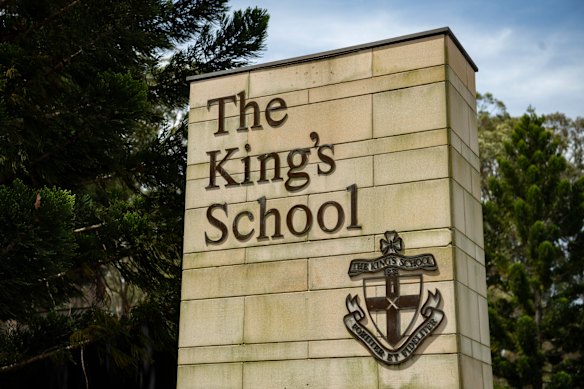
The King’s School in North Parramatta was the first of the high-fee schools to release its 2027 fees last week, where year 12 tuition increased by 4.8 per cent, surpassing the $50,000 mark before extra lunch fees and technology levies are paid for. They increased by 6.2 per cent the year before.
Schools say fee hikes are driven by increasing teacher wages, while some cite cybersecurity and campus upgrades as also contributing to growing costs. Under new enterprise agreements, a handful of schools will pay teachers $150,000 or more next year.
A parent sending a child to kindergarten at King’s in 2027 and who factored in fee increases of 5 per cent each subsequent year can expect to spend $790,000.
Year 12 would cost $94,066 in 2039, when that child finished their schooling. Some schools, such as Scots, are already charging $52,000 for years 7 to 10 and the total cost of schooling would be $807,000 if fees rose by 5 per cent year-on-year.
University of NSW economist Richard Holden said the labour market for teachers remained tight, which was driving up costs for schools.
“[Fee increases of] around 5 per cent doesn’t sound aggressive at all, it could end up being lower, but we have seen some increases in recent times which have been higher than that,” he said.
“Schools have the costs of teachers, which are a really big part of it; private schools also have demands for high-quality facilities, as well as energy costs.”
He said parental anxiety about the future of the entry-level professional jobs market in reaction to artificial intelligence was also fuelling demand for a private school education.
“The demand for high-quality school education is going to be stronger rather than weaker,” he said.
Independent Schools Australia chief executive Graham Catt said there was a diverse range of schools within the sector which provide a range of options.
“Parents choose a school for their child based on a range of factors, including affordability,” he said.
“A straight-line projection of 5 per cent fee increases through to 2039 is arithmetic, not a forecast.
“Schools set fees year by year against their actual costs and circumstances, and families make their own decisions about what works for them.”
At least 20 of Sydney’s high-fee schools raised fees by 6 per cent or more last year, with some raising fees by as much as 8.8 per cent.
Financial adviser Rebecca Pritchard said half of her clients sought advice on budgeting for private school. She previously advised parents to factor in tuition increases of 5 per cent each year but was now modelling for 8 per cent.
“When you consider ancillary fees and other items, 8 per cent actually ensures they are best placed to achieve their goals,” she said.
Financial adviser Mike Miller, who runs advisory firm Emerging Wealth, counsels parents to allow for increases of between 5 and 7 per cent to be clear-eyed about how to best prepare for the costs.
‘The demand for high-quality school education is going to be stronger rather than weaker.’
University of NSW economist Richard Holden
“Options include saving from birth, somewhere between $1500 and $3000 a month depending on how it’s invested, the time frame and your [investment] risk profile,” he said.
“Some starting later have to refinance their mortgages, or contributions from grandparents where that is the family’s wish.
“A lot of people go backwards during this period.”
Independent economist Adam Rorris, who has previously done work for the Australian Education Union, said he believed fee increases were not driven by the cost of delivering a high-quality education but rather the positioning of high-fee schools as an elite positional good.
“These prices have been rising for a long time, they’re not directly driven by the cost of delivering the service,” he said.
“Elite private school fees I would expect would continue to outpace inflation. I see that continuing; all that reflects the financial capacity of the elite and their ability to spend ever more on asserting their position.”
Demographer Mark McCrindle, who sits on the board of Pacific Christian School, said school councils seriously contemplated whether fee rises were sustainable and if parents have the capacity to pay.
“The answer continues to be yes, despite the pretty high fee ranges,” he said.
“They’re clearly high fees; parents do make sacrifices, so the stickiness of the customer is very high.”
He noted schools were competing to attract and retain teachers and offer a suite of extracurricular activities and associated facilities.
“As for where it ends? Parents are increasingly demanding more – the schools are trying to get the best teachers [and] co-curricular facilities.”
Education finance company Edstart, in its latest report on fees which uses data from hundreds of schools, noted the average increase was 5.78 per cent across NSW schools this year, down from a 7.16 per cent average increase in 2025.
Start the day with a summary of the day’s most important and interesting stories, analysis and insights. Sign up for our Morning Edition newsletter.
From our partners
Disclaimer : This story is auto aggregated by a computer programme and has not been created or edited by DOWNTHENEWS. Publisher: www.smh.com.au