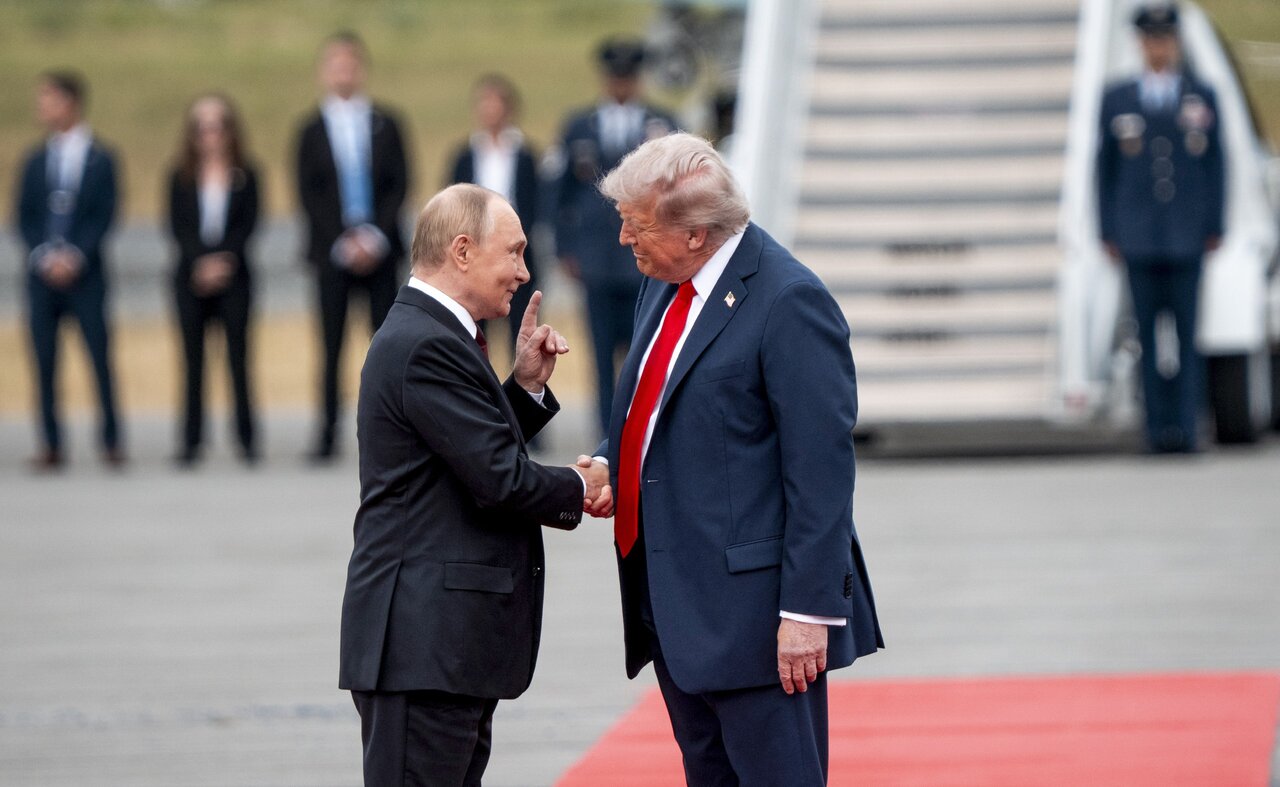
TEHRAN – On October 9, US President Donald Trump announced an agreement with Russian President Vladimir Putin for Russia to supply diesel to the US and global markets, paired with a temporary 6-month US sanctions waiver. The move is aimed at easing record-high US diesel prices weeks before the November 3 midterms. Initial volumes are modest relative to consumption, so analysts expect limited and mostly psychological price effects — unless larger follow-on deliveries materialize and Russian refineries recover.
What exactly was agreed?
Trump said the deal was reached in a phone call with Putin and described it as highly successful. In his words, “vast amounts” of fuel would flow, and he publicly thanked Putin.
Putin confirmed Russia’s “readiness to supply oil and petroleum products to the US market and world markets.”
Operationally, the agreement has two parts:
Physical volumes in phases, as outlined by Trump:
300,000+ tons immediately — roughly 2.25 million barrels
500,000 tons in November
1 million tons shortly after
3 million tons more “in a short period,” conditional on the state of Russian refineries
Total nominal volume: over 4.8 million tons.
A legal window to deliver it. The US Treasury’s OFAC issued a temporary general license allowing the sale, delivery, offloading and import of Russian-origin diesel. The authorization runs for about six months, until April 7, 2027, covering cargoes loaded during that window.
This is the largest fuel-related sanctions relaxation since the Ukraine war began in February 2022. Previous licenses in the context of the ongoing US-Iran conflict were typically 30-day extensions.
How big is this in market terms?
Put in context, the first shipments are small:
The US consumes about 3.6 to 3.8 million barrels of diesel per day and exports about 1.5 million barrels per day. The first 2.25-million-barrel tranche equals roughly half a day of US consumption.
Global diesel demand is around 30 million barrels per day. The early Russian volumes equal 72,000 to 124,000 barrels per day — a fraction of one percent.
The 800,000 tons expected by end-November equals about 6 million barrels, or less than two days of US use.
That is why most market analysts describe the deal as a redirection of existing flows rather than major new net supply: if Russian barrels go to the US, current buyers of Russian diesel must source from elsewhere, leaving global balances broadly unchanged.
Looking back: how did we get here?
US sanctions history: Since 2022, the US has banned imports of Russian oil and petroleum products and, together with allies, imposed price caps and shipping restrictions to limit Moscow’s energy revenues.
Only three weeks before the diesel announcement, Trump signed a sweeping bipartisan sanctions law targeting Russia’s oil and gas income. The new diesel license therefore represents a sharp, if temporary, reversal — a pause, not a repeal.
Russia’s export position: Russia imposed its own restrictions on diesel exports in July after Ukrainian drone strikes damaged several refineries. The International Energy Agency has estimated Russian diesel output fell by about 30%.
Russian Deputy Prime Minister Alexander Novak said Moscow would begin lifting those restrictions ahead of schedule starting in October, adding that the domestic market remains “fully supplied.” Russian officials have framed the US deal as a normal commercial operation that also helps stabilize world markets.
Why US diesel is at record levels: Two overlapping disruptions explain the price spike:
Refinery losses in Russia from the Ukraine war, reducing global diesel availability.
Disruption around the Strait of Hormuz and Middle East refining amid the eight-month US-Iran conflict, which has raised freight, insurance and replacement costs.
The result: US average diesel hit a record $6.53 per gallon on September 22, easing only slightly to $6.28 by October 9, according to AAA. A year earlier it was about $3.68. Futures prices dipped modestly on the announcement, but pump prices did not move.
Trump had already tried domestic tools — including a proposed ban on diesel exports and authorization for off-road, tax-exempt diesel use — before turning to external supply.
Why now? The political calendar
The timing is inseparable from US domestic politics. The midterm elections are on November 3, with fuel prices and inflation ranking as voters’ top economic concerns. Farm states such as Iowa have been hit particularly hard by diesel costs during harvest season.
Trump has stated the goal explicitly: lower costs for “farmers, ranchers and truckers” as his top priority. Supporters present the deal as pragmatic — using every available barrel to protect consumers. Critics in Congress, including Democrats Chuck Schumer, Jeanne Shaheen and Elizabeth Warren, as well as some Republicans such as Michael McCaul, argue it contradicts the intent of the sanctions law passed weeks earlier and provides revenue to Moscow while the Ukraine war continues.
Ukrainian President Volodymyr Zelenskyy called it a “weak decision” and a “gift to Putin.”
Energy analysts, regardless of political view, converge on a narrower technical point: volumes are too small to transform prices, though they could shave the peak off futures and provide localized relief on the US East Coast — New York-New Jersey and Philadelphia — where Russian-origin cargoes would most plausibly land.
What happens next? Three scenarios
Base case — partial delivery, limited price impact:
Russia delivers the first 1.8 million tons (300k + 500k + 1m tons) while keeping the conditional 3 million tons under review. Global diesel futures ease modestly, US retail diesel falls by cents, not dollars. This is the consensus among analysts at Eurasia Group, CSIS and Columbia University.
Prerequisite: Russian refineries stabilize and Hormuz-related freight costs do not worsen.
Upside case — full delivery plus refinery recovery:
If all 4.8+ million tons arrive in November-December and Russian refineries return toward normal throughput, combined with a seasonal demand softening, US diesel could retreat more meaningfully from record highs. Even then, analysts note, prices would remain far above 2025 levels because Middle East refining and shipping constraints persist.
Downside case — logistics and politics interrupt flow:
Tanker availability, insurance disputes, port restrictions, Congressional pressure, or a new escalation in either Ukraine or the Gulf could delay or shrink deliveries — particularly the conditional 3 million tons. In that case, the price effect would be almost entirely symbolic, while the political controversy would remain.
The key variable to watch is not announcements but loadings: how many vessels actually load Russian diesel in October-November, where they discharge, and whether OFAC extends or narrows the license after April 2027.
Bottom line
The agreement opens a narrow, time-limited corridor in an otherwise sanctions-constrained relationship. Economically, it is best understood as a short-term buffer — potentially helpful at the margins, but not a structural fix for a diesel market strained by two conflicts at once. Politically, it signals that in an election season, energy prices can temporarily outweigh sanctions logic.
Whether drivers feel it at the pump will depend less on diplomacy and more on refineries, tankers and the Strait of Hormuz.
Disclaimer : This story is auto aggregated by a computer programme and has not been created or edited by DOWNTHENEWS. Publisher: tehrantimes.com