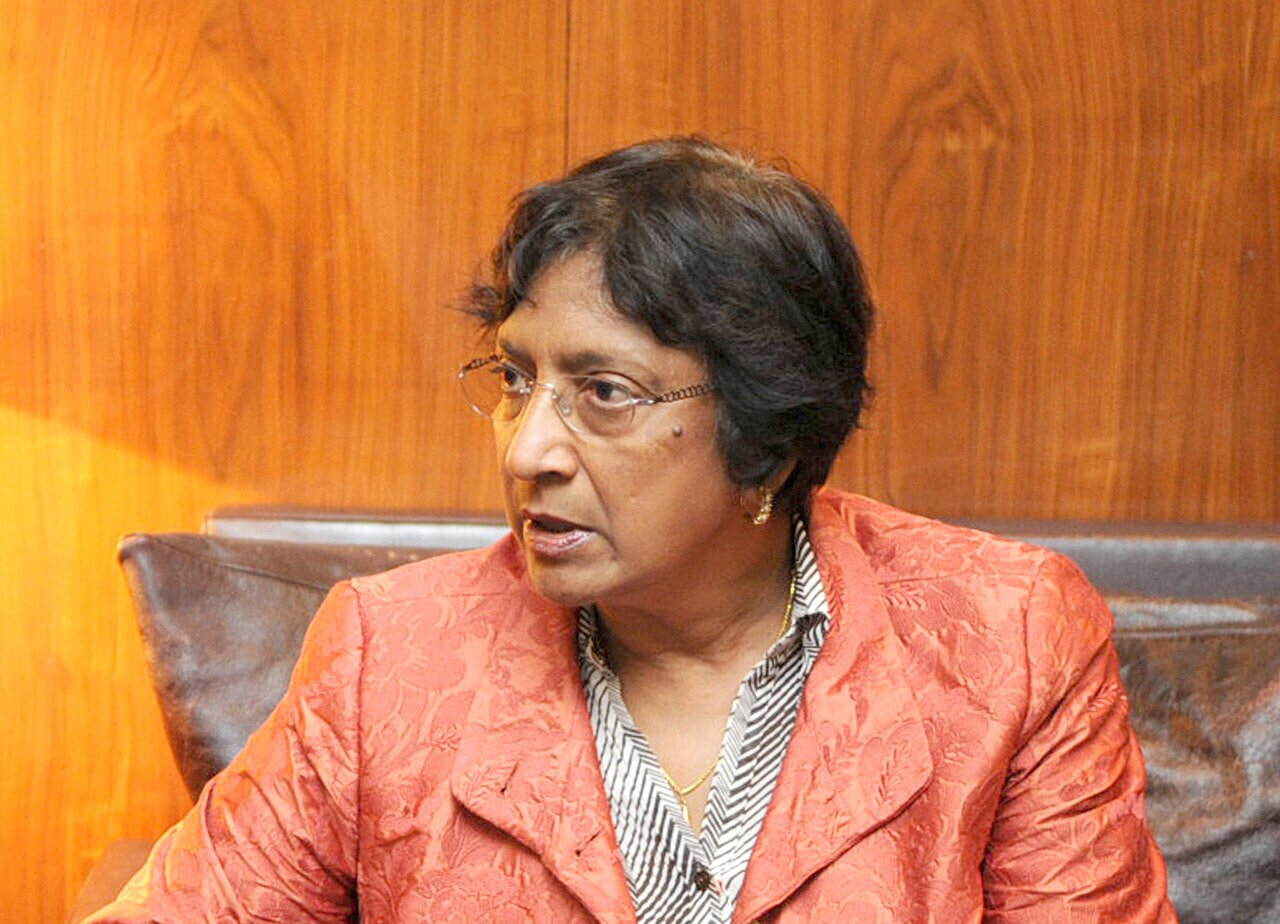
GOA, India – For a world fractured by double standards, the recognition of a lifelong defender of human rights is a reminder that peace cannot be separated from accountability. True peace is not achieved simply when the powerful agree to stop fighting. It is achieved when the vulnerable no longer have to live at their mercy.
The award of the 2026 Nobel Peace Prize to Navanethem “Navi” Pillay, the South African jurist and former United Nations High Commissioner for Human Rights, arrives at a moment when the meaning of peace itself is being contested. Wars continue to devastate societies, international institutions struggle to command respect, and the application of international law remains deeply entangled with geopolitical interests. In such circumstances, recognising a woman whose life has been devoted to confronting discrimination, defending victims and strengthening international justice carries significance beyond the honour bestowed upon an individual.
It is also an opportunity for the Nobel Peace Prize to reaffirm its essential purpose. The prize must stand for something greater than diplomatic prestige, political expediency or the celebration of whichever causes happen to enjoy the support of influential governments. Its enduring authority depends on its willingness to recognise those who challenge entrenched power, defend human dignity and insist that no nation, government or individual should stand above the law.
Pillay’s recognition is therefore important not simply because of what she has accomplished, but because of what her career represents: the conviction that peace without justice is an incomplete peace, and that international law loses its meaning when its protection is distributed according to political convenience.
From apartheid to the defence of universal justice
Pillay’s journey began in apartheid South Africa, where racial discrimination was entrenched in law and institutional power. Born into a family of Indian Tamil origin in Durban, she experienced the indignities of a system that denied equal rights and opportunities to the majority of the population. Rather than accepting the structures of exclusion surrounding her, she chose the law as an instrument of resistance.
Her contribution to the anti-apartheid struggle was not incidental to her later international career. As a lawyer, she defended people subjected to political imprisonment, challenged abuses of authority and worked to protect the rights of those whom the apartheid system sought to marginalise. Her professional choices reflected a fundamental understanding: laws do not become just merely because a state enacts them, and governmental authority does not confer moral legitimacy on discrimination.
The struggle against apartheid established a principle with continuing relevance across the world. A system cannot claim legitimacy while denying a section of humanity equal dignity, freedom and protection. Nor can oppression be transformed into justice simply by giving it a legal form.
This is a lesson that extends well beyond South Africa. Across West Asia and elsewhere, communities confronting occupation, displacement, discrimination and prolonged conflict understand the difference between peace proclaimed by political leaders and justice experienced by ordinary people. A settlement that leaves fundamental grievances unresolved may end a phase of violence without creating the conditions for lasting peace.
Pillay’s life offers a powerful reminder that the defence of human rights must begin with the people whose rights are denied, rather than with the political interests of those who exercise power over them.
International justice must not have political favorites
Pillay carried these convictions into the international arena, serving as a judge of the International Criminal Tribunal for Rwanda, presiding over that tribunal, and later serving as a judge at the International Criminal Court. Her judicial work contributed to the development of international jurisprudence on genocide and sexual violence. The landmark Akayesu judgment, delivered during her service at the Rwanda tribunal, helped establish that sexual violence can constitute an act of genocide when the necessary legal elements are met.
This was more than a legal advance. It challenged the longstanding tendency to treat the suffering of women during conflict as secondary to the supposedly larger political and military narrative. It affirmed that atrocities committed against vulnerable people deserve the full attention of the law, and that survivors must not be erased from the historical record.
From Rwanda to every other conflict in which allegations of grave international crimes arise, the principle remains the same: victims deserve investigation, recognition and justice, while those accused must be afforded due process and responsibility must be established through lawful procedures.
As United Nations High Commissioner for Human Rights from 2008 to 2014, Pillay occupied one of the most demanding positions in the international human rights system. The office required her to defend universal standards in the face of pressure from governments with different political systems, strategic interests and ideological commitments. Human rights could not be defended consistently if criticism depended on whether the government concerned was a friend or an adversary.
That remains one of the central crises confronting the international order. Governments frequently invoke international law when accusing their opponents, yet become defensive when the same standards are applied to their own conduct or that of their allies. Some violations provoke immediate outrage; others encounter diplomatic hesitation, political obstruction or carefully worded expressions of concern.
Such selectivity does not merely damage the reputation of international institutions. It weakens the confidence of ordinary people in the very idea of international justice. When the law appears powerful against the weak but cautious before the powerful, it begins to resemble an instrument of political management rather than a universal safeguard.
For countries across West Asia, this contradiction is especially consequential. The credibility of international law cannot be sustained if its principles are proclaimed universally but applied unevenly in situations involving occupation, civilian casualties, displacement and allegations of serious international crimes. No community should have to wonder whether its suffering will matter less because acknowledging it would inconvenience a powerful state.
Pillay’s legacy does not require the international community to accept every allegation without examination or every institutional decision without criticism. It requires something more rigorous: evidence must be examined, legal standards must be applied consistently, and accountability must not be abandoned because its consequences are politically uncomfortable.
Palestine and the credibility of international system
The question of Palestine brings these contradictions into particularly sharp focus. Decades of occupation, repeated cycles of violence, the dispossession of Palestinians and the catastrophic destruction and human suffering in Gaza have intensified demands for an international order that does more than issue declarations.
Pillay has been associated with efforts to scrutinise alleged violations in the occupied Palestinian territory, including through her work with the United Nations Independent International Commission of Inquiry on the Occupied Palestinian Territory, including East Jerusalem, and Israel. The commission she chaired concluded in 2025 that genocide had been committed in Gaza. That finding has been strongly contested by Israel and must be understood in its proper institutional and legal context. Its existence nevertheless illustrates the significance of independent investigation when allegations concern crimes of the gravest order.
The broader issue cannot be reduced to whether governments welcome or reject a particular finding. The question is whether international institutions can investigate serious allegations independently, whether their findings receive a reasoned response, and whether credible processes of accountability can proceed without political intimidation.
For Palestinians, justice cannot mean simply the temporary cessation of bombardment while the conditions that deny them freedom, security and self-determination remain unaddressed. Nor can the language of peace be used to demand that victims abandon their claims while the structures responsible for their suffering remain intact.
Equally, the defence of Palestinian rights must rest on universal principles that protect civilians and uphold human dignity without exception. International humanitarian law, the prohibition of genocide and the prohibition of torture cannot be selectively invoked. They must apply irrespective of nationality, religion, political affiliation or military power.
This is the significance of Pillay’s career for the wider region. Her work invites governments and peoples alike to insist that international law be judged by its consistent application, not by the identity of those it protects or holds accountable.
The Nobel Peace Prize must recover its moral purpose
The Nobel Peace Prize has historically recognised people and movements whose struggles connected peace with freedom, equality and resistance to oppression. Its recognition of Martin Luther King Jr., Nelson Mandela and other figures demonstrated that peace is not simply the absence of armed confrontation. It is also the pursuit of social conditions in which human beings can live with dignity and without fear of arbitrary power.
Yet the prize is not immune to the political controversies surrounding international life. Its selections can generate legitimate debate over the relationship between peace, democracy, diplomacy and geopolitical alignment. The 2025 award to Venezuelan opposition leader María Corina Machado, which the Nobel Committee justified by reference to her promotion of democratic rights and a peaceful transition from dictatorship, became part of precisely such a debate. Critics questioned the political implications of the choice, while its supporters defended the committee’s stated rationale.
The issue is not that every controversial decision invalidates the prize, or that its recipients must satisfy every political constituency. The greater danger is that repeated perceptions of political selectivity can diminish the moral authority of an institution whose influence depends on public confidence in the principles it represents.
The Nobel Peace Prize cannot settle every international dispute, compel governments to obey the law or substitute for functioning judicial institutions. But it possesses a powerful capacity to direct the world’s attention towards struggles that deserve recognition. Its choices help define what the international community celebrates as peace, and what it is prepared to overlook.
Pillay’s recognition offers an opportunity to bring that purpose into sharper focus. Her career has not been built around the promise of an easy diplomatic solution. It has been shaped by the demanding work of defending rights, strengthening legal institutions and confronting the impunity that allows grave abuses to recur.
This is a conception of peace that should resonate across political boundaries. It does not belong exclusively to the West, the Global South, any particular religion or any geopolitical bloc. Nor should international justice be portrayed as the exclusive property of one political tradition. Its legitimacy rests on the proposition that every human being possesses dignity and that every state bears obligations under international law.
For Iran and other countries of the region, the award provides an occasion to engage with that universal proposition while continuing to scrutinise the institutions through which it is implemented. Defending international law requires neither uncritical acceptance of every Western position nor the rejection of international institutions simply because their decisions are disputed. It requires a consistent commitment to legal equality, national sovereignty, human dignity and accountability for serious violations.
The test of principle is whether it survives when its application challenges our own political preferences.
Peace is a responsibility, not a slogan
Pillay’s life brings the meaning of the Nobel Peace Prize back to the human beings whose lives are shaped by war, discrimination and impunity. A displaced family needs more than declarations of concern. A survivor of sexual violence needs more than sympathy. A political prisoner needs more than a diplomatic expression of regret. People whose homes, communities and livelihoods have been destroyed need institutions capable of protecting their rights and securing meaningful remedies.
Justice cannot restore every life or erase every wound. Nor should the pursuit of accountability become an excuse to reject negotiations that can save lives. Ceasefires, diplomacy and political settlements remain essential. But peace becomes durable only when they create a credible path towards freedom, security, recognition and justice.
The Nobel Peace Prize awarded to Navi Pillay should therefore be understood as a recognition of a lifetime spent defending the principles without which peace becomes little more than a temporary arrangement between those who possess power. It honors a woman who confronted apartheid at its foundations and carried that commitment into the international institutions charged with defending humanity against grave abuses.
The true measure of this recognition will not be the ceremony, the medal or the declarations that accompany it. It will be whether the principles associated with Pillay’s work receive renewed support, whether independent institutions are strengthened, and whether the international community becomes more willing to confront violations even when doing so carries political costs.
The Nobel Prize does not become meaningful simply because it honors a distinguished individual. It becomes meaningful when that recognition reminds the world of obligations it would otherwise prefer to evade. In an age when the language of peace is frequently invoked while justice remains elusive, Navi Pillay’s recognition offers a clear and demanding message: no nation should possess a license to violate human dignity, no victim should be considered expendable, and no government should be beyond scrutiny.
Peace requires justice. Justice requires accountability. And accountability must never depend on who holds the power.
*Ranjan Solomon is an author, researcher, and freelance writer focused on global and national justice.
Disclaimer : This story is auto aggregated by a computer programme and has not been created or edited by DOWNTHENEWS. Publisher: tehrantimes.com