TEHRAN – Saudi Arabia is once again testing its options for dealing with Ansarallah, hoping that what failed the first time might succeed the next.
It tried a war in March 2015 under the banner of the “Arab Coalition,” and the result was a brutal conflict that devastated everything in its path. The war dragged on for eight years before the guns fell silent, without achieving its objectives. Today, it seems decision-makers in Riyadh have fallen prey to the belief that whatever force fails to achieve can be accomplished by using even more force. The war is being reignited, this time with greater intensity and ferocity.
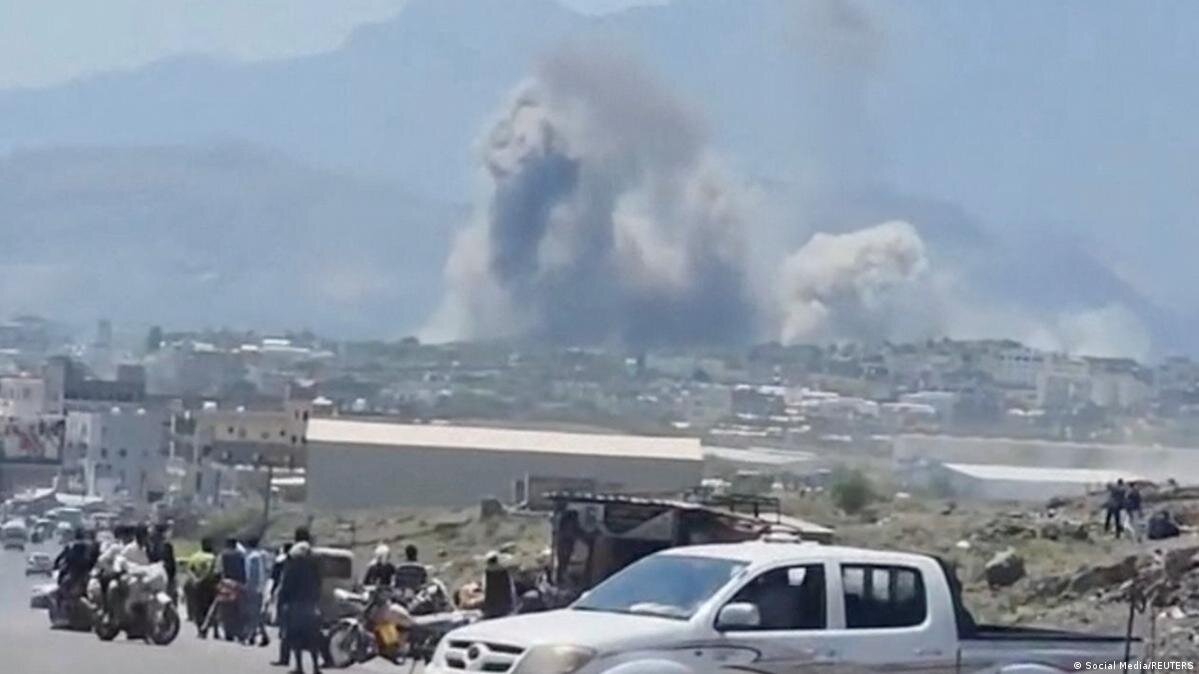
For more than a decade, Saudi Arabia tried blockade, isolation, and sanctions. When these measures failed to break Ansarallah’s resolve, it went a step further on July 13, bombing the runway at Sanaa International Airport to prevent an Iranian aircraft from landing.
On board was a Yemeni delegation returning from Tehran, where it had paid its respects following the martyrdom of the Leader of Iran’s Revolution, Ayatollah Sayyed Ali Khamenei.
The attack was intended as a reminder that the airport remained under blockade. Instead, it became the spark that reignited an unprecedented confrontation between the two sides, with hostilities now unfolding on land, in the air, and at sea, striking deep into both Saudi and Yemeni territories.
The option the Kingdom has refrained from trying is sustained negotiations and genuine dialogue with Ansarallah, whether face-to-face or through trusted intermediaries aimed at a lasting solution. By its very nature, a truce is temporary. It does not address the roots of a crisis or produce the necessary settlements between the conflicting demands and interests of the parties involved.
The collapse of de-escalation
The second extension of the truce agreement expired on October 2, 2022, without an agreement on a third extension, as the parties remained too far apart in their positions. Nevertheless, the ceasefire largely held, and the past four years saw a reduction in hostilities that was disrupted only by isolated incidents, none of which amounted to a significant breach or escalation, until the attack on Sanaa airport three months ago.
In April 2023, a Saudi delegation visited Sanaa. The trip lasted six days. In September 2023, an Ansarallah delegation visited Riyadh to explore the possibility of advancing a political process that could produce lasting solutions. That trip lasted five days.
However, three factors left everything unresolved: first, the widening gap between the two sides; second, Riyadh’s insistence that it was a “sponsor and mediator” rather than a party to the Yemeni crisis; and third, the outbreak of the Al-Aqsa Storm operation, which reshaped regional maps, balances of power, and priorities. As a result, matters remained unresolved, leaving both the intra-Yemeni and Yemeni-Saudi crises open to any number of possibilities and scenarios.
Ansarallah became preoccupied with its military campaign in support of Gaza, achieving tangible results that worked in its favor rather than against it. It subsequently evolved from a local actor into a regional player, particularly after reaching an understanding with the Trump administration under which the U.S. would halt its attacks on Yemen in exchange for ending attacks on American vessels and assets in the Red Sea and the Bab al-Mandab Strait. Meanwhile, relations with Riyadh appeared to have been pushed to the back burner.
Some Ansarallah officials say the war now raging should have erupted two years ago, given the deadlock in efforts to find a solution and the worsening consequences of the blockade. However, the Gaza genocide postponed the entire matter.
There is also a reductive and misleading narrative that portrays the renewed war and confrontation as a response by Ansarallah to an Iranian order. Beyond being false and superficial, this narrative harms those who genuinely believe it, rather than those who repeat it out of spite or to demonize their adversaries.
Misjudging Ansarallah’s position and standing leads to some of the most erroneous and damaging conclusions. Ansarallah indeed makes no secret of its close ties to Iran and its regional axis. It is also true that the Sanaa government did not hesitate to support Gaza in the past and may not hesitate in the future to join a campaign in support of Hezbollah and Iran.
But above all, Ansarallah is an integral part of Yemen’s social and political fabric and one of the country’s fundamental constituencies. All of Yemen may not be governed by Ansarallah alone, but it cannot be governed without it.
Following the July attack on Sanaa airport, it became clear that a fundamental shift had taken place in Ansarallah’s language and preparations. Its leader announced a new equation: “blockade for blockade, ports for ports, and airports for airports.”
Few took these threats seriously until the confrontation on the ground escalated, with Ansarallah extending its control along the coast toward Taiz and the Bab al-Mandab Strait, while reciprocal strikes intensified in the heart of both Saudi and Yemeni territory.
The Kingdom has sought to absolve itself of accusations that it is directly involved in military operations, maintaining its position under the theory that it is a “sponsor and mediator, not a party” to the war.
The path Saudi Arabia has yet to try
The eight-year war failed to achieve its objectives, while Ansarallah emerged stronger and is now expanding its reach.
Nor can Saudi Arabia continue to deny the damage and consequences of its blockade on Yemen, which affects three-quarters of the population. It cannot credibly claim that the limited and restricted flights available, or the reduced flow of goods are sufficient to compensate the Yemeni people for shortages of food and medicine. Neither can it maintain that its measures target only Ansarallah and are directed exclusively at arms supplies.
The realities of Yemeni life and the daily experiences of ordinary Yemenis tell a different story. Reports by international organizations document poverty, deprivation, shortages of medicine and food, and the interruption of salary payments. Such conditions might be endured for another year or two, but allowing them to persist much longer seems untenable.
The option Saudi Arabia has yet to try, with the seriousness it demands, is to open the door to dialogue and negotiations, either directly or through a trusted mediator, such as Oman, in pursuit of solutions and settlements to all outstanding disputes.
Such a dialogue would begin between Sanaa and Riyadh, but it would not end with them. Instead, it would bring all Yemeni parties to the negotiating table, based on the principle that Yemen cannot be governed by a single Yemeni faction. The talks should not be tactical, intermittent, and ceasefire-focused. Dialogue must be a sustained, strategic commitment to a comprehensive negotiated settlement that addresses the root causes of the conflict, the blockade, the humanitarian crisis, and Yemen’s political future. The Kingdom has not genuinely embraced negotiation as a primary strategy, instead treating it as a pause between rounds of military pressure.
Experts believe the time has come to try this approach. It would not be costly and offers the shortest and least expensive path forward for all parties, especially Saudi Arabia, which has much to lose. Has the time finally come to stop repeating failed experiments and take a new path, one that might, at last, lead to a different ending?
Disclaimer : This story is auto aggregated by a computer programme and has not been created or edited by DOWNTHENEWS. Publisher: tehrantimes.com