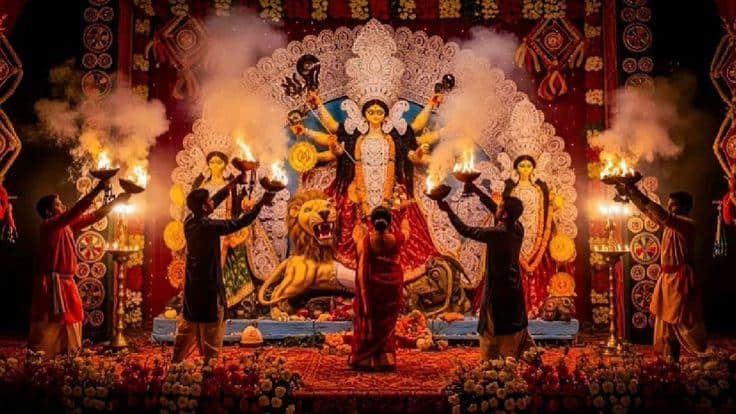
- Shardiya Navratri 2026: Pandal doors open on October 17.
- Maha Ashtami, featuring special prayers, observed on October 18.
- Maha Navami with havan rituals observed on October 19.
- Fasting concludes with Paran ritual on October 20.
Shardiya Navratri 2026 is being celebrated with devotion across the country, with devotees worshipping the nine forms of Goddess Durga. As the festival progresses towards its final days, many devotees are looking for the correct dates and auspicious timings for the opening of pandal doors, Maha Ashtami puja, Maha Navami rituals, havan and the conclusion of their fasts. This year, Shardiya Navratri began on October 11 and will conclude on October 20 with Vijayadashami. According to the Hindu calendar, the timing of the tithis is important for determining when specific rituals should be performed.
When Will Maa Durga’s Pandal Doors Open In 2026?
The ceremonial opening of Maa Durga’s pandal doors, also known as pat khola, is an important ritual during Durga Puja. The ceremony involves the unveiling of the Goddess’s idol after the rituals of invocation and consecration.
According to the Hindu calendar, Saptami and the Mula nakshatra are significant for this ceremony in 2026.
- Saptami Tithi Begins: October 17, 2026, at 3:47 am.
- Saptami Tithi Ends: October 18, 2026, at 5:53 am.
- Mula Nakshatra Begins: October 16, 2026, at 6:22 am.
- Mula Nakshatra Ends: October 17, 2026, at 8:58 am.
- Auspicious Time For Opening Pandal Doors: Until 8:58 am on October 17, 2026.
The period when Saptami coincides with Mula nakshatra is considered auspicious for the ritual. Devotees and organisers should consult their local panchang for timings applicable to their location.
ALSO READ | Durga Puja 2026: 8 Dishes You Must Not Miss While Visiting Pandals
Maha Ashtami 2026 Date And Puja Timings
Maha Ashtami is one of the most significant days of Shardiya Navratri. Devotees worship Goddess Durga, observe fasts and participate in special prayers. In many places, the day also includes Sandhi Puja and other traditional rituals.
In 2026, Maha Ashtami will be observed on Sunday, October 18.
- Ashtami Tithi Begins: October 18, 2026, at 5:54 am.
- Ashtami Tithi Ends: October 19, 2026, at 7:53 am.
- Maha Ashtami Vrat And Puja: October 18, 2026.
The day is considered especially important for devotees who observe the Navratri fast and perform special worship during the evening and night. Ritual timings may vary according to local sunrise and the panchang followed.
ALSO READ | Navratri 2026: Best Garba And Dandiya Nights In Delhi-NCR To Enjoy With Friends And Family
Maha Navami 2026 Date, Havan And Puja
Maha Navami marks the final major day of worship during Navratri. Devotees offer prayers to Goddess Durga and perform rituals seeking her blessings. Havan, or the sacred fire ritual, is an important part of Navami worship in many households and temples.
In 2026, Maha Navami will be observed on Monday, October 19.
- Navami Tithi Begins: October 19, 2026, at 7:54 am.
- Navami Tithi Ends: October 20, 2026, at 9:34 am.
- Maha Navami Vrat And Puja: October 19, 2026.
According to the calendar details, Chamunda Puja and Bali Puja can be performed after 9:34 am on October 20, when Navami remains applicable according to the relevant sunrise-based calculation. Devotees should follow their local religious calendar for the exact timing of individual rituals.
Shardiya Navratri 2026 Paran Date And Time
Paran refers to the ritual conclusion of a fast. Devotees who observe Navratri fasts generally break their fast according to the prescribed tithi and the customs they follow. In 2026, Navratri paran will be performed on Tuesday, October 20, after 9:34 am, following the conclusion of Navami tithi and the beginning of Dashami. Devotees should confirm the appropriate time with their local panchang or priest, particularly if their fasting tradition prescribes a specific method for completing the vrat.
Why Are The Final Days Of Navratri Important?
The final days of Shardiya Navratri hold special significance for devotees of Goddess Durga. Maha Ashtami and Maha Navami are marked by special prayers, fasting, havan and other traditional ceremonies. Many families also perform Kanya Puja, in which young girls are worshipped as manifestations of the Goddess and offered food and gifts. The festival concludes with Vijayadashami, which symbolises the victory of good over evil. Devotees celebrate the occasion with prayers and festivities, while Durga Puja celebrations culminate in the ceremonial farewell to the Goddess.
[Disclaimer: The information provided here is based solely on beliefs and information. It’s important to note that ABPLive.com does not endorse any beliefs or information. Consult a relevant expert before acting on any information or information.]
Disclaimer : This story is auto aggregated by a computer programme and has not been created or edited by DOWNTHENEWS. Publisher: abplive.com