A very strong El Niño system is expected to bring exceptionally severe weather to large parts of the world through the coming autumn and winter seasons. So how could it affect Germany?
The world is bracing for an El Niño event like it’s never seen before.
About the severity of global events to come, UN Secretary-General António Guterres previously warned that the record-breaking heat waves and “apocalyptic” forest fires seen through the summer were only a “warm-up act” compared to the kinds of events expected to be brought by the El Niño to come.
Referencing human-caused climate change, he added: “El Niño is strengthening – adding fuel to a planet already on fire.”
But what does the abnormal weather system mean for autumn and winter in Germany?
The good news, for people living in Germany, is that El Niño tends not to influence the weather in Europe very strongly.
Its influence is more strongly felt in the Pacific Ocean, and in places around the world that are closer to the equator.
That said, El Niño events can influence the weather in Europe, and given the unprecedented scale of this one, we may see effects that haven’t been observed before.
Additionally, extreme weather events in tropical regions are expected to create supply chain disruptions that would also affect consumers in Germany.
Here’s a glance at what the experts predict.
What is El Niño?
El Niño is a shift in global weather patterns that is typically understood to naturally occur every two to seven years, and last between nine and twelve months. However, El Niño events are thought to be getting stronger and more frequent as the climate warms.
Put simply, El Niño occurs when the trade winds across the central Pacific weaken or reverse, and thus a mass of warm water lurches eastward toward the west coast of the Americas. This causes ocean surface and air temperatures to rise, supercharging storm systems, and disrupting typical weather patterns around the world.
The term “Super El Niño” is not really a scientific term, but is applied when weather signals show that the event will be especially strong. It’s used when water in the Central Pacific is measured to be 2C degrees above average.
Based on recent measurements experts expect warming of up to 2.5C, which would be the strongest El Niño ever measured.
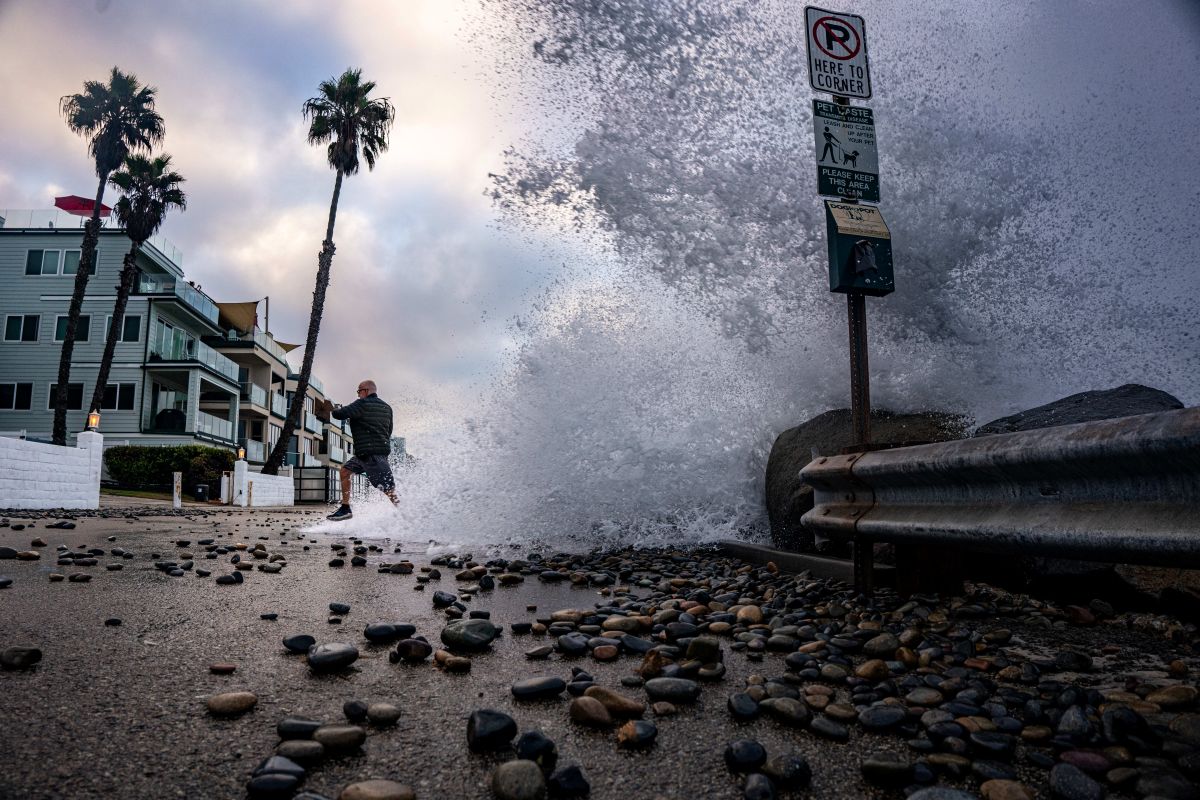
Oceanside, California is hit by high waves during a historic El Niño season. Photo: picture alliance/dpa/ZUMA Press Wire | Jake Lee Green
What would that mean for the weather in Germany this winter?
While temperatures across the globe will rise on average due to El Niño, this does not necessarily apply to Europe.
Daniela Matei, from the Max Planck Institute for Meteorology in Hamburg, emphasises, “The impact of El Niño on Europe is more complex and much less direct than in the Pacific region.”
“Especially from January onwards, El Niño can influence the polar vortex and significantly increase the probability of frequent strong cold air intrusions in northern and central Europe,” she said.
Or make for a particularly cold winter, in other words.
Matei adds that a strong and long-lasting El Niño could also contribute to increased warming in the following spring and summer, potentially contributing to even more heat waves and drought in southern Europe in the coming year.
Helge Gößling, a climate physicist from the Helmholtz Centre for Polar and Marine Research Bremerhaven, told German media that current forecasts show a “slight tendency towards a somewhat wetter winter in Europe.”
This could potentially make for a decent year for skiing in the German Alps, if temperatures aren’t too warm on the ski slopes.
READ ALSO: The little known ski resort rated best in Germany for reliable snow cover
Long-term forecasts are notably uncertain
Weather forecasts weeks or months in advance are highly uncertain.
Lothar Bock of the German Weather Service (DWD), told BR24 that this is especially true of El Niño’s impact on Europe.
“The further away you move from the equator, the ‘wilder’ it gets,” Bock said, adding that the Pacific is far away from Germany, and that the weather is influenced by many other factors.
High prices and supply chain issues
What is arguably more certain in Germany, is that El Niño will push up the prices of certain commodities.
Crop yields for cocoa, coffee and sugar – all of which are grown in tropical regions – are expected to be impacted by severe weather events related to El Niño.
German companies can expect higher costs and delayed deliveries for these and other commodities coming from the Global South and warmer regions.
Global supply chains may also be affected.
READ ALSO: Germany can expect more intense weather extremes, warns climate expert
Disclaimer : This story is auto aggregated by a computer programme and has not been created or edited by DOWNTHENEWS. Publisher: thelocal.de