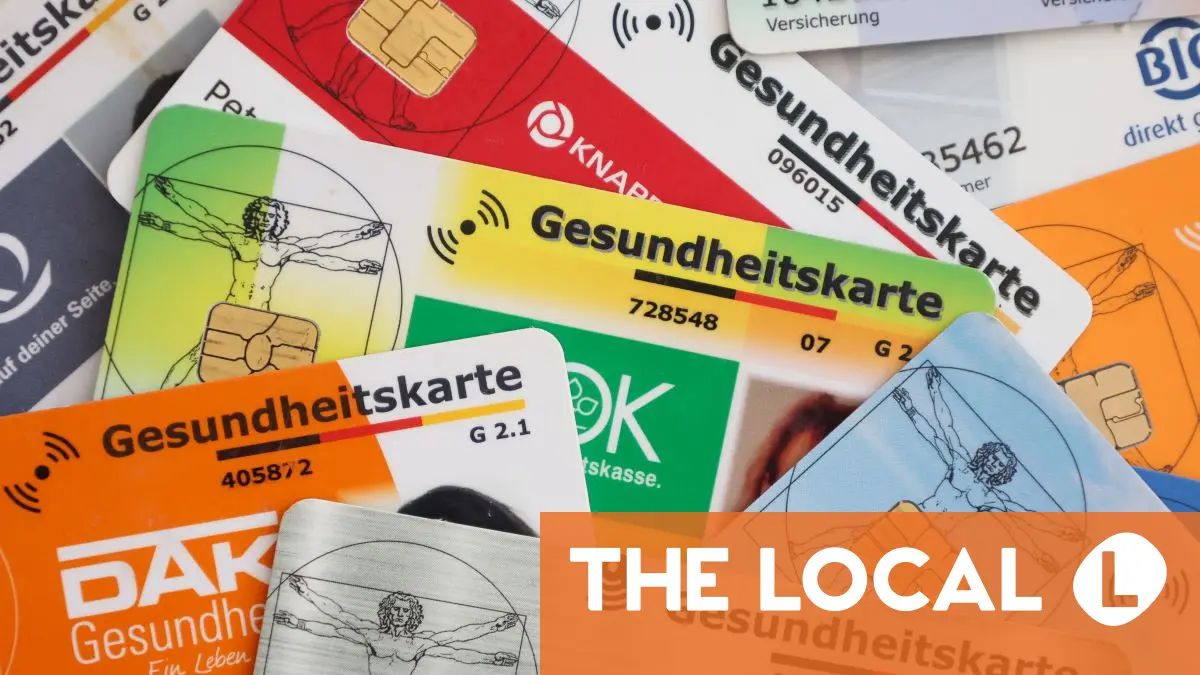
Patients with statutory health insurance in Germany can breathe a sigh of relief this year, as supplementary contributions look set to remain the same.
Health Minister Carsten Linnemann (CDU) shared the news on Wednesday, following the release of financial estimates from a panel of health insurance experts.
According to Linnemann, the committee found that the current average supplementary premium of 2.9 percent does not need to be increased in 2027.
In other words, patients can expect a year of relief after a series of years of rising contributions.
“We have achieved our most important goal: the average supplementary premium rate will remain stable in the coming year,” said Linnnemann.
He added that the development was a “good sign” after numerous increases to the supplementary premium in previous years.
Financial strain
The news marks the first time in almost half a decade that the supplementary contribution has remained unchanged. Since the start of the Covid pandemic in 2020, the benchmark for the extra premiums has more than doubled from 1.1 percent to 2.9 percent.
The last time the figure was frozen was in 2022, when the contribution rate remained stable at 1.3 percent.
However, the Health Minister emphasised that the “tense” financial situation was far from over.
In 2026, the statutory health insurance funds are forecast to raise around €312.2 billion in revenue, compared to €370.1 billion of spending by the health insurers.
In 2027, revenues are expected to increase to around €320.7 billion, while spending will also rise to €378.1 billion.
Nevertheless, higher revenues and €15 billion in measures to curb spending growth are expected to help keep the benchmark contribution rate stable.
READ ALSO: Germany’s federal cabinet approves health reform package
Contributions set by health insurers
The supplementary contributions are the premiums charged on top of the standard base rate in Germany, which is set at 14.6 percent of income (split between employers and employees).
Though the government is charged with setting a benchmark, health insurers can choose to set their own rates below or above this number. For example, TK currently charges 2.69 percent, while AOK Nordost sets their rate at 3.5 percent.
Often, health insurers will aim to justify higher rates by citing additional services, like professional teeth cleaning or free fitness classes.
This means that health insurers may still opt to raise their rates despite the current benchmark.
Following a hike in rates, patients have the right to cancel their membership and switch insurers.
READ ALSO: How Germany’s public health insurance shake-up will affect families
Useful vocabulary
Supplementary contributions – (die) Zusatzbeiträge
average – durchschnittlich
income – (die) Einnahmen
spending – (die) Ausgaben
special contract termination rights – (das) Sonderkündigungsrecht
Disclaimer : This story is auto aggregated by a computer programme and has not been created or edited by DOWNTHENEWS. Publisher: thelocal.de