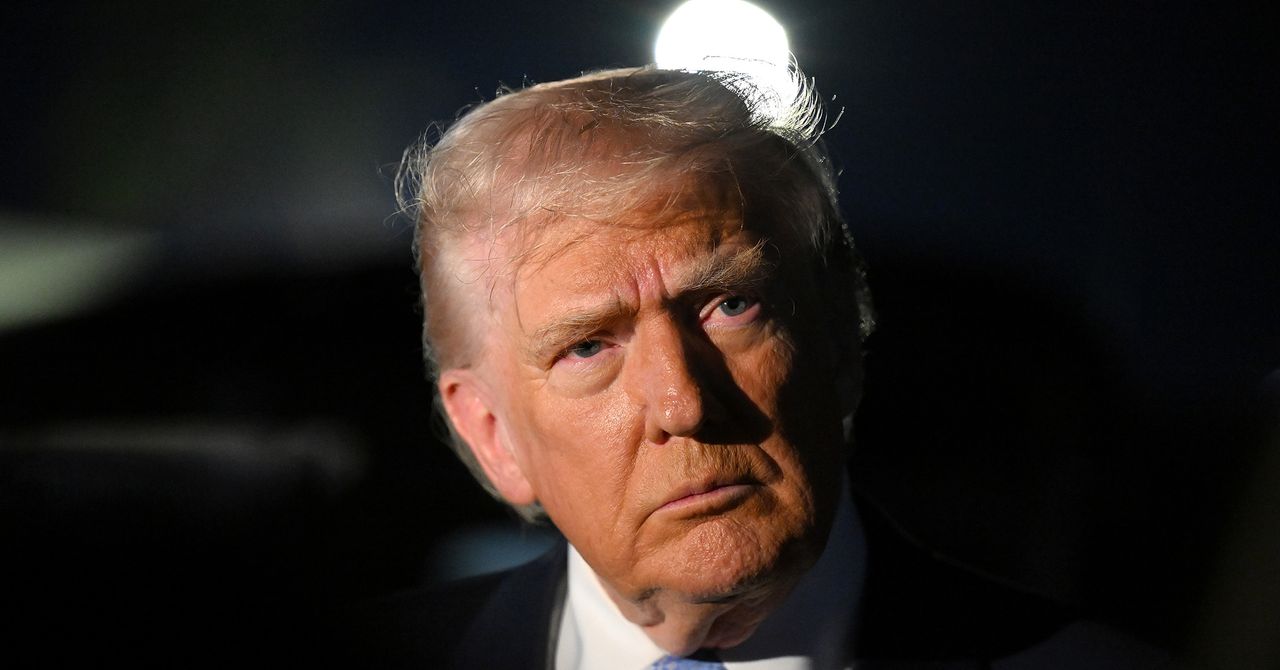
As polls indicate Democrats could take back the US House of Representatives, and possibly the Senate, lawmakers are gearing up to investigate the Trump administration. But that may prove to be a difficult task, even with a majority in both chambers of Congress.
In late September, the Government Accountability Office (GAO) released a report on Elon Musk’s so-called Department of Government Efficiency titled “DOGE: Congress and the Public Lack Assurance That Systems and Data Were Protected at Multiple Agencies.” In it, the GAO revealed that multiple executive branch agencies had refused to fully cooperate with investigators about the extent and nature of DOGE’s access to sensitive systems and information. The Consumer Financial Protection Bureau (CFPB), which DOGE and the Trump administration gutted in the early months of the president’s second term, sent GAO a letter accusing investigators of bias and alleging the report was “misleading.”
The report, just the latest example of the Trump administration seeking to dodge congressional oversight, raises questions about what—if any—avenues the legislature has to enforce accountability, or even access basic information about what the government has been doing.
“In a world where there is no shame, it’s hard to think of what Congress can do that doesn’t involve some coercion of some kind,” says Emily Berman, a law professor at the University of Houston. “Like withholding money or going to court.”
The GAO serves as Congress’ primary investigative body; its work is most often initiated by requests from Congress, but it is independent and nonpartisan. It does not, however, have the ability to enforce laws or take on prosecution. Federal agencies don’t necessarily have to enact the agency’s suggestions, but they are legally required to cooperate with GAO’s requests for information and auditing.
The GAO and a Democratic congressional aide who spoke to WIRED on the condition of anonymity, though, say that the agencies investigated by the GAO for the DOGE report—the CFPB, the Department of Veterans’ Affairs (VA), the Department of Education, the National Oceanic and Atmospheric Administration (NOAA), the Securities and Exchange Commission (SEC), and the Small Business Administration (SBA)—all, in one way or another, refused to cooperate with the investigation.
“We have experienced increased challenges in obtaining information from agencies over the past year and a half,” GAO spokesperson Sarah Kaczmarek says. “As this report demonstrates, when agencies do not provide requested information, it can limit GAO’s ability to provide Congress and the public with assurance that federal programs, systems, and information are appropriately managed and protected.”
As an example, every agency included in the report refused to do so much as name which DOGE operatives they’d played host to—even when that information had already been publicly reported. The CFPB refused to name all six of the DOGE operatives who were detailed to the agency even though, in February 2025, WIRED identified three of them: Nikhil Rajpal, Chris Young, and Gavin Kliger. DOGE members Jeremy Lewin and Jordan Wick were also part of the team at the agency.
| Got a Tip? |
|---|
| Do you know about what’s happening here? We’d like to hear from you. Using a nonwork phone or computer, contact the reporter securely on Signal at velliott88.18. |
According to the report, both the SBA and the VA “did not respond to requests for information needed to determine the access DOGE team members had to their systems.” Previous reporting from WIRED found that the DOGE affiliate at the VA, Sahil Lavingia, sought to use AI to write code for the agency’s systems, and at the SBA, DOGE affiliates Edward “Big Balls” Coristine and Donald Park were granted broad access to the agency’s financial and loan systems.
VA and SBA did not respond to a request for comment.
The Democratic aide says that in addition to the VA and SBA refusing to provide information, several agencies slow-walked their responses to the GAO. The aide says that meeting some resistance within an agency to a GAO investigation is not unheard of, but that responses to the DOGE inquiry represented a “surprising” level of obstruction.
“We did see a little bit of a range in terms of cooperation,” they say. “Normally, an agency might be reluctant to provide as much information as the GAO requests, but then they try to find accommodations. If they can’t provide X, they provide Y. If they can’t provide Y maybe they could walk investigators through something, or show different things. But there’s just a complete lack of willingness to kind of get to yes.”
And it’s not just the agencies named in the DOGE report that have been resistant to congressional efforts to investigate. In a statement to WIRED, Senator Ron Wyden, the Oregon Democrat, says that his office was notified by the GAO that the Commerce Department “is refusing to cooperate with my request with Sen. Welch to investigate the effectiveness of U.S. export controls to address AI-fueled national security risks.”
The Department of Commerce did not respond to a request for comment.
“There is no good reason to deny GAO investigators the access they need to root out corruption and waste in federal programs,” says Wyden.
While the current Republican-led Congress appears to have little interest in using them, there are tools to enforce cooperation with a GAO investigation. The most obvious–and likely–is using their subpoena power, which the Democratic aide says members of Congress are preparing to do. “We are expecting that the administration is gearing up for the [the next Congress] to be hostile,” they say.
If someone refuses to cooperate with a subpoena, Congress can hold them in contempt. “It used to be that if Congress threatened to hold an executive official in contempt of Congress, that was like a huge embarrassment,” says Berman. “And that imposed a lot of pressure on the executive branch to reach some agreement with Congress.” But in recent years this has changed. Since 2012, three different attorneys general have been held in contempt of Congress, with seemingly few repercussions.
This is because without the cooperation of executive branch agencies like the Department of Justice, Congress has little power to enforce a subpoena or hold those who don’t comply in contempt.
Last month, Congress held billionaire Leon Black in contempt for refusing to answer subpoenas to return and testify under oath regarding his connections to Jeffrey Epstein. Whether Black will face any consequences, however, is now out of Congress’ hands—the US Attorney’s Office for the District of Columbia will ultimately decide whether or not to prosecute him.
Without being able to count on the support of agencies nested under the executive branch and staffed by presidential picks, Berman says, today’s Congress now has fewer options than in the past. It could impose fines on those held in contempt; it “can arrest them and put them in their little jail cell in the basement of the Capitol;” or it could file a lawsuit, potentially winding all the way up to the Supreme Court. But any legal case could easily stretch beyond the House’s two-year term, creating “a real problem” for using the courts to enforce accountability, says Berman.
“This is part of a broader shift of power from Congress to the executive branch,” she says. “Over time, the way the law has moved is to give the executive branch more and more power and discretion over decisions within its own branch. So it’s had the effect of essentially broadening the scope of what the executive branch can argue they’re entitled to keep secret.”
With its own oversight powers limited, Congress is going to have to think of other ways to force the executive branch to cooperate. Jamie Raskin, the Maryland Democrat who serves as the ranking member on the House Judiciary Committee, told reporters in September that Congress has “the power of the purse” as a way to pressure the executive branch to comply with investigations.
But in order for this power to be effective, Congress would need to change the way it legislates. As it stands, Berman says, the budget is a “blunt tool” because Congress often passes legislation in large omnibus bills. This means that critical funding for regular government operations, or initiatives that have broad bipartisan support, is often bundled along with other allocations for the administration’s priorities. For instance, following the killing of Alex Pretti by two Customs and Border Protection (CBP) agents during the Operation Metro Surge in Minnesota, Senate Democrats refused to pass an appropriations bill that included funding for the Department of Homeland Security (DHS), which oversees CBP. What followed was a months-long partial government shutdown. But DHS is also home to the Transportation Security Administration (TSA), meaning that TSA workers went without pay for weeks, and led to massive delays at airports around the country.
Berman says that if Democrats take control of the Senate, they could also put pressure on the administration through refusing to confirm appointments unless the executive branch cooperates with investigations.
But in reality, she says, “there are no good options.”
Maddy Varner contributed reporting.
Disclaimer : This story is auto aggregated by a computer programme and has not been created or edited by DOWNTHENEWS. Publisher: wired.com