
TEHRAN – The cinematheque of the Tehran Museum of Contemporary Art (TMoCA) will review six films by Stanley Kubrick on Sunday.
The films will be examined from a philosophical perspective in a session titled “Kubrick and the Cinema of Machines,” Mehr reported.
In this program, Farzad Karimi, a postdoc in interdisciplinary studies of literature and philosophy, will analyze the works alongside screening excerpts from six films by the late filmmaker.
The event will feature excerpts from the films “Dr. Strangelove,” “2001: A Space Odyssey,” “A Clockwork Orange,” “The Shining,” “Full Metal Jacket,” and “Eyes Wide Shut”.
Attending this program is free and open to the general public.
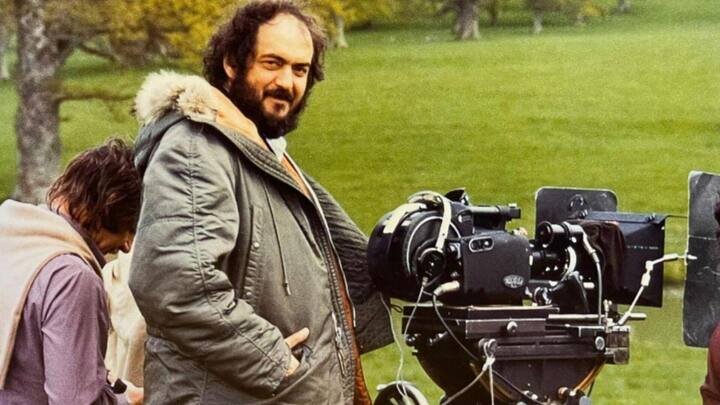
Stanley Kubrick (1928 – 1999) was an American filmmaker and photographer. A prominent figure of the New Hollywood era, Kubrick is regarded as one of the greatest and most influential filmmakers. His films spanned a number of genres and gained recognition for their attention to detail, innovative cinematography, extensive set design, and dark humor.
Kubrick’s “Dr. Strangelove or: How I Learned to Stop Worrying and Love the Bomb” (1964) was a satirical black comedy. Kubrick became preoccupied with the issue of nuclear war as the Cold War unfolded in the 1950s, and even considered moving to Australia because he feared that New York City might be a likely target for the Russians. He studied over 40 military and political research books on the subject and eventually reached the conclusion that “nobody really knew anything and the whole situation was absurd”.
A perfectionist who assumed direct control over most aspects of his filmmaking, Kubrick cultivated expertise in writing, editing, color grading, promotion, and exhibition. He was famous for the painstaking care taken in researching his films and staging scenes. He frequently asked for several dozen retakes of the same shot, often confusing and frustrating his actors. Many of Kubrick’s films broke new cinematic ground and are now considered landmarks. The scientific realism and innovative special effects in his science fiction epic “2001: A Space Odyssey” (1968) were a first in cinema history; the film earned him his only Academy Award (for Best Visual Effects) and is regarded as one of the greatest films ever made.
While many of Kubrick’s films were controversial and initially received mixed reviews upon release—particularly the brutal “A Clockwork Orange” (1971), which Kubrick withdrew from circulation in the UK following a media frenzy—most were nominated for Academy Awards, Golden Globes, or BAFTA Awards, and underwent critical re-evaluations.
With the horror film “The Shining” (1980), he became one of the first directors to make use of a Steadicam for stabilized and fluid tracking shots, a technology vital to his Vietnam War film “Full Metal Jacket” (1987). A few days after hosting a screening for his family and the stars of his final film, “Eyes Wide Shut” (1999), he died at the age of 70.
SS/SAB
Disclaimer : This story is auto aggregated by a computer programme and has not been created or edited by DOWNTHENEWS. Publisher: tehrantimes.com








