TEHRAN- A deeper understanding of the relationship between religious institutions and the arts is essential to addressing longstanding challenges surrounding music in Iran, cultural sociologist Hossein Sarvi says, emphasizing the need for informed dialogue and a reassessment of institutional relations.
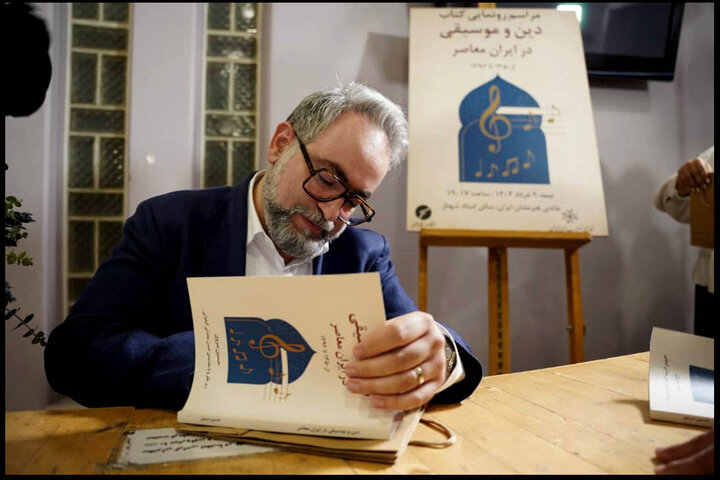
Speaking to Mehr News Agency, Sarvi, whose book “Religion and Music in Contemporary Iran” examines the historical and social dimensions of the subject, said some of the tensions between religion and music stem not necessarily from fundamental conflicts but from insufficient understanding of the nature, functions and sensitivities of the two fields.
“One of the main objectives of this research has been to help improve what I call ‘mutual institutional literacy’ between religious institutions and the arts,” Sarvi explained.
The concept refers to the ability of each institution to better understand the other’s internal logic, functions, requirements and concerns, creating opportunities for more informed and realistic interaction.
Sarvi argued that the relationship between religion and music in Iran remains an important subject for cultural and social debate. Questions concerning the relationship between religious and artistic institutions, cultural policymaking on music, and the scope and methods of official intervention continue to require reflection and scholarly discussion, he said.
According to the researcher, examining these issues solely through a historical lens would overlook their continuing relevance to contemporary Iranian society. He believes that a more comprehensive understanding of the two fields could help move discussions beyond oversimplified interpretations and encourage more constructive engagement.
Sarvi also stressed that academic research should not be evaluated solely by conventional publishing-market standards, noting that specialized scholarly works generally address a narrower audience than popular literature. For him, the more significant measure of a study’s impact is its ability to enter academic discussions, attract the attention of researchers and contribute to sustained intellectual debate.
He expressed hope that his book would reach a broader audience, particularly university students, researchers, cultural policymakers and those interested in interdisciplinary studies. He added that further discussion of the issues raised in the research could contribute to a deeper understanding of the relationship between religion and music in Iran.
Sarvi also highlighted the role of institutions responsible for introducing and promoting scholarly publications, saying that producing and publishing research represents only part of the process of generating and disseminating knowledge. Efforts to make such works accessible to wider audiences are equally important in helping them gain a stronger presence in academic and cultural life.
Sarvi holds a PhD in cultural sociology and specializes in cultural studies and the sociology of art. He has experience in research, teaching and cultural administration and is currently conducting postdoctoral research in the Department of Music Studies at the National and Kapodistrian University of Athens.
His book, “Religion and Music in Contemporary Iran,” has recently reached its second edition following interest from researchers, academics, scientific and research centers, and readers interested in cultural and social studies.
SAB/
Disclaimer : This story is auto aggregated by a computer programme and has not been created or edited by DOWNTHENEWS. Publisher: tehrantimes.com