Honda Racing Corporation president Koji Watanabe admits the manufacturer’s Formula 1 power unit upgrade brought its driveability close to its troubled first specification’s level.
Honda has struggled on his full-fledged return to the world championship, as new technical regulations were adopted with power units featuring near-50% electrical energy.
While the Adrian Newey-designed AMR26 had flaws of its own, it was rendered unpredictable by the Japanese company’s powertrain lacking not just power and reliability but also driveability, with turbo lag and “random downshifts” – as described by Fernando Alonso.
Late-summer chassis and engine upgrades have significantly improved Aston’s performance, to the extent it is now starting to mingle with the midfield, scoring six points across the latest six rounds.
However, the power unit update – courtesy of the Additional Development and Upgrade Opportunities system for powertrain manufacturers – also had some drawbacks.
“As the drivers have also said, the biggest issue is that we simply do not have enough power compared with our competitors,” Watanabe said. “With Spec 2, our aim was to close that gap progressively by increasing the power output.
“We achieved the power target we had set for Spec 2, but we also made some changes to the combustion process and other areas. As a result, driveability regressed to something closer to what we experienced with Spec 1 in its early stages.
“That is something we can improve with time, both through hardware changes and through control-system refinements. Even amid these difficult circumstances, we have been able to confirm that driveability is improving.
“However, we are still short on power, and that is something we need to address.”
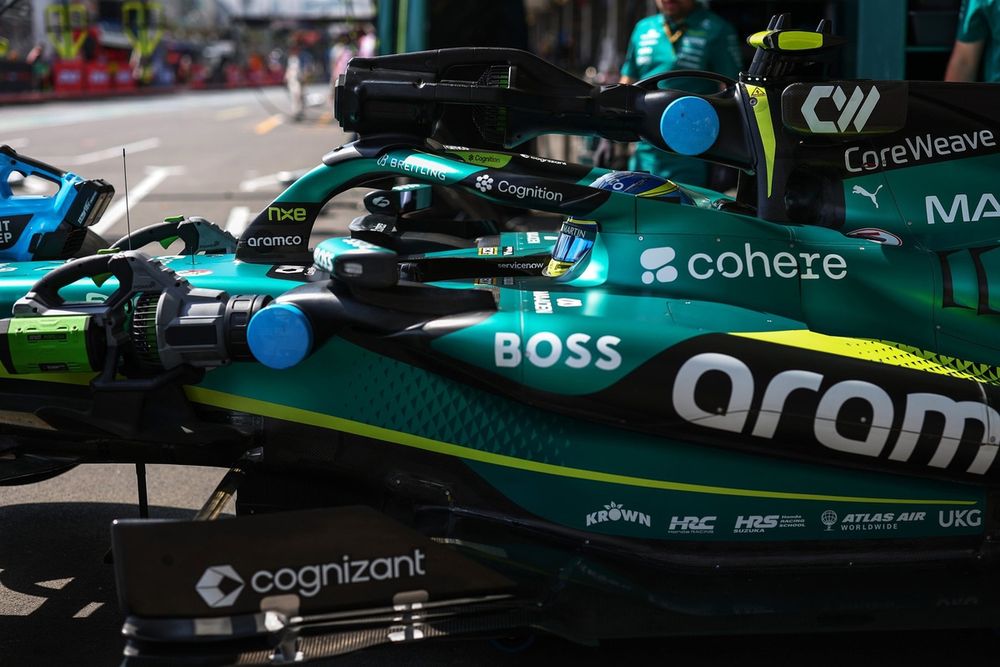
Fernando Alonso, Aston Martin Racing
Photo by: Alastair Staley / LAT Images via Getty Images
Honda’s current struggle is well-documented, after the brand required a certain time to get experienced F1 engineers back onboard after (officially) pulling the plug on its Red Bull partnership in 2021.
“I think the starting point was that we got a late start on development,” Watanabe detailed. “By establishing HRC as a racing development company, we ensured that F1-related work continued even at the fundamental research level. So development never stopped completely.
“However, when we announced our return in 2023, we needed to establish a fully functioning development organisation as quickly as possible, and that took time. We made the decision to return a year later than our competitors, and it also took time to put the development structure in place.
“As a result, we effectively lost almost two years. In that situation, we initially focused on developing the battery and electric motor, which take a long time to develop. I believe we achieved our targets in those areas, but that meant development of the internal combustion engine fell behind.
“If we had been able to start development with a fully staffed organisation from the outset, we could have allocated resources to both the electrified components and the engine. But we were short of personnel initially, so we started with the electrified side and then shifted our focus to the engine. We pushed ahead to catch up, but then we ran into the budget cap and restrictions on operating time. In the end, we were unable to make up the lost ground.”
We want your opinion!
What would you like to see on Motorsport.com?
– The Motorsport.com Team
Disclaimer : This story is auto aggregated by a computer programme and has not been created or edited by DOWNTHENEWS. Publisher: motorsport.com