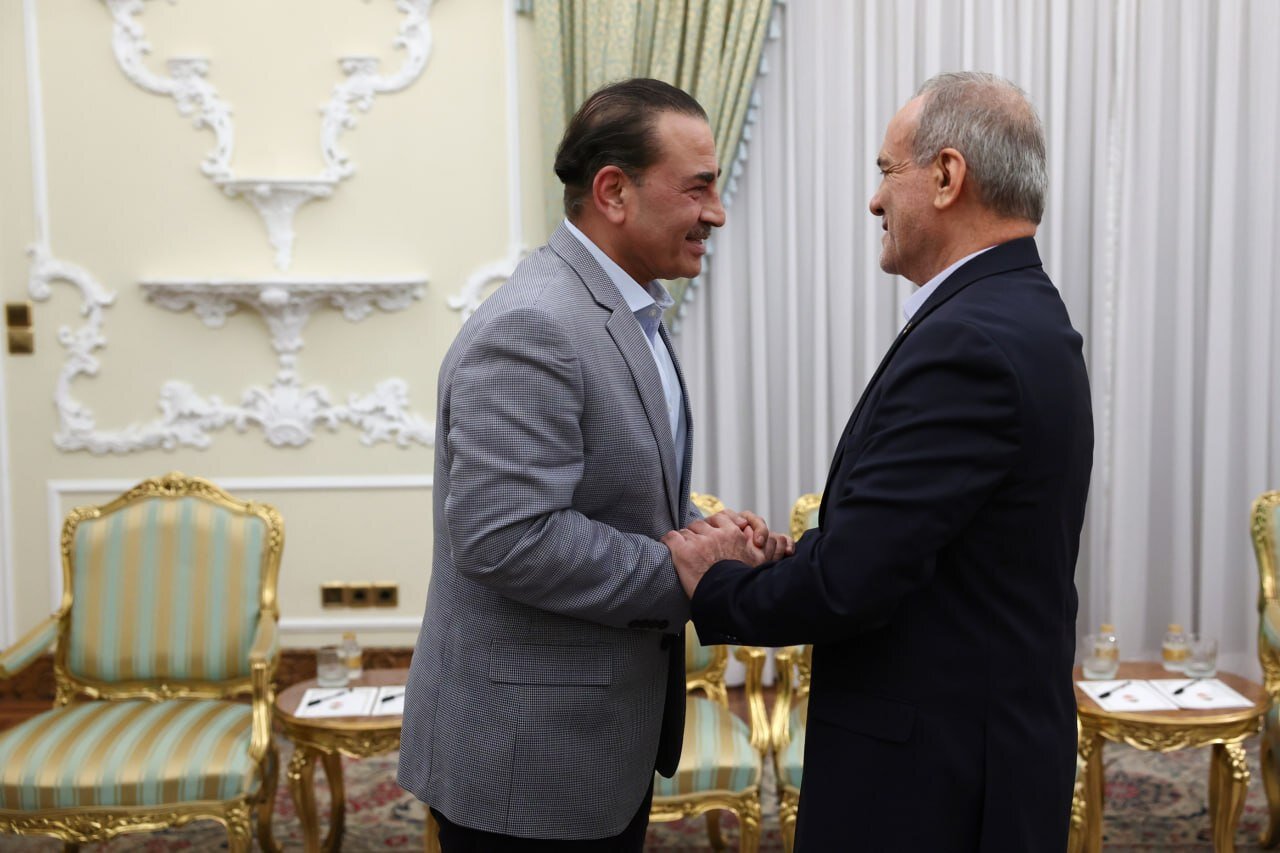
TEHRAN – Field Marshal Asim Munir, Pakistan’s army chief, arrived in Tehran on Tuesday for consultations with Iranian officials. It is General Munir’s fifth visit to Tehran since the start of the US-Israeli war against Iran on February 28.
In continuation of the Pakistani government’s sincere mediation, the country’s army chief arrived in Tehran yesterday and held talks with senior Iranian officials. Islamabad’s efforts come as Iran has always given credibility to mediators, but in recent years it is the US that has consistently neutralized those efforts and discredited them. Iran gave the four European countries the opportunity in the JCPOA to appear as international actors, but when Trump withdrew from the JCPOA in his first term, those countries failed to honor their commitments to Iran and even aligned themselves with the US policies and anti-Iran actions. After that, Iran engaged with Oman, and Muscat also sincerely tried to untie the knot between Washington and Tehran, but in the end Trump even threatened to bomb Oman, leaving observers stunned.
Pakistan’s sustained efforts in the ongoing war also led to the Islamabad MoU and placed Pakistan in the position of a major international actor, but once again it was the US that destroyed it only weeks later with adventurism in the Strait of Hormuz and violation of the memorandum’s provisions.
Tehran was the first country to recognize Pakistan’s independence and has always had warm and close relations with Islamabad. Islamabad knows well that the Islamic Republic of Iran is a strong barrier against the sinister intentions of the Israeli regime, and if Tel Aviv’s malign actions are not contained, they know no limits. Tehran and Islamabad have many common interests, and Pakistan’s role and efforts in resolving the ongoing conflict are welcomed by Tehran. But has the US had, and does it have, the same view of mediators?
Pezeshkian: Iran does not trust the US
President Masoud Pezeshkian, in his meeting with the Pakistani army chief, recalling the record of US bad faith and breach of promises – attacking our country in the middle of negotiations and martyring the Supreme Leader of the Revolution, scientists and innocent schoolchildren without any legal justification – said: All the problems created in the region, from escalation of tension and conflict to disruption in the Strait of Hormuz, all stem from the warmongering nature of the US. All their claims against our country lack legitimacy, because we had proven our goodwill both with regard to negotiations and inspections in the nuclear file within the framework of international laws and regulations.
Emphasizing that the US must first show it will lift threats and sanctions so that conditions for dialogue can be met, Pezeshkian stated: You cannot increase sanctions and pressure day by day and close routes and roads to our country, and then claim you seek dialogue and negotiation. What kind of dialogue is this?
Noting that we know war benefits neither us, nor the region and the world, nor even the US, the President added: It is the US that must answer why it started the war in the first place, entangling itself and the world in problems and difficulties?
Pezeshkian noted: We have been and are ready for dialogue, but the US must first remove threats and sanctions and then we will talk, because if they are truly seeking dialogue and agreement, such behavior is completely in contradiction with their claim and is not logical.
The President, further pointing out that they imposed all these criminal acts on our country and our region under the false claim of nuclear weapons, while they martyred our Leader who had repeatedly stressed the prohibition of nuclear weapons, and drove the region into deadlock, said: They will certainly not achieve their objectives through war and will only bring destruction and damage, not only for Iran but for the entire region; something we do not want to happen.
Stressing that they must prove to our nation that this time they do not want to lie to us, Pezeshkian said: Our nation today does not trust the US and believes that if we negotiate, they will attack us again.
The President added: They constantly propagate in the media that they want to attack our country to frighten our people, while our nation has no fear of martyrdom. You, as our Muslim brothers, must make them understand that this is not how one treats Muslims. We do not want to impose our will on anyone, but we will not submit to coercion.
Field Marshal Asim Munir, in the meeting expressed pleasure at meeting Pezeshkian, presented a report on diplomatic actions and efforts to reduce tensions, and while expressing concern over a renewed outbreak of war, stressed the importance of resolving issues through diplomatic solutions and Pakistan’s readiness to help settle matters in this regard.
He, while regretting the non-implementation of the Islamabad Memorandum of Understanding, said: Negotiation never means weakness and acceptance of submission to the US, because the Iranian nation has repeatedly shown its dignity, authority and power to the world; rather it is an opportunity to resolve issues through a path other than war, conflict and insecurity.
Iran will not take out its uranium
General Munir also met in Tehran with the Secretary of the Supreme National Security Council. Major General Mohsen Rezaei, the Representative of the Supreme Leader and Secretary of the Supreme National Security Council, in his meeting with Asim Munir, stressing that all enriched nuclear material will remain in Iran, said: Not even an ounce of enriched nuclear material will leave Iran, and this material is a great asset and the national wealth of Iranians for use inside the country.
Major General Mohsen Rezaei stated: All the Iranian people and officials have unanimously and with one voice concluded that until confidence-building is done by the US, there will be no negotiation, and the start of this confidence-building is the fulfillment of Iran’s conditions. He also stressed the fraternity of the Iranian and Pakistani nations.
Asim Munir, emphasizing the reopening of the border between Iran and Pakistan, said the Iran-Pakistan border problem has been resolved and the border has been reopened as of Tuesday.
Referring to the courageous defense and resistance of the Armed Forces of the Islamic Republic of Iran in the 40-day war, he stressed regional cooperation between the two countries without the presence of foreigners.
US threats have no effect on our decisions
The Pakistani army chief also met with Mohammad Bagher Ghalibaf, Speaker of Parliament, in Tehran. In the meeting, Ghalibaf, while appreciating the support of the Pakistani government and nation for Iran in conditions of war and negotiation, stressed the fraternal relations of the two countries. Asim Munir also announced the reopening of the two countries’ border as of today and described border issues as temporary and technical.
Referring to Iran’s deep distrust of the US and the Trump administration’s violation of the Islamabad Memorandum of Understanding, Ghalibaf stressed that the US can win Iran’s trust only by implementing Iran’s seven conditions presented in New York.
He also said that Iran is not warmongering but is fully prepared to defend the homeland and national dignity, stressing that threats and military moves cannot change the strategic decisions of the Islamic Republic, and that it is the US that must act to get out of the quagmire of war.
A deadlock that is not easy to break
General Munir’s visit to Tehran took place while negotiations between Iran and the US have reached a deadlock, and Tehran’s seven-day plan to reopen the Strait of Hormuz could not untie this knot either. The deep divide between the two sides’ views of the balance of conflict and tension is one of the main reasons mediation efforts have failed. While the US is a short distance from the midterm elections and the Republican Party is not in good shape in the polls, Trump is trying to force Iran into submission through threats. Iran, by tightening control over the Strait of Hormuz and dealing with violating vessels seeking to pass through the strait without permission, has increased pressure on the US, and oil prices have even exceeded 110 dollars. In the latest developments, two tankers carrying a total of 4 million barrels of crude oil hit mines over the weekend; one caught fire and the other came to a halt.
The diesel deal with Putin, although it faced enormous criticism inside the US, failed to have any particular effect on prices or calm angry US consumers.
Trump has so far taken varied and sometimes contradictory positions on the midterm elections and their link to the war with Iran. He has tried to deflect the rise in fuel prices onto the Ukraine war and Biden’s record by shifting blame. Meanwhile, he has at one point spoken of the insignificance of these elections for his Iran policy and even said the elections and their outcome do not matter to him at all, but in practice he behaves differently. From the 5,000-dollar promise to every US adult and personal appearances at campaign rallies in various states, telling people to imagine they are going to the ballot box to vote for him, all show how vital this election is for him.
The US President recently said he would not start a new round of confrontation with Iran until after the elections, but evidence does not necessarily confirm this claim. The secret trip of Pete Hegseth, the US Secretary of War, to Israel and his consultations with Benjamin Netanyahu, the Israeli Prime Minister, held with the participation of officials from the UAE, has increased doubts about the future plans of the US and Israel.
Iran is ready for the next round of war
In Iran too, senior military officials speak of full readiness for a new round of war. Sardar Hossein Mohebbi, in his recent interview with the Tehran Times, did not rule out the possibility of a new US attack aimed at manufacturing an achievement on the eve of the elections, stressing that such an attack would bring no achievement for the US and that even if limited, Iran’s response would be very severe and would confront the world with a serious energy crisis.
The IRGC spokesman, in other remarks, named data cables on the floor of the Persian Gulf as one of the possible targets in a new round of war – something that Mohsen Rezaei, the Secretary of the Supreme National Security Council, had also pointed to before him.
Major General Abdollahi, Chief of the General Staff of the Iranian Armed Forces, also said: Our enemies possess modern and new equipment, and we must, when necessary, respond to the enemy with different methods and asymmetric equipment, as happened in the two recent wars.
In the event of any renewed miscalculation by the enemy, we will neutralize the effect of the enemy’s expensive and advanced equipment with a wide range of cheap but effective equipment, and this will be painful, worrying and costly for the enemy.
It seems Trump is seeking even a temporary achievement to pass easily and triumphantly through the upcoming elections, but whether he loses or wins this election, it is unlikely to fundamentally affect his strategy toward the war with Iran. Trump has openly and fully endorsed Netanyahu in the Israeli elections, and Netanyahu has explicitly stated that his goal is the destruction of Iran. The Israeli Prime Minister spoke by phone with Trump on Monday and, by his own account, stressed in it the need to achieve this goal. In such circumstances, there is no doubt about the real intentions of the Donald-and-Bibi duo toward Tehran, and this very fact undermines any mediation and proposal.
Trump is not after a deal
While some unofficial sources in the region have said Pakistan and Qatar have prepared a proposal covering part of both sides’ demands that could be agreed by Tehran and Washington, evidence shows that from Tehran’s perspective, Trump is merely seeking to pass through the difficult strait of the midterm elections, not to end an unjustified and costly war whose declared objectives have changed repeatedly.
Tehran has no doubt about Islamabad’s sincerity in resolving the current situation, but the point is that the ball is in Washington’s court, not Tehran’s. Until the US government abandons the illusion of forcing Iran to surrender and imposing its unilateral conditions – whether through negotiation or military aggression – this conflict and tension will not end.
It is worth noting that concurrent with General Munir’s presence in Tehran, Mohammad Ishaq Dar, Pakistan’s Foreign Minister, announced at the Shanghai Cooperation Organization meeting in Tajikistan that Islamabad continues to work to reduce tensions and mediate between Tehran and Washington.
Stressing that dialogue and diplomacy are the most effective way to resolve regional disputes, he said: “Pakistan will continue to support dialogue and the peaceful settlement of disputes to achieve lasting peace and stability.”
Disclaimer : This story is auto aggregated by a computer programme and has not been created or edited by DOWNTHENEWS. Publisher: tehrantimes.com