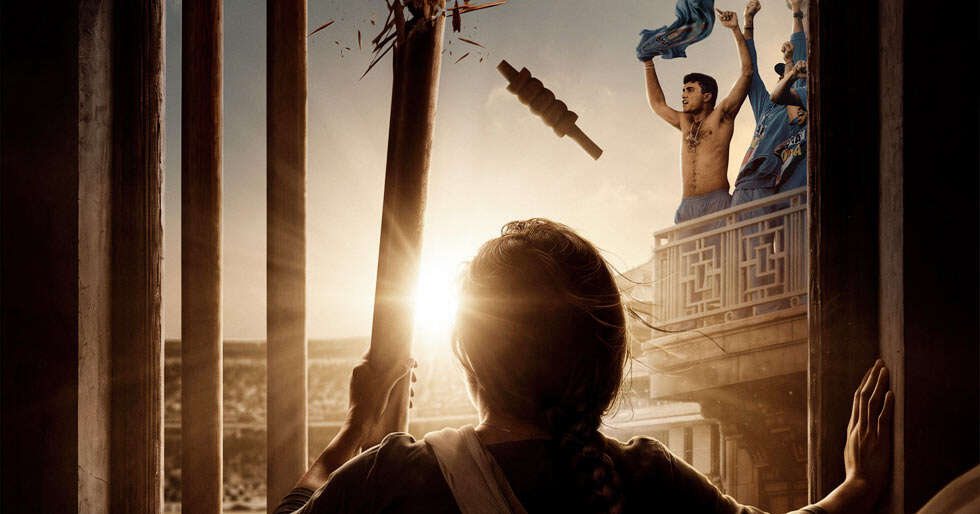
Doosra is an unusual blend of documentary and fiction that brings together two seemingly disparate worlds: Indian cricket’s coming of age under Sourav Ganguly and a young woman’s struggle to come to terms with her identity and sexuality in a conservative, patriarchal society. Set primarily in the 1990s to early 2000s, the film uses the transformation of the Indian cricket team as a metaphor for individual rebellion, giving a familiar sporting moment an intimate, deeply personal resonance.
The film builds towards India’s famous victory over England in the 2002 NatWest Series final at Lord’s. Chasing a formidable target of 326, India pulled off a thrilling win, prompting Ganguly to take off his shirt and wave it from the Lord’s balcony. It was an impudent, joyous gesture that came to symbolise a new, self-assured Indian team, no longer willing to play second fiddle to its opponents. More than a sporting celebration, it was a declaration of defiance against the lingering colonial mindset.
For Tara (Plabita Borthakur), a young girl watching the match at home, Ganguly’s audacity becomes a source of inspiration. His refusal to conform gives her the courage to confront the truth about herself, even if doing so means inviting the wrath of a family and society that would rather she remain within prescribed boundaries. The parallels between the captain’s fight for recognition and Tara’s search for personal freedom are thoughtfully drawn, allowing the two narratives to complement each other without making the connection feel entirely contrived.
What makes Doosra distinctive is its treatment of the material. Rather than following the familiar template of a sports biopic, Abhinay Deo combines archival footage, documentary elements and a fictional coming-of-age story. Interviews with cricket commentator Harsha Bhogle and the late advertising legend Piyush Pandey, among others, pay tribute to Ganguly’s impact, while footage from significant matches recreates the excitement of an era when Indian cricket was finding a new voice. For cricket lovers, this is a treat, bringing back memories of a team that learnt to stand up for itself. For others, the film offers a moving account of a young woman’s struggle to claim her identity.
The emotional core, however, belongs to Tara. Plabita Borthakur carries the film on her able shoulders, bringing resilience, vulnerability and conviction to a character negotiating patriarchy, sexuality, identity and the limitations of small-town life. Her performance is particularly effective because she does not turn Tara into an invincible rebel. There is apprehension beneath her defiance, and the fear of the consequences of speaking out lends her eventual assertion considerable weight. Borthakur makes the character’s journey believable without resorting to melodrama.
Ankur Vikal is convincing as Tara’s father, a man steeped in patriarchal beliefs who sees authority as his unquestionable right. Samidha Guru is equally effective as the mother who has internalised the same oppressive system and struggles to look beyond its dictates. Krishna Gokani, as Tara’s supportive friend, brings a welcome touch of realism to the narrative.
The technical aspects are equally impressive. Mohammed Rubais’s cinematography captures the textures and atmosphere of small-town Rajasthan without reducing the setting to a collection of familiar stereotypes. Ayelet Gil Efrat’s editing skilfully moves between the documentary and fictional strands, maintaining the film’s momentum and allowing the cricketing history to inform Tara’s personal journey. The interplay between archival material and dramatised scenes is central to the film’s unusual appeal.
At 78 minutes, Doosra is also refreshingly economical. It does not overstay its welcome or belabour the parallels it establishes. Its occasional reliance on the symbolic connection between sporting triumph and personal liberation may feel a little too neat, but the underlying idea is persuasive.
Ultimately, Doosra is as much about finding one’s voice as it is about winning a cricket match. It celebrates Ganguly’s contribution to changing the mindset of Indian cricket while examining the courage required to challenge deeply entrenched social conventions. An unconventional sports drama and a sensitive coming-of-age film rolled into one, it deserves credit for attempting something different and finding an engaging emotional connection between the two.
Also Read: Doordarshan confirms airing Shah Rukh Khan’s TV show Doosra Keval
Disclaimer : This story is auto aggregated by a computer programme and has not been created or edited by DOWNTHENEWS. Publisher: filmfare.com