Throughout Labor’s 12 years in government in Victoria, crime has been a chronic political problem for the party. Over its three terms, three premiers have ridden the crime-rate rollercoaster, flipping from progressive policies to blunt crackdowns amid escalating voter anxiety.
The state’s crime rate hit a record high in 2025, coinciding with erosion of the party’s primary vote. If the polls are to be believed, law and order will be a decisive factor when voters decide on November 28 whether to turf Labor out.
An analysis of crime statistics by The Age shows that in more than 60 per cent of Melbourne council areas and more than 40 per cent of regional municipalities, the rates of aggravated burglaries, car thefts and assaults have reached their highest levels in a decade over the past two years.
Enter your suburb in the interactive tool below to see how the overall crime rate in your area has changed over the past decade, how it stacks up against the rest of the state, and your area’s rates of aggravated burglaries, car thefts, assaults and more.
Premier Ben Carroll came to power recognising his party’s political weakness on crime, even after his predecessor Jacinta Allan changed course on key policies to appear tougher to voters. This has caused some discomfort within the party, and sparked criticism from researchers who say Labor is locking itself in a “race to the bottom” with the Liberal Party and One Nation, rather than prioritising evidence-based best practice.
The perception – and indeed the reality – for many voters, however, is that the government has struggled to fulfil its key duty of keeping Victorians safe. This is the story of how Labor ended up here.
Bail laws: Labor’s persistent barnacle
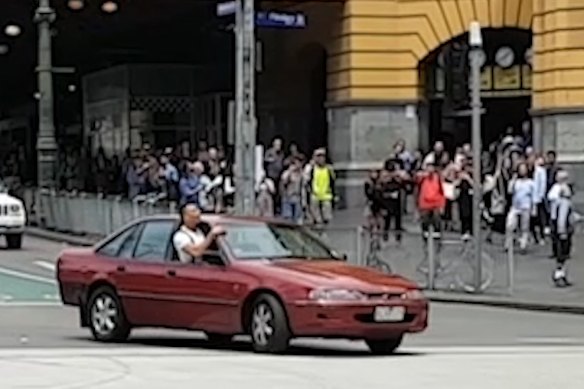
On January 20, 2017, James Gargasoulas drove a stolen Holden Commodore through the heart of Melbourne’s CBD, mowing down 33 pedestrians and killing six people. He was on bail at the time.
Faced with public outrage, the state government under then-premier Daniel Andrews launched a review of bail laws that resulted in Labor introducing a “reverse onus test”, meaning that instead of police needing to prove why bail must be denied, suspected offenders needed to give a compelling reason why they should be released. Andrews boasted these were the toughest bail laws in the country.
So they were. Immediately, more people were held in prison on remand, a policy that disproportionately affected women and Indigenous Victorians. Prison populations grew, as did the cost of housing inmates, and tensions about the large number of untried Victorians in jail.
The percentage of prisoners on remand went from 30.9 per cent in 2017, to 44.4 per cent by 2022.
The unintended consequences were laid bare in 2020, when Gunditjmara woman Veronica Nelson died in custody suffering from an opioid withdrawal after being remanded for a minor shoplifting offence.
During an inquest into her death in January 2023, Coroner Simon McGregor labelled the bail provisions a “complete, unmitigated disaster”. Later that year, the government unwound its strict laws, with then-attorney general Jaclyn Symes conceding the state “cast the net too wide”.
Come March 2025, the government reversed course again, when Allan unveiled changes that removed the requirement for judges to treat remand as a last resort for magistrates to use, and – as after the Bourke Street murders – made it a specific crime to commit an indictable offence on bail.
At the time, Allan was under intense pressure to tackle youth crime after a spate of high-profile home invasions and car thefts in Melbourne. The crime rate had begun to rapidly rise from fewer than 5000 criminal incidents per 100,000 people months before the 2022 election to more than 6700 by mid-2025.
Victims of crime and their families were demanding action. The sister of doctor Ashley Gordon – who was stabbed to death in 2024 after confronting teenagers who had broken into his home, including one who was on bail – said: “I don’t want anyone to feel what we are feeling.”
In 20 of the 32 local government areas that make up Melbourne, residential aggravated burglaries reached their highest level in the past decade over the past two years.
Allan’s crackdown was once again described as the strongest ever, with the government using the word “tough” or “toughest” 32 times in its media release.
Once again, the rate of prisoners on remand – which had fallen following the 2023 changes – began to rise, hitting 40.8 per cent by the middle of this year. The number of children in detention has also rapidly increased.
“The government did the right thing and started to unwind those appalling laws, and then of course did a reverse,” said barrister and spokesman for the Australian Lawyers Alliance Greg Barns, SC.
Monash University professor Natalia Antolak-Saper, author of The Role of the Media in Criminal Justice Policy: Prisons, Populism and the Press, said Labor’s 2025 laws were undoubtedly tougher than the 2018 changes.
“[It] is very disappointing because you now have quite a lot of evidence … that its operation is both discriminatory and problematic,” she said.
Labor has argued its current approach is carefully focused on high harm, violent offending, and avoids indirectly targeting vulnerable groups.
“Victorians want to feel safe – only Labor will listen and act on what the community wants,” Police Minister Paul Edbrooke said in a statement.
Since coming to power in July, Carroll has made a point of saying more people than ever are going to jail.
“It is nonsense that incarceration brings people out worse,” he said this month. “Incarceration gives them the opportunity to get a trade, get an education and break up their links [to crime].”
However, neither Allan nor Carroll’s changes have slowed the Coalition’s attack. If elected, the opposition is promising a “one-strike” policy for bail that would automatically remand accused criminals who reoffend on bail.
“After 12 years of Labor, police numbers are down, crime is up and Victorians are living in fear,” said opposition police and corrections spokesman Brad Battin. “Being weak on crime is in Labor’s DNA, but our Liberal and Nationals team has a comprehensive plan to restore community safety.”
‘I need answers’: Youth crime cuts through with voters
Two years after taking office, Labor faced its first major test on youth crime in 2016: the Moomba riot and the subsequent “African gangs crisis”.
Hundreds of boys – including members of the Apex and Islander 23 gangs – brawled in Melbourne’s CBD using samurai swords, knuckledusters, bats and knives. Although police described the offenders as a “United Nations”, it quickly became a racialised issue that ran to the 2018 state election.
Matthew Guy, the Liberal leader at the time, said in 2017 that Labor had allowed Melbourne to become “the Johannesburg of the South Pacific”. The next year, federal MP Peter Dutton infamously declared that people in Melbourne were “too scared to go out to restaurants” because of “African gang violence”.
In the wake of the riot, Labor moved to roll out tough-on-crime changes: a new youth detention centre, longer sentences for young criminals, and $2 billion in funding for community safety programs that included hiring 3100 new police.
It was enough to ensure Andrews was easily re-elected in 2018, with the Liberal Party’s review concluding that the Coalition’s focus on “African gangs” was dismissed by voters as a political tactic.
During the COVID-19 lockdowns, crime receded from Victoria’s political landscape.
And so after his “Danslide” election victory in 2022, Andrews was emboldened. On the first day of the new parliament, he signalled a willingness to raise the age of criminal responsibility from 10 to 14. In 2023, it became Labor’s policy to raise the age first to 12, and then to 14 by 2027.
In October 2023, under the new leadership of Jacinta Allan, the government appointed an independent panel of experts to design a model to keep young people out of the justice system. By September 2024, the group had finished its review, and recommended strongly in favour of raising the age.
Meanwhile, however, youth crime had re-emerged as a political barnacle for Labor, as offending skyrocketed after the pandemic and fear spread over home invasions.
The prospect of raising the age of criminal responsibility to 14 became untenable. The government told the panel its report was not needed, according to a source with knowledge of the situation who was not authorised to speak publicly, and it has never been released.
Barns, the lawyer, said this epitomised Labor’s approach to justice policy.
“I don’t think they ever had in them any serious reformist bone in their body,” he said.
After Allan announced tougher bail laws in early 2025, youth crime remained in the headlines. Few incidents were more shocking than the fatal stabbings of 12-year-old Chol Achiek and 15-year-old Dau Akueng in Cobblebank, in Melbourne’s outer west, allegedly at the hands of a group of teenagers.
“I need answers for my son. My son is just gone like this – he was a basketball player, not a criminal,” Dau’s father, Elbino Akueng, told reporters the morning after his son was killed.
About a month later, the government introduced its “Adult Time for Violent Crime” laws, which Allan said would “mean more violent youth offenders going to jail, facing serious consequences”.
In her resignation speech this year, Allan said that after inheriting a rising crime rate, she had acted quickly to reform the justice system and “crime is now falling for the first time since COVID”.
But under her leadership, the rate of non-family-violence assaults, car thefts and shop thefts in Greater Melbourne all hit their highest levels in a decade. Regional Victoria also recorded its highest rates of those crimes, as well as aggravated robberies, with youth offenders often involved in the most high-profile incidents.
The Age’s Resolve Political Monitor shows crime and policing is the second most important priority for voters ahead of November’s election. Carroll has announced further policies to increase police powers and hire more officers.
Swinburne University criminologist Joel McGregor said evidence showed punitive policies did not increase safety in the long term, just immediate perceptions of safety. “Coming up to an election, people want to see action, and action happens via these tough-on-crime policies.”
Asked what evidence the government had used to guide its laws, Police Minister Paul Edbrooke did not point to specific research, saying Labor made no apologies for its approach.
“It’s common sense when someone, no matter what their age, is accused of doing something violent, and we take them off the street and put them in jail,” he said at a press conference this month.
‘The momentum is lost’: Questions over progress on family violence
At Labor’s state conference in 2014, Daniel Andrews – then opposition leader – promised a royal commission into family violence.
“Some people think the chief duty of a government is maintaining law and order. Well, the biggest law and order issue in our state is unfolding inside our homes,” he said, as Victorians struggled to come to terms with the murder of Rosie Batty’s son, Luke, at the hands of his father.
Labor’s nation-leading royal commission on the issue produced 227 recommendations and resulted in massive investments in family violence prevention programs, crisis accommodation and support services. Police attitudes shifted greatly to treat the crime with more urgency.
The government also released a 10-year plan titled Ending Family Violence, the ambition of which was to end gender inequality and stop any women or children being killed by family members.
But family violence has nevertheless proved to be a problem for Labor. Family violence assaults rose steadily after the royal commission and reached a peak during the pandemic. Rates of harassment, stalking and threatening behaviour also have not declined, and the rate of family violence intervention orders breaches this year was up 41 per cent on 2017.
In the year to June, Victoria Police made 16,500 arrests for family violence offences. Greater Dandenong has the highest rate of family violence assaults, and across the state overall, officers respond to a family violence incident every five minutes.
A police spokesperson said family violence had been significantly underreported in the past.
“Since the Royal Commission into Family Violence, increases in family violence reporting have occurred during a period of substantial reform, including the rollout of family violence investigation units, the development of specialist family violence capability and significant investment in victim-centred responses,” the spokesperson said.
Earlier this month, 21-year-old Indigenous woman Jayda Allen Bonner was allegedly killed by her partner, Liban Ali. Bonner’s great-aunt, Kellie Carter-Bell, said her grandniece suffered injuries so horrific that police did not allow family to see her body.
“We can’t say our goodbyes properly,” Carter-Bell said.
Becky Batagol, a Monash University associate law professor who worked as a research consultant for the royal commission, said that although there had been great progress in Victoria, domestic violence was getting worse.
Respectful relationships courses delivered in schools, men’s behaviour change programs, specialist family violence courts and cross-agency information sharing have had a positive impact, she said. But government funding has fallen since the pandemic, while there is overwhelming demand for services and a lack of crisis accommodation.
“I’m an optimist by nature, but I find working long term in family violence is very wearing because it seems like despite the progress, the problem doesn’t get better,” Batagol said. “We’ve got great foundations in Victoria, but we need to keep going, and I feel like the momentum is lost.”
Attorney-General Sonya Kilkenny said Labor had put family violence on the national agenda, invested more than $4 billion and implemented all 227 recommendations from the royal commission.
“Not only has this changed laws and services, it’s changed the culture around family violence – it’s reported and talked about more, not kept behind closed doors,” she said.
Police staffing levels
The biggest one-off police hiring pledge in Victoria was that of Andrews’ fledgling first-term government, which committed to hiring about 3100 new officers.
Over the course of the following decade, Victoria, with the biggest police force, has become one of the nation’s most heavily policed states.
Overall, the number of officers has grown by about 2800 since 2015. But analysis of staffing levels by The Age reveals there is a shortfall of 902.7 full-time officers employed compared with what Labor promised.
Staffing levels suffered during COVID-19 due to vaccine mandates, and combined with high attrition rates, workforce growth has been slow.
Chief Commissioner Mike Bush says the force is still short about 1550 officers.
Last month, Carroll promised that if re-elected, Labor would hire an extra 1500 police by 2028. The opposition has promised to hire 3000 officers, as well as reopen police 40 stations that do not have full-time operating hours.
Businessman Nick Turnbull, whose Toyota LandCruiser was stolen 200 metres from Collingwood police station, said the high rate of crime had exposed the lack of police resources.
In Collingwood, as in 26 of the 32 local government areas that make up Greater Melbourne, the rate of car thefts has reached a 10-year high in the past two years.
Turnbull said that after reporting the theft to police, the response had been lacklustre. Though his car was eventually recovered, syringes and traces of methamphetamine were found inside.
“They’re stealing cars at such a rate the police can’t keep up with it,” he said. “The problem is the government and the courts.”
Start the day with a summary of the day’s most important and interesting stories, analysis and insights. Sign up for our Morning Edition newsletter.
 Angus Delaney is a state political reporter at The Age. Email him at angus.delaney@theage.com.au or contact him securely on Signal at angusdelaney.31Connect via email.
From our partners
Disclaimer : This story is auto aggregated by a computer programme and has not been created or edited by DOWNTHENEWS. Publisher: www.smh.com.au