Matt Hryciw
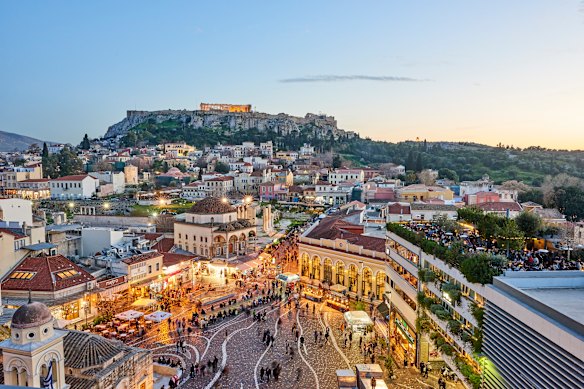
I probably shouldn’t admit this, but it wasn’t Athens’s iconic, historic sights – the Acropolis, the finally revealed Parthenon, the ancient Forum – which finally convinced me to book my first visit to the Greek capital last month. Instead, it was the buzz I’d been hearing that, after 20 years of economic and political upheaval, the city had found its groove again.
I was intrigued. As ground zero for the Greek government-debt crisis, the 2010s saw the city struggling under the weight of economic collapse and civil unrest. All but abandoned by holidaymakers, it became a gateway to the islands and little else, a sad, run-down shadow of its former self.
But, at last, Athens is on the up. In recent years, visitor numbers have rocketed to new highs, with international arrivals between January and June 2026 topping 13 million – 15 per cent up on the year before – and the capital’s airport seeing its busiest August ever, surpassing 4 million passengers in a single month for the first time.
The renewed energy is palpable: the economy is growing, unemployment is declining, and a sense of civic confidence and pride abounds as shuttered office blocks and historical buildings hum with the sounds of renovation.
Gritty-cool with academic edge
Sign up for the Traveller Deals newsletter
Get exclusive travel deals delivered straight to your inbox. Sign up now.
Keen to sample the best of this renewed energy – and to get under the skin of the “real” Athens – I ventured beyond the busiest tourist hubs and headed for the steep, labyrinthine streets of the vibrant, bohemian Exarcheia neighbourhood.
Just a 20-minute walk north of Athens’ historic centre – and anchored firmly on one side by the monumental National Museum of Archaeology, home to the world’s greatest collection of artefacts from Greek Antiquity – this excitingly unconventional area lays claim to being the spot that ended Greece’s dictatorship in 1974, as a result of local student activism. It was then that the country returned to democratic rule and became the Third Hellenic Republic – modern Greece as we know it.
It still has strong academic links: the National Technical University of Athens, or Polytechneio, is here alongside the museum, and I passed so many publishers, bookshops and bookbinders that I lost count. One tiny “bookbindery”, stacked to the rafters and run by Ioannis Mantzako, still binds tomes for the British Museum in London. On every other street corner was an unassuming bar or coffee house serving as hubs of intellectual – and at times countercultural – discourse.
This is a neighbourhood where cigarette smoke still drifts out from hole-in-the-wall kafeinos (legendary Greek coffee-shop bars), and the latest generation of black-clad students rub shoulders with elderly shoppers, trend-setters, foreign workers and literary folk. In a city bursting with millions of tourists each year, it’s a refreshingly authentic break from the cruise-ship crowds and 30-strong tour groups which surge around the main hubs
Local characters
An insider understanding of the area came via specialist walking tour group Culinary Backstreets, which runs small-group excursions to quieter neighbourhoods in some of the world’s foodie capitals. Our tiny pack – just five in total – nipped into the types of places that have been fixtures on the local scene for decades, but which have thankfully stayed well clear of the mass-tourism radar.
This neighbourhood connection was at its most obvious when I was introduced to Kostas, who – with twinkling eyes, a hunch in his back that betrayed his years, and an open can of lager tucked beside his ovens – has helmed Makedonikon bakery for 52 years, since that new democracy was born.
Master of the spanakopita – not to mention a wealth of Greek pies, sweet, custardy bougatsa, and various savoury cheeses, all served warm from his oven – Kostas broke off our (translated) chat every few moments to greet customers, evidently regulars at a corner shop that appears blissfully unchanged from its earliest days.
Today, Exarcheia is alive with independent shops like Kostas’s, excellent restaurants, speciality and organic delis, and lively bars, its colourful network of narrow roads fanning out between mid-century apartment blocks filled with street art. It’s this kerbside vibrancy that makes it such an exciting place to visit.
As ever in Athens, evolution is continuously afoot, and though increased gentrification in Exarcheia is not welcomed by all, the original spirit of the area is still very much alive – even in cool, modern spots like coffee shop Behold The Man on tiny Exarcheia Square.
“This place is Exarcheia in a nutshell,” explains Greek author, chef and TV personality Carolina Doriti, a local expert (and the brains behind my Culinary Backstreets tour), gesturing to the young, creative crowd sitting outside with their speciality coffees in the late-September sunshine, chatting or working on laptops to the sound of new music.
How to explore Exarcheia
This dynamic area may be small, but it’s worth clearing a full day of your itinerary if you really want to get under its skin.
Start off early at Panepistimio metro station (a standard single ticket will set you back just €1.20 [$1.92] and is valid for 90 minutes), taking in the neoclassical grandeur of the three monumental marble buildings known as the Athenian Trilogy: the Academy, the University and the National Library. An apt gateway to intellectual Exarcheia.
Just a few streets behind, fuel up with a warm pie at Makedonikon before meandering down one of the many side streets which cut diagonally towards the National Archaeological Museum, taking note of the murals and street art that pay homage to local history.
The museum itself is sprawling, so don’t try to do it all – though do aim to see the near-mythical Mask of Agamemnon, perhaps the most famous gold artefact from the Greek Bronze Age, before the crowds descend, along with the museum’s vast collection of bronzes.
By late morning, it’s time to escape uphill to one of Athens’s best farmers’ markets on nearby Kallidromiou Street: in full swing by noon on Saturdays with mountains of vegetables, freshly caught seafood (avoid if fish heads are not your thing) and jars of local thyme honey piled high – an unparalleled lesson on the central role fresh food plays in daily Greek life.
When you’ve stocked up, descend a few steps from the heart of the market for lunch in the leafy courtyard of Ama Lachei, an oasis of calm in a former primary school which serves small plates such as zucchini patties with feta or saganaki fried cheeses, and carafes of delicious local wine (be warned, these will disappear at speed).
It all speaks to the simple, stripped-back nature of Greek food – “a poor man’s kitchen”, in Carolina’s words, where “everything needs to be used and last as long as possible”. Think of delicious dolmadakia, for example, just balls of rice and herbs wrapped in vine leaves. Or paximathia – hard, dried bread that won’t spoil – and even those fish heads, perhaps to be transformed into a hearty soup. Simple foods that are all about flavour.
Spend the afternoon sipping strong Greek brews at kafenion both old-school and modern, wandering beneath citadel-like Strefi Hill and nipping into the little local delis which dot the streets. Try Gastronio, with its picture-perfect shelves of organic treats, or comforting Moiropoulos Dimitros George, picking up honey-soaked sesame brittle, marinated olives or a bottle of local fire water, tsipouro, to tuck into that last inch of space in your suitcase.
Cap things off with a tipple at a traditional watering hole such as Ouzeri Lesvos, where the timeworn tradition of long, grazing meals pairs perfectly with long pours of ouzo and even longer conversation.
Truly, Exarcheia is as varied and storied a place as they come, a haven for culture seekers, foodies, bookworms and night owls alike – in permanent forward motion, yet so much of its varied appeal lies in its glorious resistance to change. All around is the legacy of those students whose resistance helped bring a new Greece into being, now interwoven with the creative ambition of their successors, the same students who still call this exciting neighbourhood home.
DETAILS
Culinary Backstreets runs six-hour “Exarcheia: Taste of Utopia” small-group walking tours (daily except Sundays) from $US140 ($199).
The Telegraph, London
From our partners
Disclaimer : This story is auto aggregated by a computer programme and has not been created or edited by DOWNTHENEWS. Publisher: www.smh.com.au