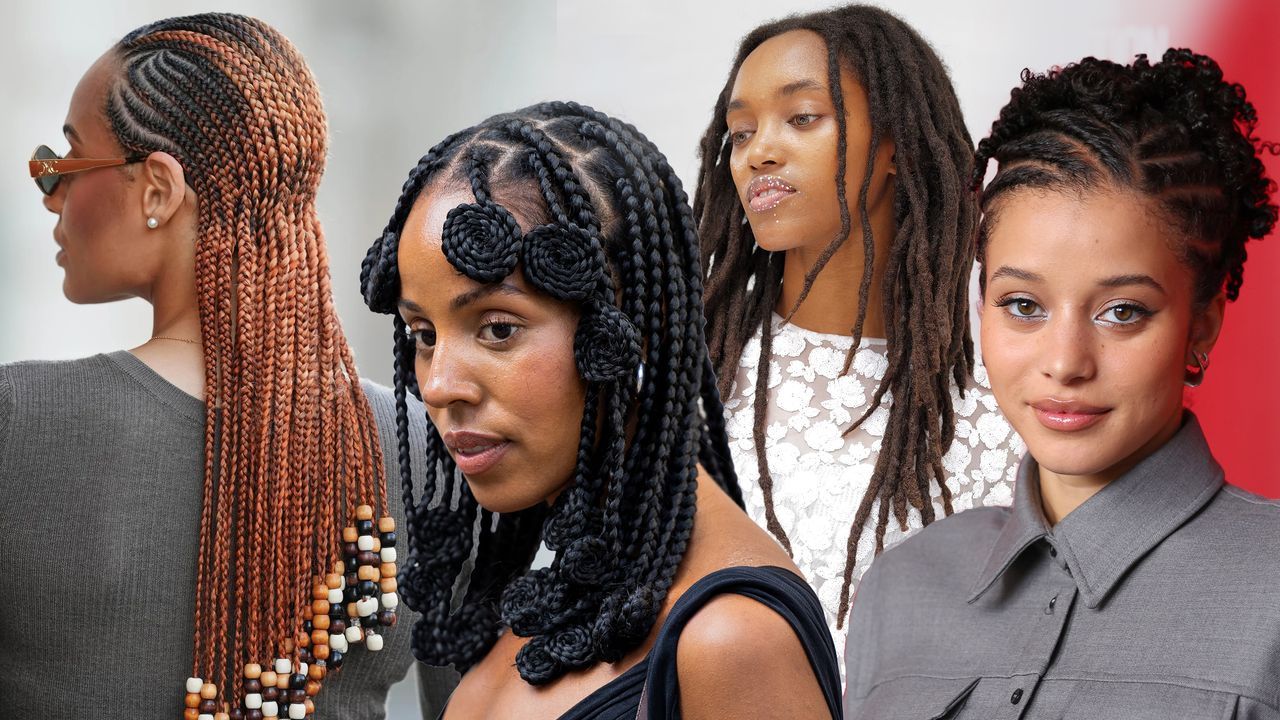
“A weave is a protective style that interlocks, attaches, connects, or weaves in extension hair, usually human, to natural hair in some form or fashion,” explains James. There are myriad ways to install weaves and extensions, but the most popular for those with coily hair is the sew-in method, wherein the natural hair is cornrowed, and the extension hair is (you guessed it) sewn into the braids. “From my experience, a sew-in is the most protective way to add length and fullness to one’s hair,” she continues. “Since the natural hair is braided and totally tucked away and secured under the weave, it’s the least exposed.”
Wigs (including partial styles, half wigs, and full wigs) can also be considered protective styles —as long as you aren’t wearing them for too long. “Full wigs that cover the entire head, scalp and hair included, block oxygen and nutrients to the follicle,” which eventually impacts hair growth, says James. So, while wigs “count,” so to speak, as long as you’re removing them “daily or periodically,” weaves are the superior longer-term option.
Is there anyone who should avoid (or be mindful of) protective styles?
As great as protective styles are, they aren’t necessarily for everyone. If your hair is fragile or damaged, “focus on healthy hair growth first, rather than protective styling,” says Jeanine Downie, MD, a board-certified dermatologist based in Montclair, New Jersey. She also suggests skipping these styles if you’re at risk for, or have a history of, traction alopecia. Additionally, “anyone with seborrheic dermatitis, eczema, or other conditions needs to be careful not to trigger a flare-up.”
Speaking of skin conditions, “the chemicals in some synthetics can irritate healthy skin,” says Dr. Downie; so, if you plan on adding length or fullness and your skin tends to be on the sensitive side, consider investing in human hair.
Potential downsides to protective styles
Across protective styles (and experts), two big potential drawbacks are continually cited: tension and product buildup. “Excessive tension, heavy extensions, product buildup, and improper takedown can all lead to breakage, thinning, and scalp irritation,” says Harper.
Disclaimer : This story is auto aggregated by a computer programme and has not been created or edited by DOWNTHENEWS. Publisher: www.allure.com