AfD loses appeal over extremist classification in Lower Saxony, rival youth groups plan protests across Germany, Left Party politician elected speaker of Berlin parliament and more news on Friday, October 30th.
Friday’s top story: Court rejects AfD appeal over extremist classification in Lower Saxony
Lower Saxony’s AfD has lost its final appeal against being classified by the state’s domestic intelligence agency as an organisation warranting heightened observation.
The Higher Administrative Court in Lüneburg upheld an earlier Hanover court decision, finding factual evidence that the party’s state branch was pursuing aims directed against Germany’s free democratic constitutional order.
The classification, announced in February, is equivalent to being designated a confirmed far-right extremist organisation in other German states.
Judges said the AfD branch promoted an ethnic and ancestry-based concept of the German people that undermined human dignity. They also cited the systematic denigration of migrants, particularly Muslims, and described its anti-Muslim rhetoric as contemptuous of human dignity.
READ ALSO: Why the Alternative for Germany is considered a far-right extremist party
The court further found that the party sought to erode public trust in Germany’s political representatives, parliament and democratic institutions.
Its numerous links to other far-right groups, particularly organisations associated with the “New Right”, provided further evidence of anti-constitutional activity, the judges said.
The appeal ruling is final, meaning the state intelligence service’s upgraded classification remains in force.
Rival youth groups plan protests across Germany
Young people across Germany are preparing separate demonstrations over education, climate policy, living costs and their economic prospects, amid divisions between protest organisers.
“Gen Z regelt” plans peaceful rallies in about 30 cities on Saturday, opposing compulsory military service and demanding greater climate protection and action on rising costs. Organisers say 146,000 people have registered nationwide.
But the Federal Student Conference has distanced itself from the initiative, citing unclear organisational structures. It will hold a separate Berlin demonstration on November 20th with teachers, parents’ representatives and Fridays for Future. Climate group Neue Generation is also beginning several days of protests on Friday.
READ ALSO: What to expect at Gen Z protests in Germany on October 31st
Politicians and business groups have voiced concern about possible unrest and disruption in city centres. Green co-leader Felix Banaszak warned against treating protesters with “general suspicion”, while protest researcher Jannis Julien Grimm said French-style riots were unlikely.
A YouGov survey found 54 percent considered the protests justified, while 28 percent opposed them. An open letter urging Chancellor Friedrich Merz’s government to take young people’s concerns seriously had attracted more than 24,000 signatures by Thursday afternoon.
Left Party leader defends caution over security concerns
Berlin Left Party leader Elif Eralp has defended choosing her words carefully after private comments revealing fears for her family’s safety became public.
Eralp, who hopes to become Berlin’s governing mayor, said threats against her had increased since the election. She added that, like many female politicians, she consulted security authorities and took their assessment of the threat seriously.
The controversy began after internal notes were reportedly returned accidentally to Der Spiegel alongside an authorised interview transcript. The notes suggested that Eralp feared explicitly discussing a Palestinian activist linked to an organisation designated as terrorist by the EU and United States.
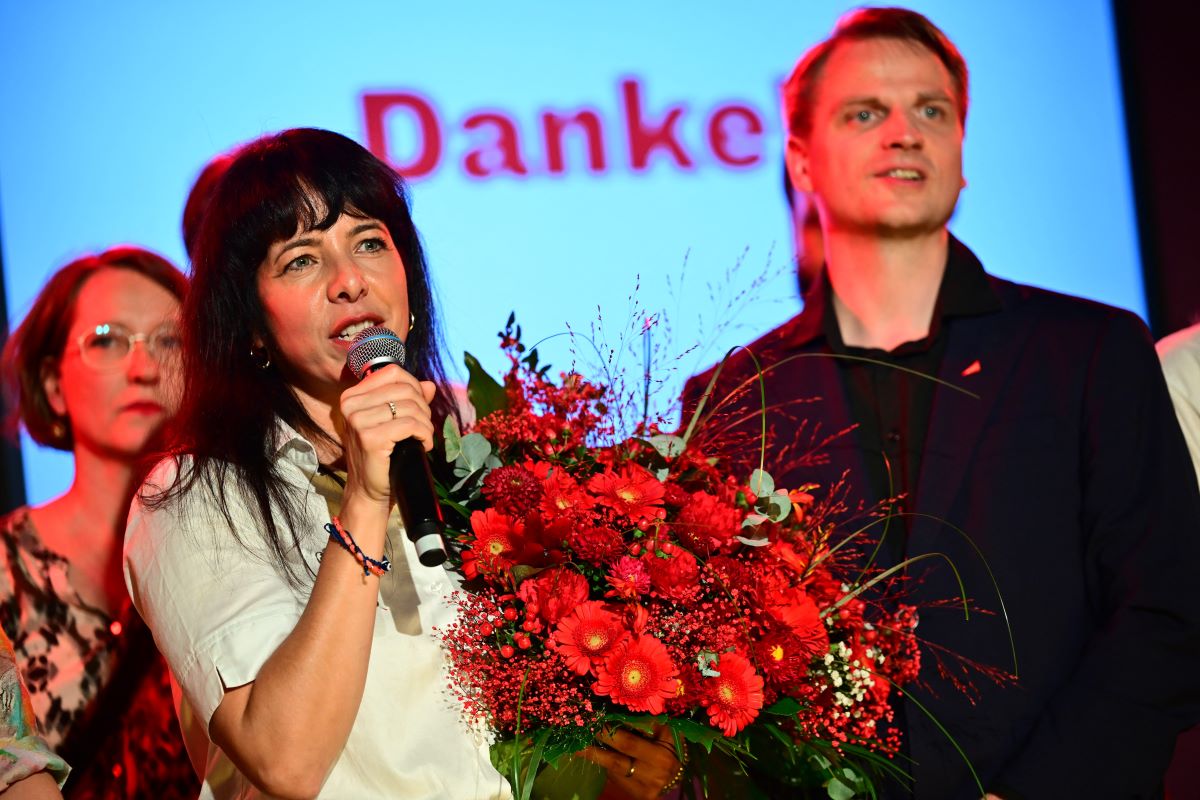
‘Thank you’. Elif Eralp, the Left Party’s lead candidate, pictured in September at an election party at the Festsaal Kreuzberg. Photo: picture alliance/dpa | Sebastian Gollnow
Eralp said that the subsequent publication of the comments had crossed a line but insisted she would not be intimidated. She pledged to oppose organised crime, violence, the glorification of terrorism and all forms of hatred.
Left co-leader Tobias Schulze accused Der Spiegel of dishonestly turning private notes into a story.
Prominent Social Democrats have taken the opportunity to question Eralp’s suitability for office, potentially complicating the Left Party’s efforts to form a Berlin coalition with the SPD and the Greens. Eralp reportedly intends to complain to the German Press Council.
READ ALSO: How a left-wing coalition in Berlin would reshape housing and integration
Left politician elected speaker of Berlin parliament
Hendrikje Klein has become the first politician from the Left Party to serve as Speaker of the Berlin House of Representatives following the state election.
The 46-year-old received 98 votes from the 149 members present at parliament’s constituent session, with 42 voting against and nine abstaining. She is the third woman to hold the office.
Klein, an MP since 2016, said she would provide ample space for debate while enforcing appropriate conduct. She also wants to make parliament more accessible to school groups and first-time voters.
The CDU’s Cornelia Seibeld was elected vice-president with 109 votes. But AfD candidate Martin Trefzer failed to secure sufficient support, leaving the second deputy position vacant.
Opening the session, senior CDU member Kurt Wansner called for religious tolerance and warned that Jewish residents no longer felt safe in the capital.
The new parliament has 153 members. The Left is the largest party with 45 seats, followed by the CDU with 33 and the AfD with 29. The Left is seeking a coalition with the Greens and SPD.
Germany and South Korea move towards strategic partnership
Germany and South Korea have agreed to deepen cooperation on security, business and advanced technology during Chancellor Friedrich Merz’s visit to Seoul.
Merz and South Korean President Lee Jae Myung said Europe’s security was inseparably linked to that of Northeast Asia, as the German delegation arrived shortly after fresh North Korean missile tests.
The two countries plan closer cooperation on defence and more resilient supply chains for critical technologies, including artificial intelligence, semiconductors and quantum computing.
Lee also urged Germany to reduce bureaucracy and speed up visas and residence permits for skilled South Korean workers.
At the start of the visit, Merz signed the official guest book with a message wishing the divided Korean peninsula “unity in freedom”. He is due to visit the Demilitarised Zone on Friday before opening the 19th Asia-Pacific Conference of German Business.
South Korea is the final stop on Merz’s Asian tour following Singapore and Japan. In Tokyo, he and Prime Minister Sanae Takaichi agreed measures to strengthen cooperation on security, advanced technologies and defence manufacturing.
LISTEN: PODCAST🎧- Inside the AfD email leak and Gen Z protests come to Germany
With reporting by AFP and DPA.
Disclaimer : This story is auto aggregated by a computer programme and has not been created or edited by DOWNTHENEWS. Publisher: thelocal.de