
Healthcare fears increasingly an election issue as GP shortages bite, children in Rhineland-Palatinate to face school readiness tests at four, Deutsche Bahn slows rail modernisation drive and more news on Friday, September 11th.
Friday’s top story: Healthcare fears increasingly an election issue as GP shortages bite
Concerns over access to family doctors are increasingly shaping political attitudes in Germany, according to a new survey that highlights growing anxiety about the state of healthcare, particularly in rural areas.
The poll, commissioned by the Association of Family Physicians, found that 81 percent of respondents view access to good primary care as essential to quality of life. More strikingly, 51 percent said healthcare provision now influences how they vote, a sharp increase from two years ago.
Many respondents expect conditions to worsen following recent health insurance cost-cutting measures, with majorities anticipating longer waiting times and reduced consultation time with doctors.
The findings come as Germany continues to face a shortage of thousands of GPs. The survey is likely to carry added political significance after the far-right AfD’s breakthrough victory in Saxony-Anhalt and little more than a week before state elections in Mecklenburg-Western Pomerania and Berlin.
Recent polls put the AfD narrowly ahead of the SPD in Mecklenburg-Western Pomerania, while in Berlin the CDU and the Left Party are running almost neck and neck, with the AfD and Greens close behind and the SPD lagging in fifth place.
READ ALSO: Will Germany’s health insurance reform make it harder to find a gynaecologist?
Far-right gains threaten female representation in regional parliaments
As of September 1st, women held an average of 33.4 percent of state parliament seats in Germany, according to official figures. But that national figure is set to fall following Saxony-Anhalt’s election, where female representation slumped to 21.7 percent – pushing the state below Bavaria to the lowest rank nationwide.
The decline is largely driven by the surge of Alternative for Germany (AfD), which explicitly rejects candidate gender quotas. The party secured a landslide victory with 39 seats, but only two are held by women.
READ ALSO: ‘I feel unsafe’ – Foreigners in Germany fear future after AfD’s breakthrough election
Similarly, there are only two women among the CDU’s 15 elected representatives. While the Greens, the Left Party and the Social Democrats (SPD) mandate gender quotas to guarantee equal representation, their combined share of the vote was insufficient to counter the shift.
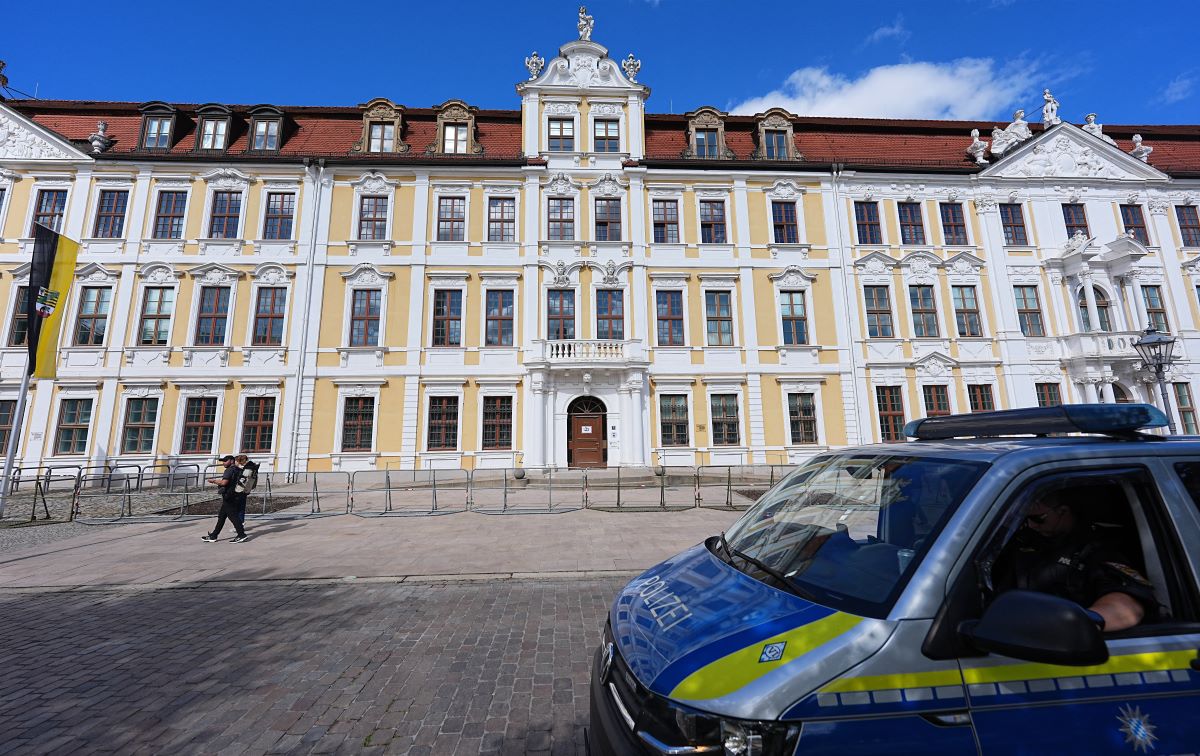
The Saxony-Anhalt state parliament building. Following the recent election, the proportion of female representatives in the state government will drop to the lowest level nationwide. Photo: picture alliance/dpa | Michael Kappeler
Children in Rhineland-Palatinate to face school readiness tests at four
Rhineland-Palatinate’s Minister-President Gordon Schnieder has announced plans to introduce compulsory tests for four-and-a-half-year-olds after Germany’s worst-ever performance in the latest PISA education study intensified concerns over falling standards.
The CDU politician said too many children begin primary school without the language and practical skills needed for learning. Under the proposals, children would undergo mandatory German language assessments as well as tests covering basic abilities such as holding a pencil, using scissors and tying shoelaces.
The move comes after the latest PISA results revealed record-low performance among German students in reading and mathematics. The findings have triggered renewed debate about the state of the country’s education system and the reforms required to address declining attainment.
Schnieder also signalled support for a national education summit, saying he was open to any initiative that could help improve schools. Describing children as Germany’s “greatest treasures”, he argued that action must begin before pupils enter the classroom rather than after problems emerge.
Deutsche Bahn slows rail modernisation drive amid capacity concerns
Deutsche Bahn has confirmed that its flagship programme to modernise Germany’s most important railway corridors will take longer than originally planned.
Chief executive Evelyn Palla said a review had shown that completing four major corridor renovations each year was too ambitious. Deutsche Bahn now expects to undertake only two, or in exceptional cases three, large-scale upgrades annually. The revised timetable is currently being discussed with the federal transport ministry.
READ ALSO: The app that wants to help you avoid Deutsche Bahn delays
The programme, launched in 2024, involves the temporary closure of heavily used routes for several months to allow comprehensive modernisation work to be carried out more efficiently. Around 40 rail corridors have been earmarked for renovation, with the aim of reducing future disruption and maintenance requirements.
Palla said the change reflected lessons learned from the first projects, funding constraints and concerns that too many simultaneous closures would severely reduce network capacity. She also stressed the need to improve diversion routes before major works begin.
The original goal was to complete the upgrades by the early 2030s, later extended to 2036. Under the revised approach, the programme may now stretch beyond the end of the next decade.
Deals worth billions to be signed as UAE leader visits Germany
The leader of the United Arab Emirates began a state visit to Germany on Thursday, during which deals worth billions of euros will be signed in sectors including energy and technology, Emirati diplomats said.
Berlin rolled out the red carpet for Sheikh Mohamed bin Zayed Al Nahyan, who was received with military honours by President Frank-Walter Steinmeier and was later to meet Chancellor Friedrich Merz.

German President Frank-Walter Steinmeier and UAE president Sheikh Mohamed bin Zayed Al-Nahyan enter Villa Borsig in Berlin on September 10th, 2026. (Photo by Tobias SCHWARZ / AFP)
The UAE is Germany’s largest trading partner in the Gulf, with bilateral trade topping $15 billion last year, and many big German companies have a presence there including BMW, Siemens, ThyssenKrupp and rail operator Deutsche Bahn.
The UAE meanwhile has made major investments in Germany, including in the chemical industry and offshore wind power.
During Merz’s visit in February, German energy giant RWE and Abu Dhabi’s national oil company ADNOC signed a memorandum of understanding on LNG imports over the next decade.
READ ALSO: UAE to invest 40 billion euros in data centres in Germany
Germany, the largest EU economy, supports talks towards a European Union free trade deal with the Emirates.
The group Human Rights Watch called on German leaders during the visit to “publicly call out the United Arab Emirates’ human rights record and its role in regional conflicts”.
No joint press conference was scheduled with Merz and Sheikh Mohamed.
With reporting by AFP and DPA.
Disclaimer : This story is auto aggregated by a computer programme and has not been created or edited by DOWNTHENEWS. Publisher: thelocal.de



