TEHRAN – Iraq has called for expanded pharmaceutical cooperation and joint investment in healthcare infrastructure with Iran, highlighting opportunities to strengthen bilateral ties in the health sector.
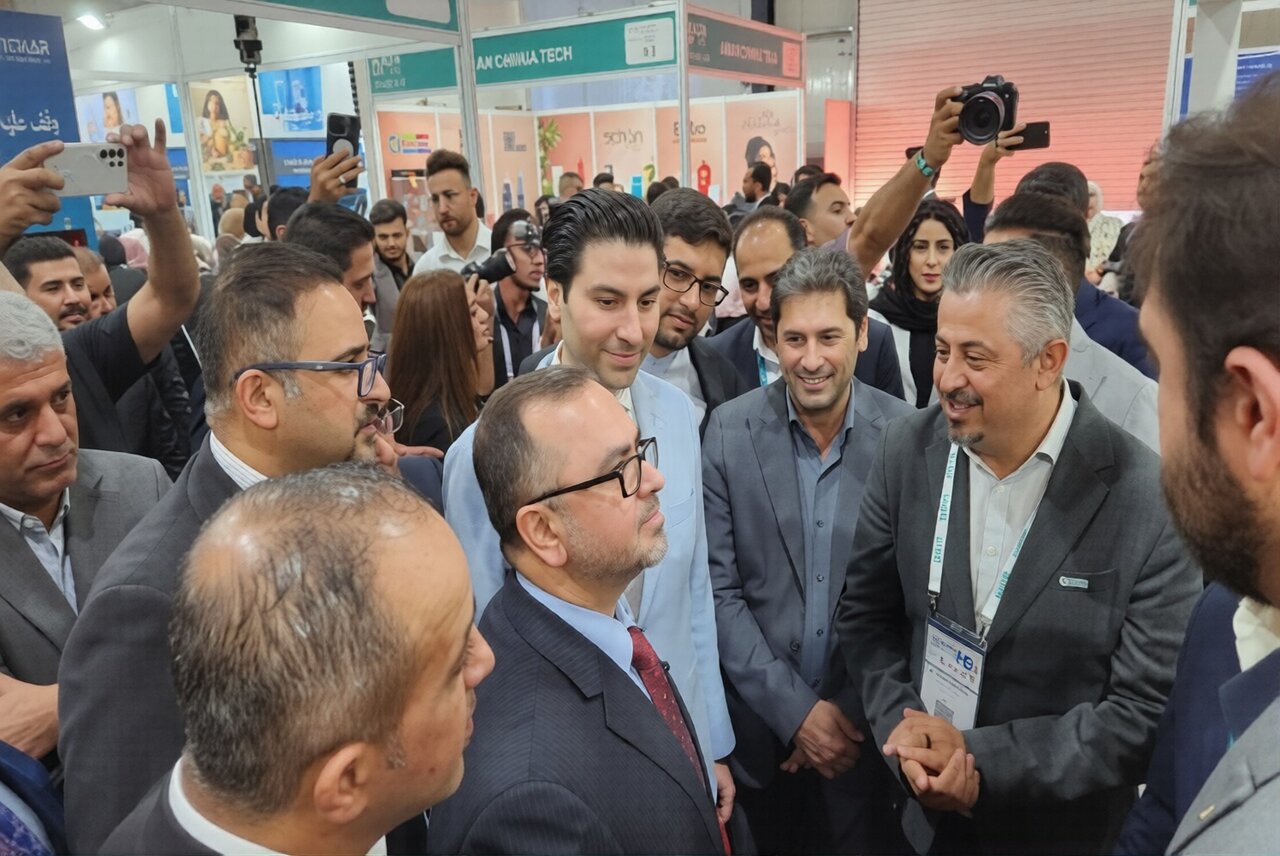
Iraqi Health Minister Abdul-Hussein Aziz Al-Mousawi, accompanied by his deputy ministers, visited Iranian pavilions at Health Expo Iraq, held from October 28 to 31 at the Baghdad International Fair, Mehr News Agency reported.
During the visit, the Iranian delegation briefed the Iraqi officials on the participation of around 30 Iranian companies, which showcased more than 40 product brands across various sectors, including pharmaceuticals, dietary supplements, raw materials, machinery, technology transfer, medical equipment, condensed milk, cosmetics, and hygiene products.
On the sidelines of the visit, Al-Mousawi highlighted the importance of deepening collaborations with Iran, including developing joint pharmaceutical industries, establishing joint forums and specialized interaction platforms in the health sector, and expanding manufacturing infrastructure with the participation of Iranian companies.
The sixth edition of Health Expo Iraq, the country’s annual international health exhibition and congress, offered Iranian health-sector manufacturers a valuable opportunity to enter the Iraqi market and expand their business in the neighboring country.
The expo featured a wide range of products and services, including medical equipment, laboratory devices, pharmaceuticals, hospital supplies, and healthcare services. The expo also hosted seminars, workshops, and panel discussions that encouraged industry professionals to share knowledge and experiences and build new business connections.
The Iranian delegation set up their pavilions to feature the products and achievements of the Iranian knowledge-based firms, establish connections between Iranian and Iraqi experts and stakeholders, hold B2B meetings, and identify the needs of the Iraqi market in the field of health.
With a population of over 46 million and the pharmaceutical market valued at 4 billion dollars, Iraq is one of the biggest health markets in West Asia. The country is planning to meet 70 percent of its pharmaceutical needs through domestic production by 2027.
Iraq seeks broader scientific ties with Iran
In October, Iraqi Ambassador to Iran Yasser Abdulzahra Al-Hajjaj stressed that scientific cooperation between the two countries should extend beyond student recruitment to include joint research projects, exchanges of professors and researchers, and stronger technological ties.
Universities are not merely educational institutions; they also serve as bridges for dialogue and the exchange of expertise among scientists from different countries, particularly Iran and Iraq, IRNA reported.
He made the remarks while addressing a national festival held at the Iran University of Science and Technology on October 20.
Referring to the significant progress achieved in bilateral scientific relations, Al-Hajjaj said today that thousands of Iraqi students are studying in more than 80 Iranian universities, majoring in medical and non-medical fields, across the country.
The past two Iran-Iraq science weeks brought together over 70 and 80 university chancellors of the two nations, and more than 250 memoranda of understanding (MOUs) were signed, indicating a good experience in expanding scientific collaborations.
The official said that the establishment of a branch of Tehran University of Medical Sciences in Iraq promoted and stabilized academic relations between Iran and Iraq more than ever.
He went on to say that a branch of University of Tehran will be inaugurated in Karbala and Najaf in the near future. He expressed hope that a branch of Sharif University of Technology and Iran University of Science and Technology would be launched in Iraq as well.
According to the official, Iraq is expanding its educational and research infrastructures, and with the increase in the number of domestic universities, the majority of Iraqi students would tend to study at home.
Given that 85 percent of Iraqi students in Iran are employees who, based on the new legislation in Iraq, will have problems studying abroad, the official suggested considering the situation as an opportunity rather than a threat to revise the model of scientific interactions between the two sides. Otherwise, the probable decrease in the number of Iraqi students in Iran would give rise to new challenges.
The Iraqi official called for the implementation of joint research projects in medical, agricultural, sand and dust, oil, gas and emerging technologies like artificial intelligence.
Developing joint educational courses and co-supervising theses were among other issues highlighted by Al-Hajjaj.
On October 18, Iran’s scientific counselor in Iraq, Mohammad-Javad Najafi, and Iraqi Deputy Minister of Higher Education and Scientific Research, Haider Abd Dahed, discussed ways to strengthen academic cooperation between universities in the two countries, with a focus on problem-solving approaches and addressing domestic and regional needs.
Collaboration on problem-oriented research, the provision of scholarships, the facilitation of educational issues for students, and preparation for the ‘Third Iran-Iraq Science Week’ were the key topics discussed during the meeting, IRNA reported.
The officials also discussed conducting collaborative research projects, supervising joint dissertations for postgraduate degrees, and publishing joint scientific articles in globally reputable magazines.
Addressing the challenges and educational problems faced by the students in reciprocal countries was the other issue raised by the two sides.
MT/MG
Disclaimer : This story is auto aggregated by a computer programme and has not been created or edited by DOWNTHENEWS. Publisher: tehrantimes.com