
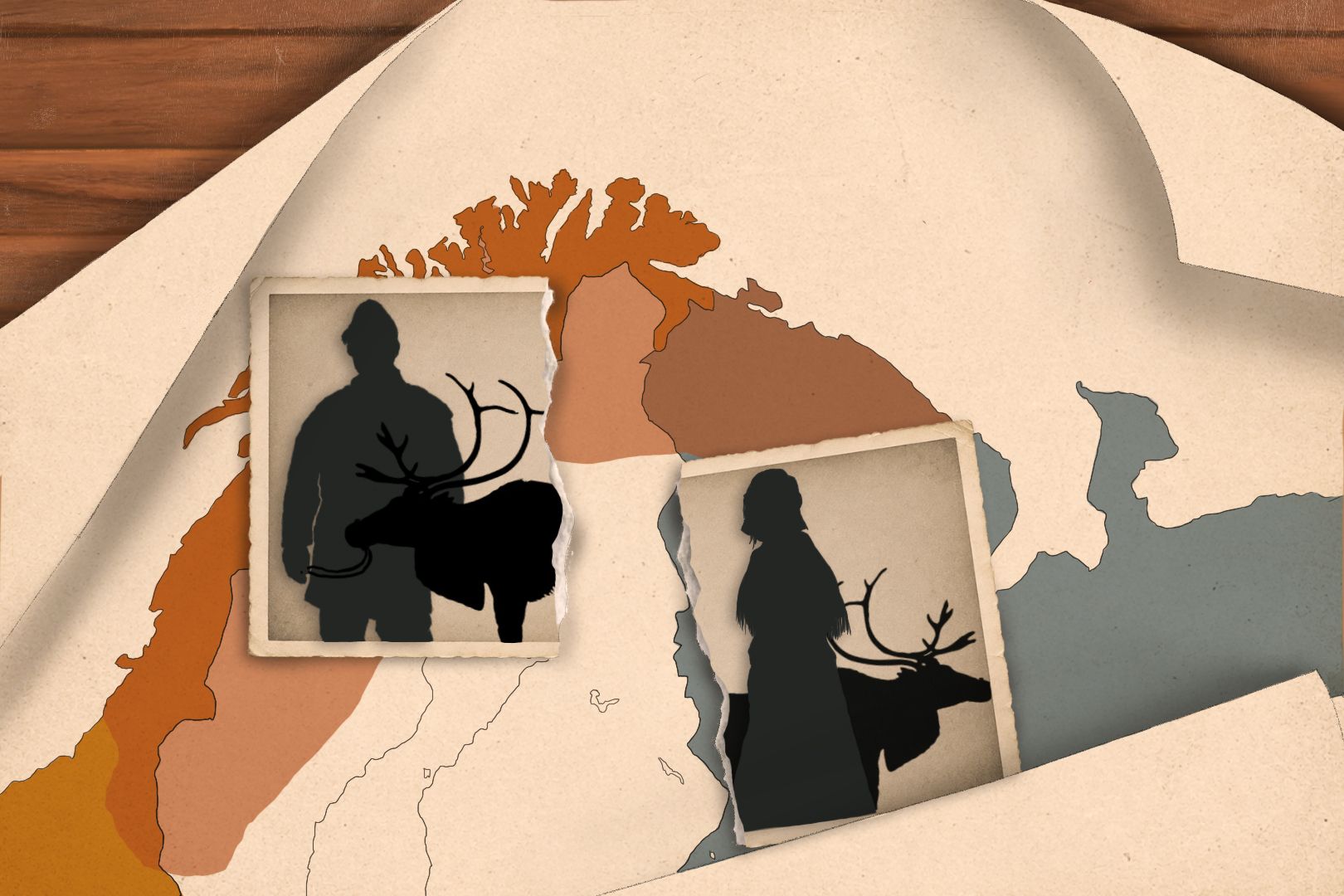
Along the shores of the Neiden Fjord, in Norway’s northernmost county Finnmark, Nils Boine* gazes out across the water. On the horizon, the Neiden River splits around the craggy island of Skogerøya, but lurking beneath its surface is a fisherman’s bounty: hundreds of king crabs.
His grandmother was Sea Sámi, from an Indigenous coastal people whose homeland, Sápmi, stretches across northern Norway, Sweden, Finland and Russia’s heavily militarised Kola Peninsula. In Finnmark’s fjords, Sea Sámi families have fished for generations. But these waters are dissected by more than currents and shoals. Since Norway and Russia fixed their border in 1826, Sámi communities in the region have been divided by a national boundary.
Two hundred years later, this Arctic community is a combination of Sámi, Norwegians, Finns, Ukrainians, Russians, and international seasonal workers. Most of the Sámi population lives in Norway, with roughly 2 percent residing in Russia.
The Sámi have established a cross-border lifestyle, supported by flexible policies, including a Norwegian-Russian agreement allowing visa-free travel for those living within 30km (18.5 miles) of the border.
Security, however, has begun to tighten since the onset of Russia’s full-scale war on Ukraine. The West sees Finnmark as part of NATO’s exposed northern flank, as it is directly opposite Russia’s heavily armed Kola Peninsula. The Norwegian border town of Kirkenes has been caught in a spy war with Russia, with multiple Russian operatives having been caught posing as tourists and fishermen while trying to engage in espionage.
Now, border bureaucracy is a daily reality, and reindeer herding, language revitalisation and hunting traditions are increasingly being navigated through permits and regulations, making the wider Arctic infrastructure feel fractured.
“I have friends in Russia,” Boine says. “We used to go shopping in Russia, and go there for weekends.”
Since Russian President Vladimir Putin’s full-scale invasion of Ukraine in February 2022, those crossings have stopped — partly as a display of solidarity with Ukraine, and partly due to safety concerns.
“A local person was just arrested in Russia, so people are afraid to cross the border,” Boine explains. “The rumours say that he had some illegal things in his car, but he was arrested, and the [Ministry of] Foreign Affairs in Norway tried to do something, but it’s very difficult, of course, because we don’t have any diplomats in Russia.”
He is referring to the reported June arrest of a Kirkenes businessman. Lawyer John Christian Elden told the daily newspaper Verdens Gang (VG) that the man was in custody for two months under alleged “possession of weapons or ammunition”. Some Kirkenes residents were left shaken by the news, as recreational hunting is common in the region. They fear accidentally crossing the Russian border with forgotten hunting ammunition that might be left in their cars.
The number of Russian tourists visiting Norway has also declined, from 250,000 in 2019 to 52,000 last year.
“Before, we had Russian guests, but not now,” Boine says. Fortunately for his family, who run a tourism company, 80 percent of customers come from Asia or Finland. Their business has emerged relatively unscathed, but other companies have not been as lucky.
“Shops in the area have lost a lot of income without Russian [tourists],” says Boine. “Several shops have had to close.”
In a landscape traditionally connected for centuries, the fragmentation of communities is deeply concerning for both the regional economy and Sámi culture. Cross-border connections are deeply rooted in the regional psyche.
For Boine, the war in Ukraine has put his friendships with people in Russia on hold.
“They are afraid to do something wrong or write something wrong,” he says quietly. “You never know what might happen if they have too close contact,” he says.
“I want to be careful.”
Disclaimer : This story is auto aggregated by a computer programme and has not been created or edited by DOWNTHENEWS. Publisher: aljazeera.com




