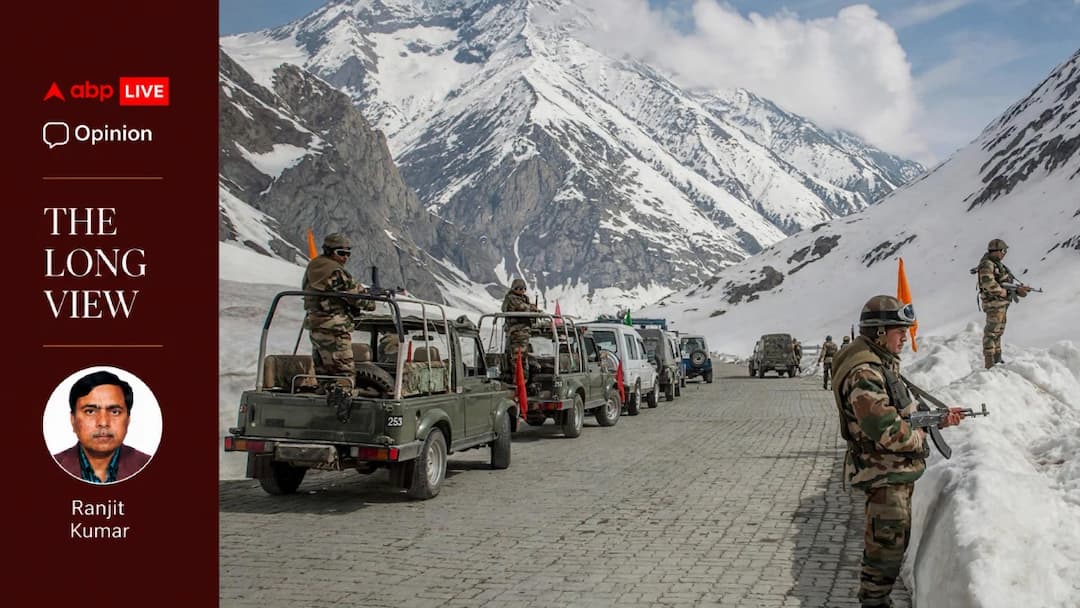
- Border force command structure causes delayed, ineffective responses.
Following its limited objectives in Eastern Ladakh, China appears to have redirected its attention towards Arunachal Pradesh, which it refers to as South Tibet. Historically, China has not sought to claim the entirety of Ladakh, focusing instead on asserting control over Aksai Chin.
However, it is now laying claim to territorial rights in Ladakh and reigniting tensions along the Arunachal Pradesh border through incremental tactics, likely emboldened by India’s perceived weak response to the gradual encroachment of the Chinese PLA into Indian territory.
Recent confirmations from the outgoing Director General of the Indo-Tibetan Border Police Shatrujeet Kapoor, regarding the continued face-off with Chinese soldiers within Arunachal Pradesh, coupled with indirect acknowledgments of incursions by the Indian Ministry of External Affairs, highlight the escalating situation.
While local media reports suggest that Chinese troops are stationed on mountain tops within 60-65 kms of Arunachal, Indian Minister Kiren Rijiju has denied these claims, leaving the Ministry of External Affairs, Ministry of Defence, and the Army largely silent.
This raises significant concerns among Indian strategists about China’s activation of the Line of Actual Control in Arunachal Pradesh, especially after deploying over 50,000 troops in Eastern Ladakh, while Indian officials often downplay the situation by suggesting that both sides operate based on their perceptions of the LAC, which encourages China to push back Indian forces and fix new LAC.
India’s Economic Dependence On China And The Threat Of Salami Slicing
The concerns regarding India’s economic and strategic challenges are increasingly relevant in the light of the shifting global geopolitics, which China is adeptly exploiting.
India’s heavy reliance on Chinese products—ranging from electronics to fertilizers—has inadvertently provided China with leverage to exert military pressure on Indian territories. Rather than seeking concessions at the negotiating table, China appears to provoke India into conflict, employing tactics such as salami slicing to test India’s resolve and advance its territorial claims.
Ever since Xi Jinping has taken over in early 2013, China has implemented this strategy effectively, notably violating the Line of Actual Control (LAC) in eastern Ladakh and deploying forces deep into Indian territory. In response, India has taken measures such as halting Chinese investments, imposing visa restrictions, and banning Chinese applications, alongside calls from nationalist groups to boycott Chinese goods.
Despite these actions, bilateral trade between India and China has continued to grow, contributing significantly to India’s economy, which has now slipped to sixth place. The violent clashes in Galwan in 2020 sparked widespread outrage in India, prompting the government to take decisive actions against Chinese exports and investments.
ALSO READ: OPINION | Why India Must Focus On BVR Missiles
Galwan Clashes, Buffer Zones And India’s Patrolling Rights
Probably rising anti-China sentiments prompted China to agree to withdraw forces up to LAC in September, 2020 , but Indian Army was compelled to vacate areas behind the LAC to establish buffer zones, which significantly reduced their patrolling rights from 66 to 26 areas following the incursions by the People’s Liberation Army (PLA) in Eastern Ladakh.
The Chinese narrative suggests that India’s fluctuating bilateral relations stem from its perceived need to appease China after being sidelined by the United States, implying that should the U.S. renew its partnership with India, India would revert to a strategy aimed at containing China.
Consequently, China appears to be signalling to India that it must accept terms favourable to China, or else face ongoing provocations along the LAC, necessitating a substantial military presence on both the Ladakh and Arunachal Pradesh borders.
While the situation in Ladakh remains tense, India characterizes this no-war scenario as peaceful and stable, which may have prompted the Indian government to pursue normalization of relations with China. This includes the resumption of border trade, civilian flights, and the easing of investment and visa restrictions.
India-China Trade Deficit: How Beijing Benefits From India’s Dependence
China recognizes that India lacks the capacity to impose significant restrictions on Chinese exports, despite a substantial trade deficit of USD 112 billion. This situation has allowed China to surpass the United States as India’s largest trade partner, with bilateral trade reaching USD 151 billion.
Chinese authorities have dismissed India’s calls to rectify this imbalance, understanding that any barriers India might impose on Chinese imports could jeopardize its own economy, which heavily relies on Chinese goods. While Indian leaders tout the country’s achievements in mobile phone exports, they overlook that these successes largely stem from components sourced from China, assembled locally, and then re-exported under the “Made in India” label.
India’s dependence on Chinese imports extends beyond electronics to critical sectors such as rare earths , agriculture, automotive, and pharmaceuticals. The absence of these imports would severely disrupt Indian production and exports. Currently, India is ill-equipped to replace Chinese products with domestic manufacturing.
The continuation and expansion of India-China trade, which has outpaced Indo-American trade, underscores this reliance, with the trade deficit doubling from USD 56 billion in 2019 to USD 112 billion today, even following the Galwan clash. This reality highlights the contradiction between India’s rhetoric and its ongoing economic engagement with China.
ALSO READ: OPINION | India’s Fighter Dilemma: The Debate Continues
PLA’s Arunachal Push And India’s Border Response
India has acknowledged the realities in eastern Ladakh following its response to the aggressive forward deployment of Chinese forces, necessitating the mobilization of over 50,000 troops to counter similar provocations from China. In light of this, the People’s Liberation Army (PLA) appears to have redirected its violations of the Line of Actual Control (LAC) to the eastern sector in Arunachal Pradesh.
Despite India’s allegations, China has denied any wrongdoing. India asserts that disturbances along the border occur when Chinese forces deviate from established patrol patterns. Both nations have committed to utilizing diplomatic and military channels to address unresolved issues and prevent misunderstandings along the LAC, emphasizing the importance of maintaining peace for the advancement of bilateral relations.
ITBP’s Chain Of Command And Challenges In Responding To China
However, China’s reluctance to clarify the LAC suggests a strategy aimed at exerting military pressure on India, fully aware that India is unlikely to engage in a direct military confrontation. The assessment of India’s military posture along the LAC, as indicated by the Director General of the Indo-Tibetan Border Police (ITBP), Shatrujeet Kapoor, raises concerns about the effectiveness of India’s border security agencies.
The ITBP, tasked with safeguarding the border adjacent to China’s Tibet Autonomous Region and operating under the Ministry of Home Affairs, often faces confusion regarding its operational directives when engaging with the Chinese military, complicating its ability to respond quickly and effectively to border tensions.
Although the army is stationed behind ITBP soldiers in full force, it can only act upon receiving orders from the Ministry of Defence or when called upon to assist the ITBP, which is under the Home Ministry’s jurisdiction. This chain of command often leads to delays in responding promptly to Chinese actions.
Intelligence reports from the ITBP must first reach the Ministry of Home, before being disseminated to army headquarters and subsequently to unit levels for necessary action. At times, bureaucratic misjudgements regarding the urgency of situations can result in critical delays, particularly when political priorities divert ITBP resources to address issues such as anti-dam protests.
China Exploiting India’s Economic And Strategic Vulnerabilities
It is evident that China is capitalizing on India’s significant economic reliance on it, as well as the comparatively weaker military presence along the borders, as noted by the DG of ITBP.
This situation, compounded by unfavourable global geopolitical and economic conditions, encourages China to pursue its objectives of integrating Arunachal Pradesh and the Ladakh region into its Tibetan autonomous territory. Chinese leadership perceives the current circumstances as advantageous, leading to provocations along the entire 3,488 kms of the Line of Actual Control with India.
(Ranjit Kumar is a senior journalist and strategic affairs analyst)
Disclaimer : This story is auto aggregated by a computer programme and has not been created or edited by DOWNTHENEWS. Publisher: abplive.com