Oil tank vandalism results in waterfowl park ‘nightmare’
-
Published
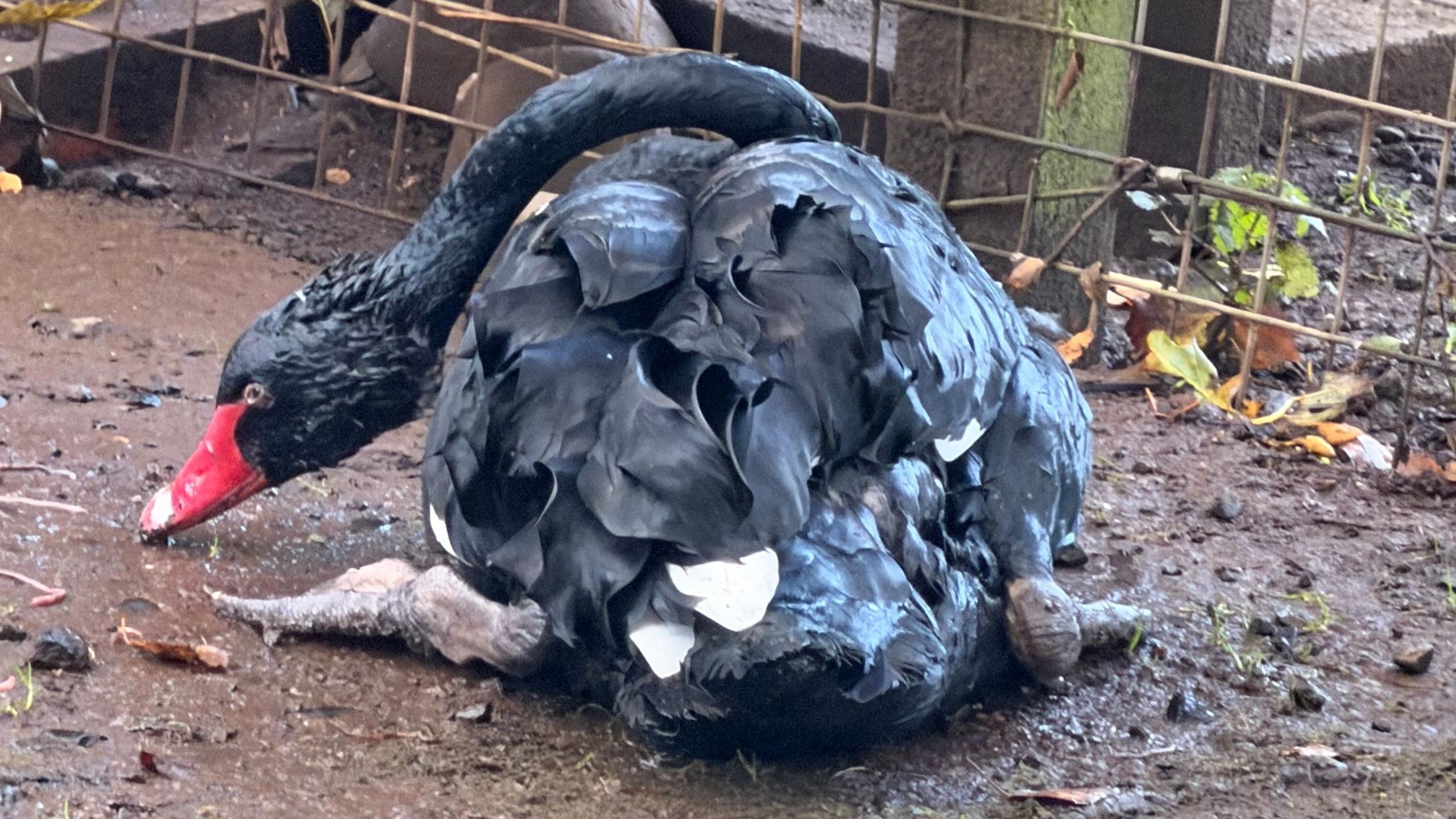
A major recovery effort is continuing after an oil spill caused by the vandalism of a nearby home heating oil tank resulted in the death of 13 birds from Broughshane Waterfowl Park.
More than 20 birds were transported to the USPCA’s headquarters last week for urgent specialist care, but the death toll has continued to rise.
The popular attraction in County Antrim has been forced to close while efforts continue to remove oil from the pond.
Police have appealed for anyone with information to come forward.
 Image source, Broughshane Waterfowl Park
Broughshane Environment Wildfowl and Wildlife Trust’s chairman, Gary Hayward, said they incident had been a “nightmare”.
“We are devastated,” he told BBC News NI.
“One of our volunteers appeared on the Thursday morning to feed [the birds], and walked down through the park and smelt this kerosene smell and saw the black swans completely oiled.”
The park is home to 120 “collection birds”, as well as wild birds, he explained.
“So far we have lost 13 birds, some of which are really close to us.”
Hayward praised the efforts of the USPCA and Northern Ireland Environment Agency (NIEA), who have been instrumental in treating the sick birds and clearing up the spillage.
 Image source, Broughshane Waterfowl Park
The Northern Ireland Environment Agency (NIEA) was first alerted to the incident on Thursday 22 October and have been involved in trying to remove the oil waste.
“The incident was quickly confirmed as having had a significant impact on the ponds and NIEA inspectors deployed oil absorbent booms and other countermeasures as mitigation,” a spokesperson said.
The agency said the substance involved had been identified as home heating oil, or kerosene, and that the source had been traced to a nearby tank.
The waterway is noted to be much improved but further works will be carried out as long as is deemed necessary.

Hayward hopes that the incident will be an deterrent to those engaged in vandalism.
“People need to be fully aware of what impact it can have if somebody vandalises a heating containers and tanks.”
Siobhan Hawthorn, wildlife supervisor at the USPCA, has been a key part of the rescue operation.
“It’s massively frustrating when these kind of incidents occur, especially when it’s caused by carelessness and us humans and these poor birds have suffered because of it,” she said.
“There’s no reason for them to have died needlessly for that reason.”

Siobhan and the team have been working tirelessly to help revive the birds which include geese, ducks and swans.
“It’s been a case of getting them all bathed and treated as soon as we could because of the level of contamination they suffered,” she said.
“We’ve given them all doses of charcoal to help combat some of the toxins that they would have ingested.
“Unfortunately not all of them got to us as quickly as we would have liked and they have ingested too much,” she added.
To play this video you need to enable JavaScript in your browser.
This video can not be played

Siobhan and the team said the incident has also placed their staff under considerable pressure “emotionally and mentally”.
The centre is unsure just how long they will have to care for the remaining birds.
“We would like to think that they’re over the worst of it, but you just don’t know exactly how much they have potentially ingested,” she explained.
“Birds are extremely good at hiding illnesses and ailments, so sometimes you don’t see the symptoms until it’s a little bit too late because they’re just so good at hiding it.
“The majority of these birds that have come into us are actually not native species so they can’t be returned until the pond is 100% fully cleaned and cleared.”
-
-
Published17 October

-
-
-
Published21 February 2023

-
-
-
Published3 December 2021

-
Disclaimer : This story is auto aggregated by a computer programme and has not been created or edited by DOWNTHENEWS. Publisher: newsrss.bbc.co.uk