There are ghosts in the housing market, writes David Kelly, the chief global strategist at J.P. Morgan Asset Management.
Kelly suggests a number of factors have contributed to the “haunting” of the sector, writes Fortune’s Nick Lichtenberg, such as more than a decade of too-easy money, tariffs, immigration policies that raise the cost of building homes while limiting the number of people who need them, and a Fed whose rate swings hit housing harder than almost anything else.
But contrary to popular opinion that the property market is facing a supply problem, Kelly believes the ghoul in the data lies in demand. He expects U.S. population growth of just 800,000 a year over the next few years. With an average household of about 2.5 people, he writes, that “implies a demographic need for just 320,000 new housing units per year,” compared with roughly 1 million per year in the first two decades of this century.
MIDTERM WATCH
The pursuit of popularity
As the U.S. heads to the voting booths this week, most polls forecast that the Democrats will take control of Congress. Of course, polls can only predict so much and have surprised markets before.
But with President Donald Trump potentially losing some of his political firepower, analysts are wondering what this means for action in the Middle East. The unpopular action in Iran has become linked to rising gas prices in voters’ minds due to the supply chain issues the war has caused.
“The concern is clearly that energy prices become less of a pressing political issue once the vote is out the way, allowing for more aggressive action in and around Iran,” Deutsche Bank’s Jim Reid wrote to clients this morning.
Meanwhile, UBS’s Paul Donovan wrote: “The U.S. midterm elections hang over markets to some extent. Investors assume a Washington gridlock, but that is not too much change from today. The focus is whether U.S. President Trump becomes more aggressive in the Gulf war, once freed from the pursuit of popularity.”
THE MARKETS
Busy diaries
Markets will start to get some answers this week, courtesy of a slate of data and earnings announcements. The U.S. midterms are the main event, but Wednesday will bring the Treasury quarterly refunding announcement, and Friday will also bring the October jobs report.
Earnings season also remains in full swing. Concerns over AI capex may be soothed or stoked by a raft of updates from AI leaders, including Apple and Palantir, as well as AMD and Arm later this week.
- S&P 500 futures are up 0.52% this morning.
- In Europe, the Stoxx 600 is up a small 0.05% in early trading, and the U.K.’s FTSE 100 rose 0.07% before lunch.
- Asia: South Korea’s KOSPI was up 2.24%. Japan’s Nikkei 225 was down 0.33%. India’s Nifty 50 was up 1.68%. China’s CSI 300 was up 0.79%.
- Brent crude is down to $108 per barrel.
- Bitcoin is up slightly on Friday, at $77,983.
MORE FROM FORTUNE
CHART OF THE DAY
Escaping AI displacement effects
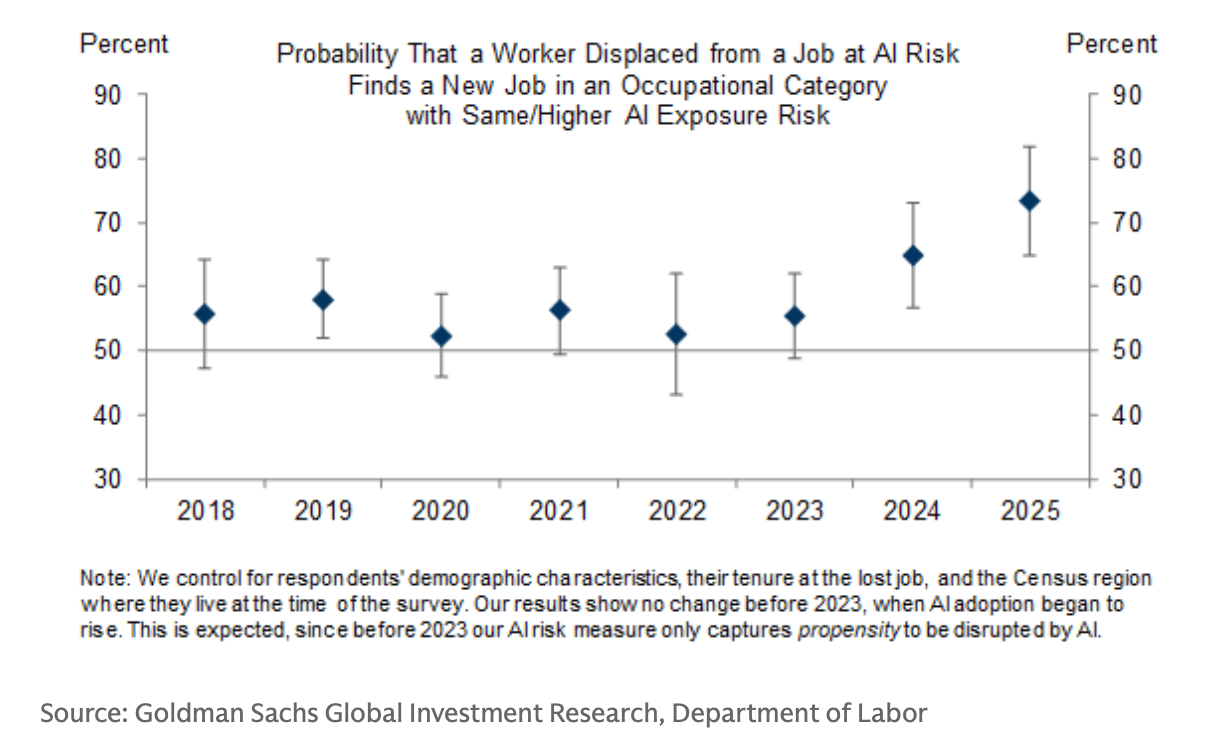
Goldman Sachs’s Pierfrancesco Mei has been looking at workers already displaced from their roles by artificial intelligence, and is seeing signs of a labor market that’s tough to rejoin.
Workers who lose their jobs to AI take about a month longer to find a new role than other displaced workers, Mei notes, in a magnitude comparable to previous technological changes.
Demographics also play a significant part in how difficult it is to find a new role, the research found. Based on analysis of previous technology displacements, Mei wrote that younger workers took about three weeks longer than other displaced workers to return to full-time employment, compared with about five weeks longer for older tech-displaced workers.
Perhaps most notably, Mei highlighted that AI-displaced workers are significantly more likely to leave their prior occupation and industry altogether, but upon reemployment, these workers—especially older ones—have increasingly moved into roles with similar or even higher AI exposure.
NUMBER OF THE DAY
62%
62% of parents with young kids and a personal loan say they wouldn’t be able to make ends meet without the borrowing. According to LendingTree’s recent Buy Now, Pay Later (BNPL) survey, 54% agree that these financial bridges have become a necessity.
Nearly half—47%—of borrowers said they’ve paid late in the past year, up from 41% in 2025 and 34% in 2024.
THE FRONT PAGES TODAY
ONE MORE THING
Apollo doesn’t care what you wear
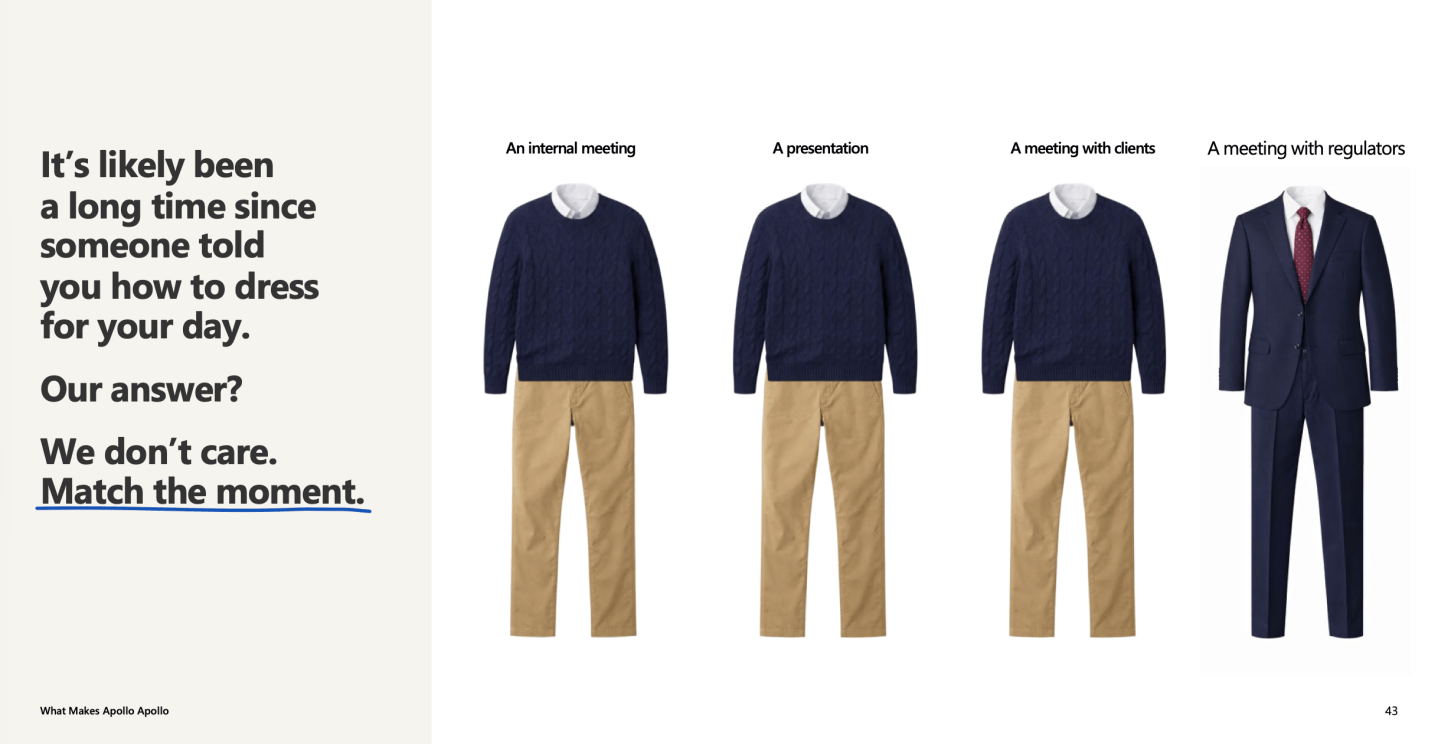
A fun tidbit from asset management giant Apollo here, courtesy of some company culture housekeeping that seems to have flown under the radar this summer.
As well as some guidance to staffers on working outside your remit (“No one here does only the job they were hired to do”) and hierarchy (“If you’re concerned about where you’re sitting or the size of your office, Apollo is not your firm”), Apollo shared some fashion advice.
Essentially, management doesn’t care what you’re wearing day-to-day—just be smart and “match the moment.”
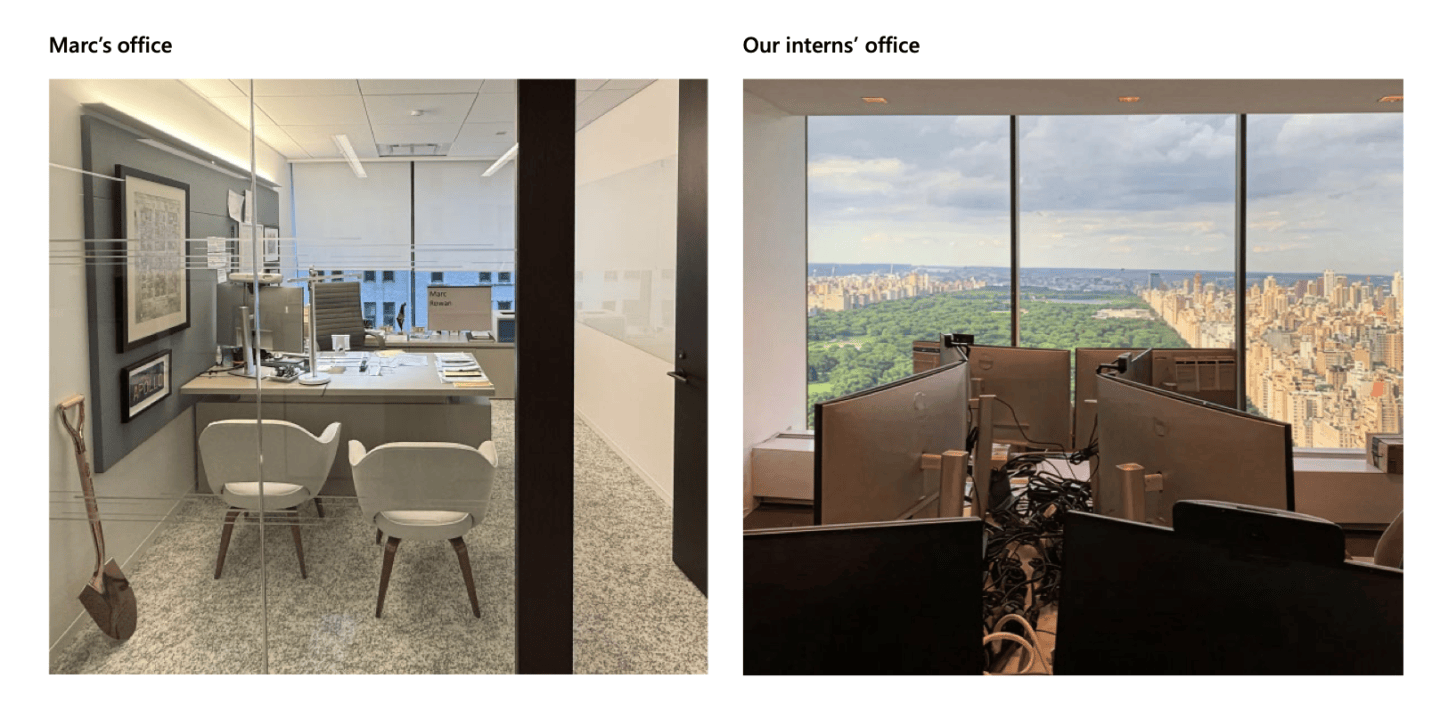
(And if you’re wondering where to prioritize interning next year, Apollo’s office for junior staff is really nice—just ask CEO Marc Rowan.)
Disclaimer : This story is auto aggregated by a computer programme and has not been created or edited by DOWNTHENEWS. Publisher: fortune.com