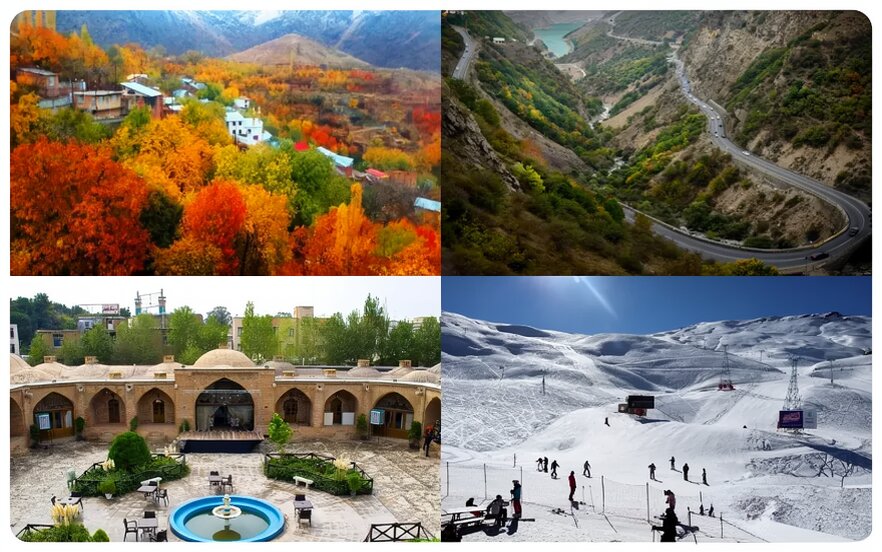
TEHRAN – Although Alborz is one of Iran’s youngest provinces in terms of administrative division, its history, cultural heritage and natural landscapes extend far beyond its modern boundaries.
Located west of Tehran, the province brings together ancient archaeological remains, historic villages, mountain scenery, traditional customs and a culturally diverse population. Its combination of urban attractions and rural destinations makes it an appealing place for travelers seeking to explore a different side of Iran.
Established in 2010, Alborz province was formed from western parts of Tehran province, with Karaj designated as its capital. The city is widely regarded as one of Iran’s most diverse urban centers, having attracted residents from different parts of the country over several decades. This diversity has sometimes contributed to its reputation as “Little Iran,” reflecting the coexistence of various regional cultures, traditions and lifestyles.
The province takes its name from the Alborz Mountain Range, a substantial section of which extends across its northern territory. Despite its relatively recent administrative establishment, the region has a long historical background. References to Karaj in ancient Iranian literature, including the Avesta and Ferdowsi’s Shahnameh, alongside archaeological remains and historical artifacts, point to the area’s enduring significance.
Geography and climate
Alborz province occupies a strategic position in north-central Iran, bordering Tehran to the east, Qazvin to the west and Markazi province to the south. Its northern reaches connect to Mazandaran through the celebrated Karaj-Chalus Road, one of the country’s most scenic mountain routes.
The province encompasses a varied geographical landscape, ranging from high mountains and fertile valleys to plains and relatively arid southern areas. Approximately two-thirds of its territory is mountainous, contributing to its diverse climate and natural attractions. Northern areas generally experience humid or semi-humid conditions, while the southern parts have a drier, more desert-like climate.
The provincial territory includes Karaj, Taleqan, Savojbolagh, Nazarabad, Eshtehard, Meshkin Dasht, Mahdasht, Hashtgerd, Kamalshahr, Mohammadshahr, Garmdarreh and Fardis. Each area offers distinct geographical and cultural characteristics.
Summer is generally considered a favorable season for exploring the province’s highlands and mountain villages, where temperatures are comparatively moderate. Taleqan, in particular, is known for its colder climate, while Eshtehard experiences warmer conditions. Autumn and winter bring lower temperatures to mountainous areas, often accompanied by snowfall that transforms the landscape and attracts winter sports enthusiasts.
Karaj: The provincial capital
Karaj, the provincial capital, serves as the main gateway to Alborz’s natural and cultural attractions. While its contemporary urban character reflects decades of expansion and migration, the city and its surroundings preserve several historical landmarks and recreational sites.
Jahan Nama Park, Chamran Park and its flower garden, Iranzamin Park, Fateh Garden and Bam-e Karaj are among the city’s popular recreational destinations. The flower garden at Chamran Park is particularly attractive during the spring, when seasonal blooms provide a colorful setting for visitors.
Morvarid Palace, situated in Mehrshahr, is one of Karaj’s notable architectural landmarks. Its distinctive design and historical association with the area have made it a popular attraction. The nearby Mehrshahr apple orchard, traditionally associated with the palace grounds, is another feature of local interest.
Other attractions include Soleymanieh Palace, located within the Faculty of Agriculture; the Zoroastrian fire temple in Kalak; Shah Abbas Bridge; Mesbah Bathhouse; and Shah Abbas Caravanserai in Tohid Square. Religious and cultural sites such as Imamzadeh Taher and Imamzadeh Hasan also contribute to the city’s heritage landscape.
Visitors interested in specialized collections can explore the Iran Historical Car Museum on Makhsus Road, while the Four Gardens Bird Garden offers an opportunity to observe a variety of bird species.
Karaj-Chalus road: A scenic gateway to the highlands
Among Alborz’s most celebrated attractions is the Karaj-Chalus road, a winding route that passes through mountain valleys, forests, rivers and picturesque villages before reaching the Caspian region. Its dramatic scenery, roadside gardens and numerous restaurants make it a destination in its own right.
One of the major landmarks along the route is Amir Kabir Dam, also known as Karaj Dam, located about 25 kilometers from the beginning of the Chalus Road. The reservoir, surrounded by mountainous terrain, offers striking views, particularly during periods when its water levels are high.
Further along the route, the roads leading to Dizin and Gajereh provide access to popular winter sports destinations. Dizin Ski Resort is among Iran’s best-known ski centers, attracting visitors during the snowy months. Khor Ski Resort is another destination for winter sports and mountain recreation.
Gachsar, a village along the road, is particularly known for its tulip garden, which typically reaches its peak bloom in Ordibehesht, corresponding to April and May. Other attractions in the area include Rezashahi Palace, a historic stone bridge and Yakh Morad Cave. The cave is renowned for its ice formations, which are especially appealing during colder months.
Shahrestanak, situated farther along the road, is home to the remains of a summer palace associated with Nasser al-Din Shah Qajar and Dozdband Castle. The nearby Goleh Gileh spring adds to the village’s natural appeal.
Waterfalls and mountain villages
The province is distinguished by its numerous waterfalls, many of which are located in mountainous areas accessible through the Karaj-Chalus road. Khor Waterfall is among the region’s notable natural attractions. During winter, freezing temperatures can transform the waterfall into an impressive ice formation.
Other waterfalls include Nashe-Rud, Nojan, Kondor, Haft Cheshmeh, Sepahsalari and Charan. Their surrounding landscapes provide opportunities for hiking, nature photography and seasonal excursions.
The highlands around Karaj also contain several traditional villages. Baraghan, accessible through the Kordan exit of the Tehran-Qazvin highway, is known for its historic bridge, orchards, old trees and traditional rural atmosphere. Its famous walnut tree is among the village’s distinctive features.
Atashgah, another well-known village, is associated with a history extending back to the Parthian period. The area has historical connections with Zoroastrian communities and is now popular for its pleasant climate and numerous restaurants.
Kordan, with its river, lush vegetation and mature trees, is another favored destination for those seeking a rural retreat close to Karaj.
Cultural heritage, cuisine and local traditions
Alborz province’s cultural identity is shaped by its long-standing rural traditions and the diverse communities that have settled in the region. Its handicrafts include carpet weaving, pottery, ceramics, needlework, stone cutting, glassblowing and wood carving. Sculpture made from reinforced concrete is also among the crafts practiced in the province.
Agriculture remains an important part of the local economy and cultural life. Taleqan is known for its walnuts, apples, pears, rhubarb, savory, mountain chives and mountain barberries. Baraghan is particularly famous for its Baraghani apricots, as well as honey, mulberries, walnuts and locally produced dairy products.
Other agricultural products include pomegranates, loquats, jujubes, plums and grapes. Roadside shops along the Karaj-Chalus route offer regional specialties such as honey, dairy products and Qare-ghoroot, a traditional fermented dairy food.
The province’s cuisine reflects its rural heritage. Marjoo Khoresht, Ash-e Joo, Valak Polo, Khoresht-e Lubia Pileh, Torshi Ash and lamb-based halim are among its traditional dishes. Local restaurants in Karaj, Taleqan, Hashtgerd and along the Chalus Road provide opportunities to sample regional food.
Traditional customs also remain an important part of community life. During the final days of the Iranian year, families prepare for Nowruz through house cleaning, cooking Samanu, reading Hafez poetry and visiting the graves of relatives. In Taleqan, Shal Andazi and Doraji Sareh are associated with Yalda Night celebrations. Preparing Ash-e Posht-e Pa and Ash-e Baran is also part of the province’s culinary and cultural traditions.
Alborz’s proximity to Tehran makes it accessible for short trips, while its highlands, waterfalls, ski resorts and rural communities provide opportunities for longer stays.
AM
Disclaimer : This story is auto aggregated by a computer programme and has not been created or edited by DOWNTHENEWS. Publisher: tehrantimes.com