
Western Australia’s peak fishing industry body claims it was not properly consulted ahead of the government’s sweeping and controversial ban that saw the entire West Coast region from Kalbarri to Augusta closed to commercial demersal fishing.
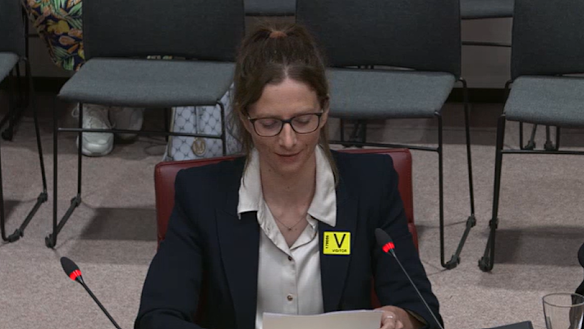
Manue Daniels, interim chief executive of the Western Australian Fishing Industry Council, spoke during a parliamentary inquiry into the impact of the demersal fishing ban on Thursday.
Late last year, the state government indefinitely banned commercial demersal fishing from Augusta to Kalbarri, as well as demersal trawling in the Pilbara, to tackle low stocks of beloved WA species.
Recreational demersal fishing in the West Coast bioregion, which spans from the South West, to Kalbarri was banned until spring 2027.
Daniels said while the council was not arguing against sustainability, the industry had not been consulted adequately before a ban was implemented, and said there had been a lack of transparency from the government.
“Under the current government, we have experienced a significant deterioration in collaboration and open dialogue concerning fisheries,” she said.
“Management options being considered, including permanent commercial closures and the reallocation of fishing access, were not openly discussed with affected industry in the lead-up to the announcement.
“I acknowledge that some type of consultation activities took place but there is a fundamental difference between being consulted about the sustainability challenges facing a fishery and being genuinely involved in considering the option that will determine its future.”
Former WA demersal gillnet fisherman Nick Soulos told the inquiry the Department of Primary Industries and Regional development held an annual meeting weeks before the announcement – with no mention of the ban.
“The meeting went through as though everything was all right, there was not one mention or one indication that these reforms were coming,” Soulos said.
“I was working down in our fish factory when I received a phone call from a colleague telling me that he just saw on Facebook that our fishery had been shut down.
“That was the first I heard of it, and that was on December 3.”
Daniels said the council believed the state already had policies in place, including established harvest strategies, ecosystem-based fisheries management, and integrated fisheries management principles to guide sustainable catches.
She argued the problem was the lack of consistency in implementing those policies.
“Government must be accountable for its part in that failure,” she said.
“If stocks require protection, appropriate action must be taken. But permanently excluding commercial fishers while providing a pathway for recreational fishers to return is an allocation decision that requires its own transparent justification and assessment of the broader public interest.
“Most Western Australians do not own fishing boats; they rely on commercial fishers for access to locally caught seafood … we have made locally caught seafood increasingly difficult for ordinary Western Australian families to afford.”
Recreational fishers will be able to fish for species including snapper and dhufish off the Perth, Mid-West and South West coasts when the ban lifts in September next year.
But when they drop a line could be restricted to winter months.
That change to the ban was flagged during the inquiry on Tuesday.
George Kailis, an expert assisting WAFIC in the inquiry, said one of the core processes should be to “take the question of allocation and reallocation out of the fisheries management game” when it came to the split between recreational and commercial fishers.
“It poisons everything,” he said.
“Every meeting, when you’re meeting with someone on the other side who you believe is going for a free allocation to their sector, you’re careful what information you provide, you don’t necessarily believe information that they provide, you’re concerned that they’re too close to somebody in the department, or they’ve been seen on the media with the minister.
“The question of fairness just gets blown out of the water.”
 Holly Thompson is a journalist with WAtoday, specialising in education and the environment.Connect via X or email.
From our partners
Disclaimer : This story is auto aggregated by a computer programme and has not been created or edited by DOWNTHENEWS. Publisher: www.smh.com.au